
European Economic
and Social Committee
EESC PLENARY: Partnership with French Economic, Social and Environmental Council to defend participatory democracy
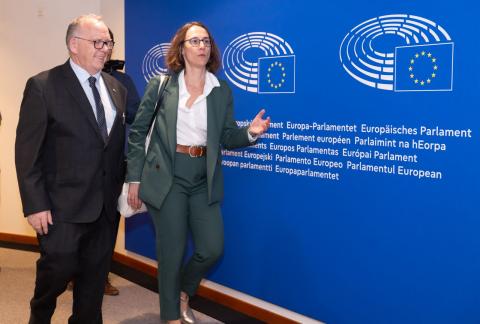
At the September plenary session, the European Economic and Social Committee (EESC) and the French Economic, Social and Environmental Council (ESEC) reiterated their intention to act as steadfast partners in defending the role and model of participatory democracy that they embody.
The newly elected President of the French Economic, Social and Environmental Council, Claire Thoury chose the EESC as the first European body to visit in her new role. At the September plenary debate, Ms Thoury outlined her priorities and highlighted the pressing concerns facing the EU: attacks on European values, poverty, jobs, artificial intelligence and climate change. She also stressed that the EU needed to restore trust in democratic institutions, against a backdrop of disinformation and growing polarisation.
We are facing aggressive attacks on our values to which we must respond more decisively,
agreed the EESC President Séamus Boland. No consultative body, in Europe or elsewhere, can take its legitimacy for granted. Recurrent attacks on such institutions remind us that we must remain united, continue to demonstrate our added value, earn trust, and speak clearly and forcefully about the importance of consultative assemblies.
The debate made it clear that the EESC and the ESEC are moving in the same direction, as their work programmes are both built around people. Cooperation is growing, particularly through thematic discussions, the promotion of opinions and participation in joint events.
Members of the EESC’s Civil Society Organisations’ Group contributed to the debate:
Cillian Lohan, President of the EESC’s Civil Society Organisations’ Group, emphasised that sustained strategic cooperation between the EESC and the ESEC was essential, adding that: Together, our institutions serve as beacons of democracy. Where an economic and social council is strong, civil society has a voice, and democracy is stronger.
Thierry Libaert highlighted the growing pressures on institutions like the EESC and the ESEC, stressing as well the need for closer cooperation. He pointed out that Civil society is indispensable to democratic functioning, yet our institutions are increasingly under threat, especially through cuts in funding. That is why we need to work together and rally our efforts, not only at the leadership level but also at the working level.
Elena Calistru, president of the EESC’s Section for Economic and Monetary Union and Economic and Social Cohesion, pointed to the strong cooperation on the Multiannual Financial Framework between ESEC and EESC, stressing the need for sufficient financial resources to uphold European values. She said: Those who attack the European project have significant resources. We need to be able to defend the values we stand for; that is why we need closer collaboration also on budgetary decisions.
Luca Jahier, former President of the EESC, reflected on the cooperation between the EESC and the ESEC during his presidency. He said that in times of unprecedented upheaval, increasing citizen participation and intermediate bodies is how we defend democracy
.
Alain Coheur, president of the EESC's Consultative Commission on Industrial Change, congratulated Claire Thoury on her appointment, pointing out that she was the first woman and the first representative of the world of associations to hold the position. He emphasised the vital role of associations in defending democratic values, stating: It is our associations that are on the ground, defending freedom of expression and empowering our citizens.