
European Economic
and Social Committee
EESC PLENARY: EU policy-makers must ‘think rural’
Rural areas are essential to Europe’s prosperity and resilience, yet many people living in these areas have poorer access to services, jobs and infrastructure. On 23 September 2026, the European Economic and Social Committee (EESC) adopted an opinion calling for a practical, EU-wide ‘rural proofing’ tool to ensure that policy-makers assess the impact of their decisions on rural communities from the outset. This approach should also guide the next EU budget and the National and Regional Partnership Plans.
Policies on transport, housing, healthcare, digitalisation, education, energy and climate can affect people differently depending on where they live. Yet rural impacts are not always considered when policies are designed. The EESC is therefore calling for policy-makers to ‘think rural’ from the start. The September plenary saw the adoption of an opinion on A rural proofing tool to unlock the full potential of rural areas and communities through better rural-centred EU policymaking for a fair and sustainable EU.
Lidija Pavić-Rogošić, EESC rapporteur for the respective opinion and Vice-President of the Civil Society Organisations’ Group, said: We need to change the way we look at rural Europe. Rural realities and potential must be considered across all policies, not only those traditionally labelled as rural or agricultural
.
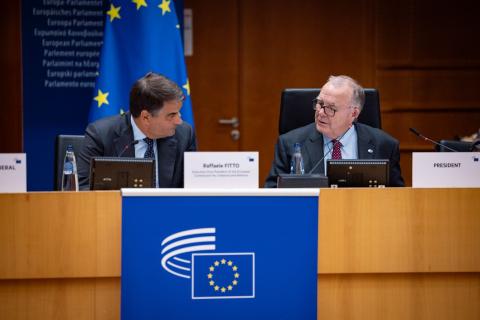
The opinion was presented during a debate entitled Modernising cohesion policy: the way forward, with Raffaele Fitto, Executive Vice-President of the European Commission for Cohesion and Reforms.
We must adapt cohesion policy to a changing world, addressing today’s priorities while preparing for tomorrow’s challenges. That is why modernisation has been central to my mandate from the outset. Through the National and Regional Partnership Plans, we aim to safeguard cohesion policy’s fundamental principles: shared management, multilevel governance and genuine partnership
, said Raffaele Fitto.
Members of the EESC’s Civil Society Organisations’ Group contributed to the debate:
Elena Calistru, president of the EESC’s Section for Economic and Monetary Union and Economic and Social Cohesion, celebrated the truly European nature of the policy. She stressed that civil society organisations needed to be involved in the modernisation of cohesion policy, saying that: The right to stay needs to go hand in hand with the right to have a say. Civil society needs to have a say in the future of their communities.
Stéphane Bijoux drew attention to the many similarities between rural areas and islands, particularly regarding the challenges they faced in terms of connectivity and the cost of living. He said: The Executive Vice-President of the European Commission for Cohesion and Reforms said that he is counting on us, but we are also counting on you, vice-president. We ask you to ensure that those who are out of sight are not out of mind.
Gaja Šavelė stressed that cohesion policy should respond to geopolitical changes. She emphasised that Cohesion policy should not only be based on economic indicators but should be adaptable. Investing in eastern border regions does not only mean investing in infrastructure, but also in civil preparedness, strong communities and civil society.
Stoyan Tchoukanov, president of the EESC’s Section for Agriculture, Rural Development and the Environment, questioned the Executive Vice-President about the implementation of the Regional Partnership Plans in the absence of standardised tools and warned that they could fragment the Common Agricultural Policy
.
Simo Tiainen said that the geopolitical situation had transformed Eastern Finland and other Eastern border regions. He emphasised that these challenges must be better reflected in EU policy-making, noting that rural areas bordering Russia face growing democratic and economic challenges, and their contribution to resilience, security and territorial cohesion must be better reflected in EU policy.