
European Economic
and Social Committee
The European Economic and Social Committee intends to play an active part in joint European efforts to translate the principles of the European Pillar of Social Rights (EPSR) into action and to build a fairer, more prosperous Europe for everyone.
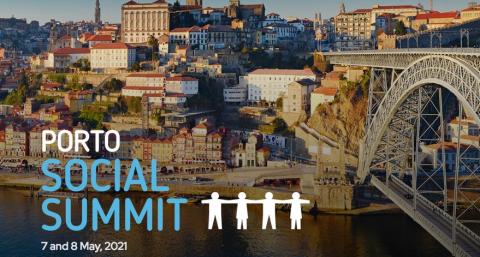
Taking part in the High-Level Conference of the Porto Social Summit, held by the Portuguese EU presidency on 7 May, EESC representatives expressed the Committee's dedication to fostering economic and social reconstruction by putting people at the heart of policies.
The EESC will work together with other EU institutions, Member States and citizens to achieve the goals set by the EPSR's Action Plan. These include boosting employment, strengthening education and reducing poverty and social exclusion.
"Through our actions, we can make Europe recover, or we can be more ambitious and make it thrive! For that to happen, we should create the conditions for the EU's job-rich prosperity", said EESC president Christa Schweng. "We should also make sure that all citizens are supported and empowered with relevant skills for work and life, so they can look towards the future with confidence. You can count on our commitment to demonstrating that the EU and Member States can act together with their citizens and improve their lives, leaving nobody behind."
Apart from the president, the EESC delegation at the summit included presidents of the EESC's three groups: Stefano Mallia (Employers' Group), Oliver Ropke (Workers' Group) and Seamus Bolland (Diversity Europe).
The EESC delegation took part in the Summit's working sessions, clustered around topics relating to the proposed goals of the Action Plan: 1) work and employment, 2) skills and innovation, and 3) the welfare state and social protection.
Pegged as a pivotal moment of the Portuguese EU presidency, the Porto Social Summit for the first time brought to the table social partners, together with European institutions, to subscribe to the agreement on what the future of social Europe should be.
Its High Level Conference focused on the best way to implement the EPSR, announced by the EU at an earlier summit in Gothenburg in 2017. The EPSR contains a set of 20 principles which should help build a stronger, fairer and more inclusive Europe that offers equal opportunities to all its citizens. (ll)