Newsletter Info

EESC info

European Economic and Social Committee A bridge between Europe and organised civil society

MARCH 2023 | EN

GENERATE NEWSLETTER PDF

Available Languages:

  • BG
  • CS
  • DA
  • DE
  • EL
  • EN
  • ES
  • ET
  • FI
  • FR
  • GA
  • HR
  • HU
  • IT
  • LT
  • LV
  • MT
  • NL
  • PL
  • PT
  • RO
  • SK
  • SL
  • SV
Youth at the heart of the Committee

Editorial

Dear readers,

Young people play a vital role in shaping the future of society. Their energy, enthusiasm, and fresh perspectives are invaluable in tackling the complex challenges of our time, particularly when it comes to addressing climate change. We owe the youth movement a debt of gratitude for their dedication, hard work and eloquently expressed expertise on these matters.

Read more in all languages

Dear readers,

Young people play a vital role in shaping the future of society. Their energy, enthusiasm, and fresh perspectives are invaluable in tackling the complex challenges of our time, particularly when it comes to addressing climate change. We owe the youth movement a debt of gratitude for their dedication, hard work and eloquently expressed expertise on these matters.

I witnessed first-hand their passion and dedication in the fight against climate change while participating in the UN climate summit in New York, where I marched down Wall Street and Manhattan with Greta Thunberg and the youth movement. One of my main objectives when I took over as the Vice-President for Communication was to help amplify their voices.

Over the years, the Committee has worked closely with young people and youth organisations and recognises their contributions to the development of a more sustainable and equitable society through initiatives such as the Civil Society Prize 2022 on youth and Your Europe, Your Say! (YEYS).

The upcoming 14th edition of YEYS, dedicated to Youth Democracy Dialogues, is a testament to the EESC's commitment towards youth participation. I am excited to see the students' recommendations and insights for the future of Europe and I look forward to welcoming them to Brussels in March.

I am proud to have played a role, with the opinion I wrote, in the establishment of the Youth Climate and Sustainability Round Tables, which bring together youth and EU institutions. The kick-off meeting in July 2021 was attended by 11 youth representatives and Commission Executive Vice-President Frans Timmermans. This initiative has given young people a platform to share their ideas and solutions for tackling climate change and has helped to mobilise a new generation of activists.

The EESC also ensures that the voices of young people are heard in global policy-making by sending a youth delegate to UNFCCC meetings as an additional member of the EESC delegation. Sophia Wiegand was the EESC youth delegate to COP26 and COP27.

Looking back on my time as EESC Vice-President, I am struck by the determination and energy of the young people I have had the privilege of working with. Our young trainees, in particular, have been a source of inspiration. Their participation in EESC activities has been a valuable asset for the Committee, and we are proud to be part of their journey towards acquiring the skills and knowledge necessary to become active citizens and leaders in their communities. It is through initiatives such as the European Year of Skills 2023 that we can continue to nurture and develop the talents of the next generation and provide them with the tools and knowledge they need to face the challenges of the future.

I am pleased with the progress we have made in empowering youth in the green transition. However, much work remains to be done. I am confident that we will continue to build on these efforts to ensure that young people's voices are heard and that we take urgent action to address the climate crisis. The future of our planet and our societies depend on it.

Cillian Lohan

EESC Vice-President for Communication

Diary Dates

23-24 March 2023, Brussels

Your Europe, Your Say! 2023

26-27 April 2023, Brussels

EESC plenary session

19 July 2023, Brussels

Tackling energy poverty for a just transition

To the point

In this column EESC members share their views on hot issues driving the EU agenda. This time, EESC member Rudolf Kolbe explains how using wood in construction can help reduce the building industry's CO2 emissions. Mr Kolbe is the rapporteur of a report on this topic that was drawn up by the EESC following a request from the Swedish Presidency of the EU. The report is up for discussion at the EESC March plenary.

Read more in all languages

In this column EESC members share their views on hot issues driving the EU agenda. This time, EESC member Rudolf Kolbe explains how using wood in construction can help reduce the building industry's CO2 emissions. Mr Kolbe is the rapporteur of a report on this topic that was drawn up by the EESC following a request from the Swedish Presidency of the EU. The report is up for discussion at the EESC March plenary.

Wood can offer buildings in harmony with both our principles and standards of living

By Rudolf Kolbe

The building sector has a considerable impact on CO2 emissions in the European Union and worldwide. It is essential to reduce its footprint; promoting timber construction is an important lever to achieve that and to drive the green transition.

Read more in all languages

By Rudolf Kolbe

The building sector has a considerable impact on CO2 emissions in the European Union and worldwide. It is essential to reduce its footprint; promoting timber construction is an important lever to achieve that and to drive the green transition.

Wood sequesters carbon before it is used as a building material – a tree consists of approximately 50% pure carbon – and performs very well on many counts: timber from forests certified as sustainable can, in many countries, be sourced within relatively short transport distances of construction sites; processing is rarely problematic or environmentally harmful; and wood can easily be re-used. Comparisons of equivalent buildings over their entire life cycle show that wood is a viable alternative in terms of embodied energy, greenhouse gas emissions, air and water pollution and other impact indicators.

However, to promote timber construction as a way to achieve climate objectives, it is essential to use quality criteria in procurement, including sustainability and life-cycle criteria, and to choose appropriate procurement procedures that allow innovative solutions. We need stricter legal obligations for quality-based competition and climate-friendly public procurement. We also need measures to train contracting authorities to apply such criteria and obligations.

Additionally, we need minimum standards for life-cycle carbon emissions from buildings and for the corresponding carbon reporting requirement across the construction sector, along with a legal and technical environment that enables innovation in general and timber construction in particular.

For people living in and using buildings, timber construction can provide sustainable, inclusive and beautiful living spaces.

One question to...

One question to…

For the March edition we asked EESC member Nicoletta Merlo to answer a question that is at the heart of her new opinion on Young people's role in the green transition. The opinion will be adopted at the EESC's March plenary session.

Read more in all languages

For the March edition we asked EESC member Nicoletta Merlo to answer a question that is at the heart of her new opinion on Young people's role in the green transition. The opinion will be adopted at the EESC's March plenary session.

Nicoletta Merlo: "Listen to the voice of young people"

EESC Info question: Ms Merlo, what role does your report see for young people in the green transition?

Nicoletta Merlo: Young people can and must play a crucial role in the green transition for at least two reasons. First of all, it is good to remember that the decisions which political leaders take today on climate change and environmental issues will above all affect young people and future generations, who therefore have a right to have their say.

Read more in all languages

EESC Info question: Ms Merlo, what role does your report see for young people in the green transition?

Nicoletta Merlo: Young people can and must play a crucial role in the green transition for at least two reasons. First of all, it is good to remember that the decisions which political leaders take today on climate change and environmental issues will above all affect young people and future generations, who therefore have a right to have their say.

Another significant aspect to take into account is that the younger generation is the most sensitive to and aware of the need to take up the challenge of the green transition and to act in order to achieve environmental sustainability. In recent years, climate action has mobilised large numbers of young people across Europe. Numerous environmental and social movements made up of young people have sprung up at local, national and European levels, holding demonstrations and demanding tangible measures from governments and policymakers to protect the environment and achieve climate neutrality.

Although the role of young people in building a more sustainable, inclusive and green world is increasingly recognised and 2022 was declared the European Year of Youth, it is clear that young people still find it difficult to make themselves heard and find their place in decision-making – and not just when it comes to the green transition.

In my view, youth organisations should be given the opportunity to make their voices heard within institutions in a systematic and structural manner, not just once in a while, so that they can make a qualified and meaningful contribution to decision-making at all levels and implement ideas and projects related to environmental sustainability.

To make this happen, institutions should first and foremost adopt the Youth Test, provide youth organisations with adequate (and structural) financial support and carry out systematic assessments of the economic, political and social impacts of investments on the younger generation, giving them a clear idea of how, and to what extent, public policies positively affect the lives of young people.

Two other key aspects that need to be addressed in relation to the role of young people in the green transition are education and employment.

In a context of climate and environmental emergency, education on sustainability should become a priority for schools. Children's education on sustainability and environmental protection should start from the youngest age and continue throughout school. A cross-sectoral approach is needed, providing theoretical and practical skills, including through school-to-work pathways and vocational apprenticeships. Lifelong learning is also key, because the success of the ecological transition will also depend on the ability of schools to work in collaboration with local authorities on extracurricular activities, in particular with youth organisations and organised civil society, to enhance public awareness and participation.

2023 has been proclaimed the European Year of Skills, and without skills there is no transition. It is crucial to equip young people with the skills to master the innovation brought about by the green transition, which is inevitably having and will continue to have a significant impact on the world of work. There is therefore a need to invest in training and learning practices that take place in work contexts, particularly in the form of quality apprenticeships and traineeships.

The green transition must be a just transition, ensuring the reskilling and upskilling of workers and quality jobs for all, and that no one is left behind. This is why it is essential for training policies to be integrated with industrial policies, coordinated with other development strategies, and planned in detail at regional and local level, in close cooperation with the social partners.

Finally, innovation is crucial for the success of the green transition. Therefore, a key aspect in achieving the set objectives is to encourage young people with entrepreneurial aptitudes to join the innovation process using specific training and support for innovative projects, and also by ensuring adequate financial support.

The surprise guest

The surprise guest

The "Surprise guest" is a column where we welcome distinguished personalities from science, journalism and culture. Our guest this month is American film director, producer and cinematographer Evgeny Afineevsky, who has made acclaimed documentaries about the wars in Ukraine and Syria.

Read more in all languages

The "Surprise guest" is a column where we welcome distinguished personalities from science, journalism and culture. Our guest this month is American film director, producer and cinematographer Evgeny Afineevsky, who has made acclaimed documentaries about the wars in Ukraine and Syria.

His film "Winter on fire: Ukraine's fight for freedom", which covered the Euromaidan protests in Ukraine in 2013-2014, was nominated for an Oscar and four Emmy awards. In 2016, he spent months in Syria shooting a comprehensive account of the war in his award-winning documentary "Cries from Syria", an official selection at the 2017 Sundance Film Festival. In 2022, he made another film on Ukraine: "Freedom on fire: Ukraine's fight for freedom ". The film chronicles the early stages of the recent invasion, showing the devastating consequences of the war on the lives of ordinary Ukrainians.

EESC info interviewed him about his work as a filmmaker documenting wars.

Evgeny Afineevsky: "Each one of us is a drop of water, together we are an ocean"

EESC info: You started working on Ukraine some years ago with the Oscar-nominated film "Winter on Fire: Ukraine's Fight for Freedom", and now you are back with a new film, "Freedom on Fire: Ukraine's fight for freedom". Is this part II of that story?

Evgeny Afineevsky: "Winter on Fire" was a campaign for peace. In February 2022, I felt the urgency as a filmmaker to go back to that story and show the continuity with today's war. So I wouldn't say that "Freedom on fire" is a sequel. What it does is connect the dots all the way from Maidan to where we are now. You see, this war has been going on for eight years. It is a fight for dignity, for freedom and for human rights.

Read more in all languages

EESC info: You started working on Ukraine some years ago with the Oscar-nominated film "Winter on Fire: Ukraine's Fight for Freedom", and now you are back with a new film, "Freedom on Fire: Ukraine's fight for freedom". Is this part II of that story?

Evgeny Afineevsky: "Winter on Fire" was a campaign for peace. In February 2022, I felt the urgency as a filmmaker to go back to that story and show the continuity with today's war. So I wouldn't say that "Freedom on fire" is a sequel. What it does is connect the dots all the way from Maidan to where we are now. You see, this war has been going on for eight years. It is a fight for dignity, for freedom and for human rights.

What pushed you to make that first film about Ukraine?

I would say it was Maidan and discovering the bravery of the Ukrainian people. They stood for their rights, their beliefs. They stood for an independent future for Ukraine as a united country belonging to the family of free European nations. This is what I witnessed and what led me to pick up that story again last year and continue the saga.

Is there any particularly memorable story from your experience with Ukrainians on the ground that you would like to share with us?

There are so many. But there is one I tell when I hear people say we cannot change history. When I was in Maidan, in that cold winter of 2013-2014, there was a poster with a big drop of water, saying: "Each one of us is a drop of water, together we are an ocean". I saw the Ukrainian people unite together, showing the government that they had the voice, the power and the will to change their history as a nation - and doing it. In 93 days, people from different social groups, rich and poor, young and old, achieved their goals by acting together and respecting one another. I think what is important these days is to be united.

What would you expect from the EU and from European countries and civil society to help Ukrainians in this war?

The EU means unity, unification. I think now is the time to stop a third world war breaking out. The sooner we admit this, the sooner the world will be united. Ukrainians are not asking people from other countries to come and fight, but to help them win this war. And this is a beautiful thing - the world, all of us rallying around Ukraine to stop this war.

You dedicated this film to journalists who "are risking their lives today". How important are reporters and activists in wartime?

I made this statement in my first movie and I keep repeating it, as I have worked with journalists on the ground and some of them are no longer with us. Statistics show that journalists, Ukrainian filmmakers and reporters died in the early months of the war, which were the cruellest. However, this war is not being fought only on the ground, but also in the media. Propaganda is the main weapon: "take a lie, pick it up, repeat it over and over and it becomes the truth", going back to Joseph Goebbels' playbook.

Russia's aggression against Ukraine is literally on Europe's doorstep, with a heavy impact on European countries. What about the US? How have people reacted there? Has there been any mobilisation by NGOs and civil society organisations?

The American government is helping as much as they can, but here, in Hollywood, there is not much talk of Ukraine. Some networks are still covering the war but not mainstream media. NGOs have been on the ground from the beginning helping people, but society at large is on a different wavelength and this is the reality of the war. We are focused on many other things and for me, as a filmmaker, it is painful to see that there is a lack of political movies. It seems that Hollywood is trying to abstract itself from political situations. But at the end of the day, if a nuclear plant is hit in Ukraine there will be a price to pay for us all.

You also directed "Cries from Syria" in 2017, another film dedicated to war and conflict. What prompted you to make that documentary? Did you succeed in drawing attention to this tragedy?

With "Cries from Syria", I tried to shine a light on what happened in Syria from the beginning to the huge refugee crisis through my storytelling. Many of the people in "Cries from Syria" are now dead. It is the same with the films on Ukraine. I tried to explain to the world that it was not a local conflict but a war. I also tried to connect activists and volunteers, but most importantly, I tried to connect journalists with the journalist on the frontline who plays the lead in the film. In my latest movie, I showed the most important thing - the media war - as I spent a lot of time in cities and the media sphere showing what propaganda is. I guess I want to tell the important stories of our day and enable those who are living them to have their voices heard loud and clear, to educate the world and send out a call to action. For me, each movie is a triple A: advocacy, activism and action.

Do you feel that you have achieved your goals with your films?

Yes, I do! I think that this is what pushes me to carry on. I have seen the difference my movies have made, inspiring political action. I have seen how people have changed after seeing my movies on Syria and Ukraine. During Q&A sessions, people always ask: "Please tell us, how can we help? What can we do?". This is the question that I hear almost every time. It is indeed inspiring and it makes me feel great.

What is your next project going to be? Do you have anything in mind?

No, not right now. First we need to stop this war. Because if this war grows big tomorrow, there will be no need for filmmakers, there will be no Hollywood anymore. Only united can we win this hybrid war, on the ground in Ukraine and in the media, because propaganda and lies can easily cross the EU's or the USA's borders, they do not need a visa. They travel freely and this is what everyone keeps forgetting in Hollywood, in America, all around the world.

Watch the trailer for "Freedom on Fire".
Learn more about the movie here.

EESC News

It's time for an EU Blue Deal: the EESC launches works on water

As water scarcity and pollution continue to pose global challenges, the current EU policy framework seems insufficient. To address this, top-level water experts gathered at the EESC on 27 February to identify possible solutions. The hearing marks the beginning of the EESC's works on water. 

Read more in all languages

As water scarcity and pollution continue to pose global challenges, the current EU policy framework seems insufficient. To address this, top-level water experts gathered at the EESC on 27 February to identify possible solutions. The hearing marks the beginning of the EESC's works on water. 

The EESC is preparing a set of own-initiative opinions and, in the autumn, will share civil society's recommendations for the future of water in the EU.

Summer 2022 saw the most severe droughts in Europe in 500 years. While the EU Green Deal has proposals tackling water-issues, these objectives are not well integrated across EU policies. A change of scale is needed to avoid the mistakes previously made with the energy policy. 

EESC President Christa Schweng said: "the EU has the opportunity to position itself as a frontrunner in the area of water."

The European Parliament also recently called for an EU water strategy. Pernille Weiss, chair of the MEP Water Group, said: "My hope is that Europe will become a role model for how to take care of water resources."

The EESC will push for a comprehensive EU strategy on water with a series of own-initiative opinions, including proposals on the safeguarding of clean water resources; anticipating and mitigating effects of international conflicts caused by water-related issues; and sustainable water management.

Pietro Francesco De Lotto, President of the Consultative Commission on Industrial Change (CCMI), highlighted the industrial dimension of water: "Water-efficient technologies are an important part of the solution we need, not just for industry, but for all of society."

Salla Saastamoinen, Deputy Director-General for the Joint Research Centre (JRC), said: "the JRC shares the EESC's ambition towards a holistic approach to water management."

Oliver Röpke, President of the EESC Workers' Group, stressed the importance of water as a human right: "Solidarity and sustainability must be at the heart of our solutions." (gb)

Sviatlana Tsikhanouskaya at the EESC: "Belarus must not be Putin’s consolation prize"

At the EESC's February plenary session Sviatlana Tsikhanouskaya, leader of the Belarusian democratic opposition, called on the EU institutions to support the Belarusian people in their fight against authoritarianism. Belarus deserves to be part of the European family, she said, and this can only be possible with the active support of all EU-institutions. 

Read more in all languages

At the EESC's February plenary session Sviatlana Tsikhanouskaya, leader of the Belarusian democratic opposition, called on the EU institutions to support the Belarusian people in their fight against authoritarianism. Belarus deserves to be part of the European family, she said, and this can only be possible with the active support of all EU-institutions. 

The human rights situation is worsening in Belarus, with some 1,500 citizens detained for political reasons and an average of 17 people put in jail daily. 

EESC President Christa Schweng said: "All politicians with authoritarian tendencies are afraid of their people. They are afraid of civil society and its role of channelling new creative forces so that they can emerge and make things happen."

Ms Tsikhanouskaya underlined the direct connection between the liberation of Belarus and Ukraine: "The future of Europe is being decided on the battlefields of Ukraine, in the Belarusian underground resistance, and of course in the European capitals". She called on the EU institutions to support the people who are fighting on the ground and in exile and suggested to revive the Eastern Partnership, from which the Belarusian government had withdrawn in 2021, in cooperation with the Belarusian opposition. 

"We call on authorities to immediately and unconditionally release the arrested people and trade unionists" said the president of the EESC Workers' Group Oliver Röpke.

"As the representatives of civil society, we are available to bring your voice to all EU institutions and to push forward your ideas about how to help improve the situation in Belarus" stressed Stefano Mallia, President of the EESC Employers' Group.

The vice-president of the Civil Society Organisations' Group Simo Tiainen said: "You are a strong and courageous woman, Ms Tsikhanouskaya. You fearlessly work for a better future for your country. We are on your side. Instead of dictatorship, democracy belongs to Belarus." (mt)
 

Support for Ukrainian civil society must continue for "as long as it takes"

Just one day before the first anniversary of Russia's invasion of Ukraine, the EESC adopted a resolution calling for Ukraine's swift accession to the EU with due regard for enlargement principles. The EESC supported the establishment of a special international tribunal on crimes of aggression against Ukraine, and stressed that civil society must carry on supporting Ukraine for as long as necessary.

Read more in all languages

Just one day before the first anniversary of Russia's invasion of Ukraine, the EESC adopted a resolution calling for Ukraine's swift accession to the EU with due regard for enlargement principles. The EESC supported the establishment of a special international tribunal on crimes of aggression against Ukraine, and stressed that civil society must carry on supporting Ukraine for as long as necessary.

The EESC adopted its third resolution on Ukraine, entitled Ukraine: One year after the Russian invasion – the European civil society perspective, at its February plenary session. The resolution was adopted during a debate with Oleksandra Matviichuk, head of Ukraine's Centre for Civic Liberties and winner of the 2022 Nobel Peace Prize, and Lora Pappa, president of the Greek NGO METAdrasi – Action for Migration Development, on the impact of the war on people in Ukraine and in the EU.

In its resolution, the EESC advocated for Ukraine's accession to the European Union. "We call for a swift accession process for Ukraine to the EU with due regard for enlargement principles. Ukrainian civil society and Ukrainian people remain the highest priority for the EESC," said EESC president Christa Schweng.

The resolution called for the establishment of a special international tribunal on crimes of aggression against Ukraine. In an emotional speech, Ms Matviichuk reported the unprecedented number of war crimes committed by Russian troops: "It is time to turn words into decisions and to empower legal procedures, because lasting peace is impossible without justice."

Seamus Boland, president of the Civil Society Organisations' Group, said that "We support the call to establish a special international tribunal on crimes of aggression against Ukraine".

One year into the invasion, civil society organisations have given their support to 8 million refugees and 6 million internally displaced people. However, "fatigue is starting to become apparent," lamented Ms Pappa.

Oliver Röpke, president of the Workers' Group, said that "Ukrainian civil society shouldn't be guests here, they should be at home," while Stefano Mallia, president of the Employers' Group, added that "Civil society is ready to do whatever it takes and for however long it takes to support Ukraine on the way to recovery". (mt)

European companies increasingly struggle to get qualified workers

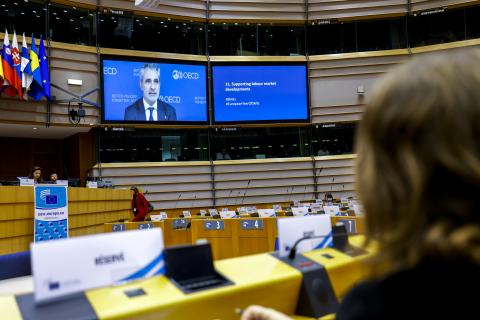
At its plenary session on 22 February, the EESC held a debate that warned about companies' growing struggle to get a skilled workforce and pointed to the pressing need for an all-encompassing skills strategy at all levels. 

Read more in all languages

At its plenary session on 22 February, the EESC held a debate that warned about companies' growing struggle to get a skilled workforce and pointed to the pressing need for an all-encompassing skills strategy at all levels. 

The debate was held in the context of the European Year of Skills and in connection with the adoption of the EESC opinion "Supporting market developments". It saw the participation of the OECD Director for Employment, Labour and Social Affairs Stefano Scarpetta, Vice President of SMEunited Marianna Panebarco and President of Social Economy Europe, Juan Antonio Pedreño.

Opening the debate, EESC President Christa Schweng said: "In the aftermath of the pandemic, the accelerated digitalisation, greening, and changing work organisation have shown how important upskilling and reskilling of workers are in maintaining people's employability and productivity, especially in our ageing society."

Speakers expressed the hope that the European Year of Skills would not remain a dead letter but would rather prove to be an instrument for promoting lifelong learning, training and retraining.

They highlighted many issues with trainings, such as limited participation of workers due to, among other things, lack of time or finances or trainings that do not match the needs of companies. 

Emphasis was placed on the vital role social partners can play in pushing for the recognition of skills to help people remain employable. The role of social dialogue as a key instrument for identifying needs and developing skills in workplaces was also underlined.

Both in the EESC opinion and in the debate there was a special focus on small- and medium-sized enterprises (SMEs) as they are already struggling to find qualified workers or offer tailor-made training programmes. 

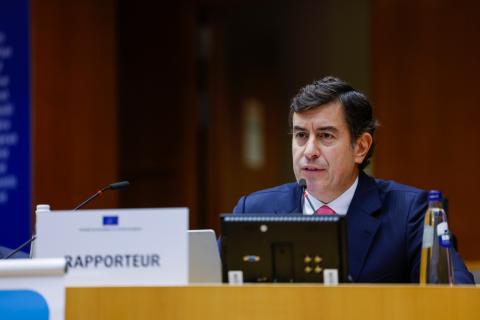
"The transformation of the European labour market requires a good understanding of what type of skills are needed for future labour market transformations, including in SMEs, " said Mariya Mincheva, rapporteur of the EESC opinion. 

In the opinion, the EESC argued in favour of making lifelong learning an integral part of broader economic growth strategies and recovery and resilience plans. It also suggested that SMEs should be encouraged to work in networks and pool their capacities to respond to the challenges of the twin transition.

Estimates show that 128 million Europeans will have to upskill and reskill to stay active in the labour market. Workers with low skills, whose jobs are most at risk being highly automatable, have the lowest participation in training, with only 4% taking part in EU27 over an observed period of time. 

The participation of adults overall is also low, with only 11% taking part in a given period. Workers aged 25-34 are most likely to attend trainings, with their attendance rate at 22%, compared to only 8% in all age groups. (ll)
 

Short-term rentals: EU legislation should help keep their impact on local life and businesses at bay

In a report adopted in February, the EESC stresses that national and local authorities should be urged to carry out impact assessments to see how short-term accommodation rental through online platforms are affecting the lives of local residents and businesses such as hotels and other hospitality facilities.

Read more in all languages

In a report adopted in February, the EESC stresses that national and local authorities should be urged to carry out impact assessments to see how short-term accommodation rental through online platforms are affecting the lives of local residents and businesses such as hotels and other hospitality facilities.

The report sets out the EESC's position on the European Commission's regulation on short-term rentals (STR). The EESC would like to see the Commission recommend that national and local authorities periodically assess how STR activities are impacting local tourism potential, the lives of local residents, accommodation available for long-term rental, the local housing market, the cost of living in the area, employment, pollution, respect for local traditions and businesses, either directly or indirectly.

The recent boom in short-term rentals through online platforms, which now amounts to about a quarter of all tourist accommodation in the EU, has put strain on several communities. While some lesser-known regions and cities have gained from the development of local tourism through more affordable STRs, more popular tourist destinations are reaching breaking point. In Venice and Florence or Barcelona, to name a few, competition has set hotels and other conventional establishments on a collision course with Airbnb and other online platforms and brought local life close to congestion.

"What we found interesting are the potential spill-over effects of the regulation", said Marinel Dănuț Mureșan, rapporteur for the opinion. "Although the regulation itself is only about collecting and sharing data on short-term accommodation at EU level, indirectly, if national authorities can get this data from the platforms, we can obtain some more substantial results. The impact assessments would be a key tool for policymakers."

The EESC also suggested a system of insurance policies to be taken up by hosts. These could replace burdensome authorisation procedures, which the regulation says local authorities should avoid imposing on STR businesses but does not say how. These insurance policies would cover the bulk of risks arising from STR activities, leaving it to insurers to verify host compliance with the rules.

Other EESC proposals to improve the regulation include a simplified registration process with a uniform, pan-EU format and a standardised approach to the level of information required for all STR activities. (dm)

An agreement on the reform of the economic governance framework is urgently needed

At its plenary session on 24 February, the EESC adopted an opinion on the Commission's Communication outlining its proposals for a reform of the economic governance framework. A swift agreement is needed, but the plan is lacking in detail, stresses the EESC.

Read more in all languages

At its plenary session on 24 February, the EESC adopted an opinion on the Commission's Communication outlining its proposals for a reform of the economic governance framework. A swift agreement is needed, but the plan is lacking in detail, stresses the EESC.

Since the Maastricht Treaty in 1992, the EU's economic governance framework has helped to create conditions conducive to economic stability, growth and higher employment in Europe. However, while it has evolved over time, the framework has also grown increasingly complex and not all of its instruments and procedures have stood the test of time. 

While the EESC agrees on the need for a swift agreement ahead of the Member States' budgetary processes for 2024, it also stresses that many details are yet to be finalised. The proposed "fiscal-structural plans" must ensure that debt-to-GDP ratios are put on a downward path or stay at prudent levels. At the same time, the rules must leave enough fiscal space for green and digital transition investments. Most importantly, for a reformed framework to be successful, enhanced ownership of the rules is key. 

"It is urgent to reform the fiscal framework. Many Member States have not consolidated their public finances enough during good times," said EESC rapporteur Krister Andersson. "The lack of prudent policies hurts the most vulnerable in society. Reduced debt levels and debt sustainability are key. We agree on the need for a swift agreement ahead of the Member State's budgetary processes for 2024." (tk)

Annual Sustainable Growth Survey 2023: Good communication must show the benefits of the European project

In an opinion adopted on 23 February, the EESC commented on the European Commission's Communication on the 2023 Annual Sustainable Growth Survey, urging the Commission to invest in communicating the challenges the EU is facing, and suggesting what needs to be done to overcome them. 

Read more in all languages

In an opinion adopted on 23 February, the EESC commented on the European Commission's Communication on the 2023 Annual Sustainable Growth Survey (ASGS), urging the Commission to invest in communicating the challenges the EU is facing, and suggesting what needs to be done to overcome them. 

The 2023 ASGS, which outlines the economic and employment policy priorities for the EU for the coming 12 to 18 months, aims to mitigate the negative impact of energy shocks in the short term, fostering sustainable and inclusive growth and increasing the EU's economic and social resilience in the medium term. 

In its opinion, the Committee welcomed the priorities set regarding competitive sustainability, as well as the attention paid to strengthening social dialogue in the EU. Furthermore, the EESC stressed the importance of good communication and called on the Commission to invest in it. To improve the functioning of the single market, the EESC called for fair working conditions, effective competition and better consideration of civil society concerns. The Committee also encouraged Member States to adopt a realistic, moderate and balanced approach when addressing inflation. 

"A strong, reliable, joint narrative on our challenges and how the EU has mobilised to overcome them is fundamental for citizens, and it will avoid misunderstandings about the European project and would boost the idea of 'a Europe for all'", EESC rapporteur Gonçalo Lobo Xavier commented. (tk)

Glass half full: Civil Society Day actors are concerned but also confident about the future of civil society in Europe

The EESC's Civil Society Days 2023, held from 1 to 3 March, delivered a set of proposals to not only protect but also expand the EU's civic space and ensure younger generations a solid foundation on which they can build a vibrant civil society.

Read more in all languages

The EESC's Civil Society Days 2023, held from 1 to 3 March, delivered a set of proposals to not only protect but also expand the EU's civic space and ensure younger generations a solid foundation on which they can build a vibrant civil society.

The three-day event was held from 1 to 3 March under the title "Civil Society Organisations: a pillar of democracy and a key player to overcome current challenges". It opened with a call to shore up civil space in the EU against internal and external threats and wound up with the presentation of a set of conclusions drawn by eight interactive workshops. The proposals cover key issues for the future of civil society ranging from the 2024 EU elections to the future of citizen panels in EU policymaking, the European Semester, civil society funding and more.

At the opening, EESC President Christa Schweng stressed that the EESC had repeatedly drawn attention to the threats besetting civil society. "That's why we were crystal clear in our feedback on the Commission's European Democracy Action Plan. We have called on the Commission to establish a dedicated pillar for civil society and have relayed the demand for a European Civil Society Strategy coming from European civil society organisations and networks."

Dubravka Šuica, European Commissioner for Democracy and Demography, conceded that “we cannot take democracy for granted. We cannot take our civil society for granted.” She stressed the Commission's action in response to the Conference on the Future of Europe, with 80% of legislative initiatives this year being a direct result of citizens' proposals at the Conference. "We took your commitment seriously. We took the proposals of the Conference seriously.”

Some 500 participants took part in this event, which took place fully in person for the first time since the COVID-19 pandemic began.

The full conclusions will feed into a resolution to be discussed at the EESC March plenary and later presented to the EU law-makers.

Civil Society Days are organised by the EESC in cooperation with its Liaison Group, which brings together pan-European civil society organisations and networks. (dm)

News from the Groups

A new path to reconstruction for Ukraine

by the EESC Employers' Group

On year after Russia's unjustifiable invasion in Ukraine, the Employers' Group met with the leaders of Ukrainian business organisations to discuss the current business situation in Ukraine and get first-hand information on what is needed for Ukrainian companies to survive now as well as with a view to reconstruction.

Read more in all languages

by the EESC Employers' Group

On year after Russia's unjustifiable invasion in Ukraine, the Employers' Group met with the leaders of Ukrainian business organisations to discuss the current business situation in Ukraine and get first-hand information on what is needed for Ukrainian companies to survive now as well as with a view to reconstruction.

In the last year, Ukraine's GDP plunged by 30-35%. The total cost of direct losses is valued at almost USD130 billion.  According to various estimates, between 2.5 and 5 million people lost their jobs and inflation sits at 26.6 %.

"With many employees, clients and partners moving abroad, losing their companies in shelling and bombings, going to the frontline to fight, it is hard to maintain high levels of income, particularly for SMEs" said Kateryna Glazkova, executive director of the Union of Ukrainian Entrepreneurs. 

Companies face a number of challenges:  the inability to regain clients they lost due to disruption of supply chains, delocalisation or other issues; the lack of financial resources; the general feeling of insecurity and the inability to export their goods and services are a matter of concern for most CEOs.

Nearly half of the member companies of the European Business Association are positive about their business development in 2023. These are the conclusions of the study Business Forecast 2023 which was conducted by the EBA and Raiffeisen Bank with analytical support from Gradus Research. This year’s results demonstrate an expected deterioration in the sentiments and forecasts of top managers. For comparison, last year 83% of CEOs made positive forecasts.

To improve the situation, the President of the Ukrainian Chamber of Commerce Gennadiy Chyzhykov, stressed the need for businesses to start exporting again. "It's a question of survival," he said.

"Stimulating export activities is crucial in restoring the disrupted supply chains, gaining European partners, learning from European experience. For that to happen, green corridors need to be continued and enhanced", agreed Anna Derevyanko, executive director of the European Business Association (EBA).

"The association to the Single Market programme has paved the way for Ukrainian businesses to access the EU market and created potential new opportunities, but B2B matching must be improved so that they get the necessary assistance, consultation and contacts to become operational", Anna Derevyanko continued.  "It's not a sprint it's a marathon," she added.

The Employers’ Group has been fully supportive of EU action to assist Ukraine in its time of need and to start work on rebuilding Ukraine, even before the war is over. We have engaged with our employer counterparts in Ukraine and have pushed our EU policymakers to do whatever it takes to help Ukraine first survive and then defeat Russia's aggression. As President Stefano Mallia stated: " Supporting Ukraine's businesses, for example by facilitating market access, is in the fundamental interest of Europe. The last months have proven that Ukraine and the EU are logical partners. Let's build on this basis."

Making Social Europe: The Ukrainian Parliament passes a law protecting social rights and collective bargaining

By the EESC Workers' Group

On 23 February 2023, the Ukrainian Parliament voted in favour of a law strengthening social rights by protecting social dialogue and collective bargaining. A milestone in the protection of Ukrainian workers and the country's accession to the EU. 

Read more in all languages

By the EESC Workers' Group

On 23 February 2023, the Ukrainian Parliament voted in favour of a law strengthening social rights by protecting social dialogue and collective bargaining. A milestone in the protection of Ukrainian workers and the country's accession to the EU. 

The law stipulates that collective agreements are binding, guarantees the right of trade unions to negotiate and safeguards their rights and preferences in collective bargaining and social dialogue. It also requires employers to provide material and technical support for trade union activities within the company, and the financing of collective agreement activities and expenses is included among the company's obligatory and protected expenses. The law also gives trade unions a strong role with regard to possible changes in working conditions, including the right to veto dismissals of trade union activists.

The law was adopted by parties in the Ukrainian Parliament across the political spectrum, with important support from the centre and centre-right. The Workers' Group stands with the Ukrainian people, trade unions and civil society organisations as they pursue peace and social justice in a country ravaged by war. Their contribution to delivering humanitarian assistance and keeping the economy going, in difficult conditions and often at personal risk, is invaluable. They have a crucial role to play in the reconstruction of Ukraine, which must be based on full respect for fundamental workers' and citizens' rights. This is a very important step not just for the protection of workers in Ukraine but also for the process of accession to the EU.  (mg)

CSO Group invites you to attend the conference on 'Civil society organisations defending and strengthening European democracy'

By the EESC Civil Society Organisations' Group

What's the role of civil society organisations in strengthening European democracy? What's the state of play of relations between civil society organisations and decision makers? Why is it important and what can we learn from good practices in the EU Member States?

Read more in all languages

By the EESC Civil Society Organisations' Group

What's the role of civil society organisations in strengthening European democracy? What's the state of play of relations between civil society organisations and decision makers? Why is it important and what can we learn from good practices in the EU Member States?

On 30 March, the EESC's Civil Society Organisations' Group (CSO Group) will try to answer these questions and more with panellists from European institutions and civil society organisations at its conference on Civil society organisations defending and strengthening European democracy.

This hybrid event will take place prior to the publication of the European Commission's Defence of Democracy package and the review of the implementation of the European Democracy Action Plan and will feed into the debate on these topics.

The conference on 30 March will take place from 09:15 to 13:00 CEST. Participants can join the event either at the EESC premises in Brussels or online via the video conferencing platform Interactio. Registration closes on 26 March.

Webstreaming will be available on the event page in English, French and German without prior registration.

For more information and registration, visit the event page: https://europa.eu/!9gPYcm

For further questions, please write to: EU-Democracy@eesc.europa.eu

Soon in the EESC/Cultural events

"There, out of sight": EESC youth event closes with musical tribute to Ukraine

The EESC is to host a musical performance on 24 March as part of the closing ceremony of its youth event "Your Europe, Your Say!". The show will pay tribute to Ukraine's fight for democracy and freedom through songs that tell stories of ordinary heroism.

Read more in all languages

The EESC is to host a musical performance on 24 March as part of the closing ceremony of its youth event "Your Europe, Your Say!". The show will pay tribute to Ukraine's fight for democracy and freedom through songs that tell stories of ordinary heroism.

The show, entitled "Svit za ochi" (There, out of sight), will be performed by the Polish theatre company Theatre Navpaky. It will feature a compilation of nine songs telling stories of young people facing different life experiences in a setting that mirrors current events in Ukraine.

The idea behind the performance is to show that people who heroically fight for their freedom are not majestic bronze statues, but ordinary people made of flesh and blood, with their own lives, joys and dilemmas.

The songs will be performed in Ukrainian with English subtitles. The show offers a unique opportunity to non-Ukrainian viewers to experience Ukrainian culture.

It will be performed during the final session of "Your Europe, Your Say!", the EESC's annual youth event, which this year is taking place from 23 to 24 March. One hundred and five students from 35 secondary schools across the EU and the candidate countries, including Ukraine and Moldova, will come to Brussels to debate about democracy and youth participation in public life. They will use the methods of parliamentary democracy to suggest ways to improve youth participation in EU policy-making. The EESC will then ensure that their proposals reach the EU institutions and decision makers.

The show is by invitation only but a recording of the performance will be available on the EESC website.

Read YEYS' full programme. (ck/dm)

Editors

Ewa Haczyk-Plumley (editor-in-chief)
Daniela Marangoni (dm)
 

Contributors to this issue

Millie Tsoumani (mt)
Chrysanthi Kokkini (ck)
Daniela Marangoni (dm)
Daniela Vincenti (dv)
Ewa Haczyk-Plumley (ehp)
Giorgia Battiato (gb)
Jasmin Kloetzing (jk)
Katerina Serifi (ks)
Katharina Radler (kr)
Laura Lui (ll)
Marco Pezzani (mp)
Margarita Gavanas (mg)
Margarida Reis (mr)
Pablo Ribera Paya (prp)
Thomas Kersten (tk)

Coordination

Agata Berdys (ab)
Giorgia Battiato (gb)


Address

European Economic and Social Committee
Jacques Delors Building,
99 Rue Belliard,
B-1040 Brussels, Belgium
Tel. (+32 2) 546.94.76
Email: eescinfo@eesc.europa.eu

EESC info is published nine times a year during EESC plenary sessions. EESC info is available in 24 languages
EESC info is not an official record of the EESC’s proceedings; for this, please refer to the Official Journal of the European Union or to the Committee’s other publications.
Reproduction permitted if EESC info is mentioned as the source and a link  is sent to the editor.
 

March 2023
04/2023

Follow us

  • Facebook
  • Twitter
  • LinkedIn
  • Instagram