
European Economic
and Social Committee
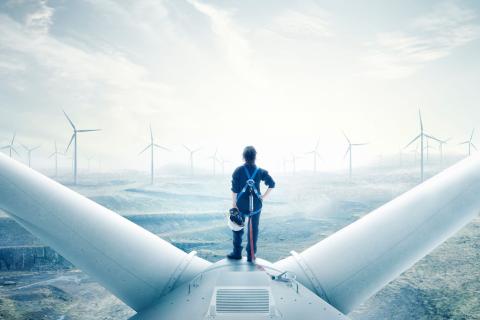
The EESC has backed the European Commission's call for energy system integration. In the future, electricity, heating and transport should all be interconnected, with the ultimate goal of improving efficiency and achieving a climate-neutral economy
In an opinion drawn up by Lutz Ribbe and adopted at the January plenary session, the EESC points out that such a strategy could contribute to securing energy supply, reducing energy imports and making affordable prices a reality for European consumers.
In the Committee's view, however, the European Commission fails to mention how the EU can achieve security of supply using low-carbon or carbon-free energy sources.
"The energy transition in Europe can only be successful if all issues are dealt with," said Mr Ribbe. speaking on the sidelines of the plenary session.
"The Commission states that 84% of electricity demand will have to stem from renewable sources, but fails to detail the sources from which the remaining electricity is to be produced. This is clearly unacceptable. Security of supply is crucially important for the European economy and consumers, especially as electrification of the heating supply and the transport sector is expected to boost electricity demand, despite progress on efficiency."
The EESC agrees with the Commission that the lack or inadequacy of CO2 emissions pricing in the heating and transport sectors is a serious problem for the system's integration.
On top of this, renewable sources are not always favoured over fossil fuels. In many Member States, heavy taxation of electricity and excessive network charges create market distortions. In these cases, the use of surplus electricity to produce heat – the simplest form of system integration – is not economically viable.
The Committee therefore urges the Commission to put forward concrete proposals for solutions, instead of just describing the problem and being somewhat hesitant and vague. (mp)