The European Economic and Social Committee (EESC) and the Consultative Commission on Industrial Change (CCMI) believe that the present and future of critical raw materials resilience is of essential concern to EU's organised civil society. For this reason, and because the Commission's Action Plan represents a step forward by providing a clear roadmap with initiatives and actions to be taken at EU level, overall the EESC recommends that the European Parliament and the Council support this approach.
As in previous years, the European Economic and Social Committee, as the body representing organized civil society at the EU, will be following the High Level Political Forum (HLPF), from Tuesday, 6 July, to Thursday, 15 July 2021. The HLPF is the United Nations central platform for follow-up and review of the 2030 Agenda for Sustainable Development and the Sustainable Development Goals.
The EU ETS was launched in 2005 and covers about 45 % of EU greenhouse gas emissions. The latest revision of the EU ETS Directive, adopted in 2018, sets the total quantity of emission allowances for phase 4 (2021-2030), in line with what was the current EU emission reduction target at the time (40 % reduction below 1990 levels by 2030).
Download format:
Download — Stellungnahme des Ausschusses: Revision of the EU Emissions Trading System (ETS), including maritime transport and Market Stability Reserve
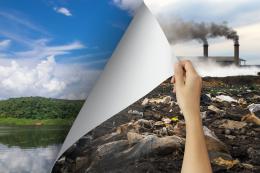
In the face of unprecedented global changes (biodiversity collapse, widespread pollution, climate change, etc.), most notably causing extreme weather events, the effects of climate change are having a direct and indirect impact on a range of human rights that are guaranteed at international and European level, such as the right to life and health, the right of access to food and drinking water, the right to property and housing, and the right to religion and culture.
Download format:
Download — Information report: Environmental protection as a prerequisite for respect for fundamental rights (information report – SDO)
Europe and the world have to prepare for the unavoidable impacts of climate change. COVID-19 has made things more difficult, but it has also created an unprecedented opportunity: to use the EU recovery funds to revitalise the economy and at the same time ensure that the EU becomes climate-resilient and fully adapted, while achieving climate-neutrality.
On 22nd of April we celebrate the Earth Day to empower and expand the environmental movement. This year's emphasis is on supporting local communities, focusing on areas that are disproportionately affected by environmental issues.