European Economic
and Social Committee
European Economic
and Social Committee
The European Economic and Social Committee (EESC) is the voice of organised civil society in Europe.
Find out more about its role and structure at http://www.eesc.europa.eu/en/about
The EESC issues between 160 and 190 opinions, evaluation and information reports a year.
It also organises several annual initiatives and events with a focus on civil society and citizens’ participation such as the Civil Society Prize, the Civil Society Days, the Your Europe, Your Say youth plenary and the ECI Day.
Find the latest EESC opinions and publications at http://www.eesc.europa.eu/en/our-work/opinions-information-reports/opinions and http://www.eesc.europa.eu/en/our-work/publications-other-work/publications respectively.
The EESC is active in a wide range of areas, from social affairs to economy, energy and sustainability.
Learn more about our policy areas and policy highlights at http://www.eesc.europa.eu/en/policies
The EESC holds nine plenary sessions per year. It also organises many conferences, public hearings and high-level debates related to its work.
Find out more about our upcoming events at http://www.eesc.europa.eu/en/agenda/our-events/upcoming-events
Here you can find news and information about the EESC'swork, including its social media accounts, the EESC Info newsletter, photo galleries and videos.
Read the latest EESC news http://www.eesc.europa.eu/en/news-media/news and press releases http://www.eesc.europa.eu/en/news-media/press-releases
The EESC brings together representatives from all areas of organised civil society, who give their independent advice on EU policies and legislation. The EESC's326 Members are organised into three groups: Employers, Workers and Various Interests.
Find out more about our Members and groups at http://www.eesc.europa.eu/en/members-groups
The EESC has six sections, specialising in concrete topics of relevance to the citizens of the European Union, ranging from social to economic affairs, energy, environment, external relations or the internal market.
Find out more at http://www.eesc.europa.eu/en/sections-other-bodies
As wildfires become more frequent and destructive across Europe, the European Economic and Social Committee (EESC) is calling for prevention to become the cornerstone of EU wildfire policy.
In its latest opinion, the EESC welcomes the European Commission’s approach to integrated wildfire risk management but warns that prevention remains significantly underfunded compared with firefighting. It calls for a structural shift towards long-term prevention and preparedness.
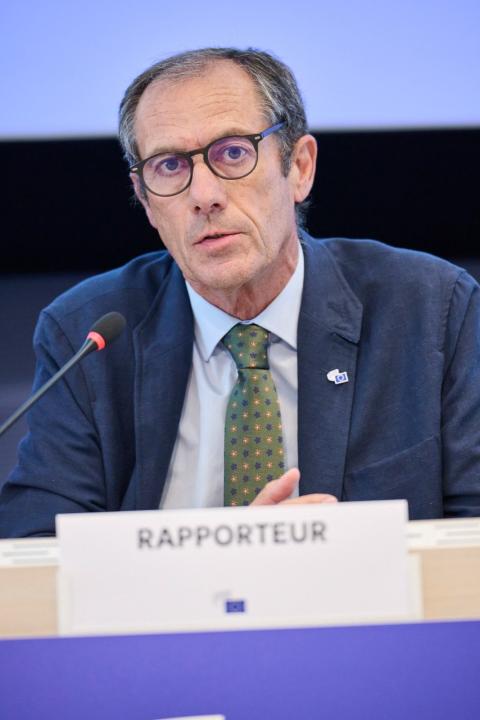
‘Wildfires are no longer a seasonal challenge confined to southern Europe, they are a European civil protection emergency. Prevention must become our first line of defence, backed by a specific EU budget, professional training and a truly integrated European strategy. The cost of inaction will be measured in lives, biodiversity loss and the future of our rural areas,’ said the rapporteur of the opinion Luís Mira.
The Committee proposes a specific European wildfire prevention fund under the next multiannual financial framework, separate from the common agricultural policy, alongside stronger cooperation between Member States and improved professional training.
The EESC also highlights the crucial role of active land management. Maintaining viable agricultural, livestock and forestry activities can help prevent land abandonment, reduce fuel accumulation and lower wildfire risks. Farmers, foresters, local authorities and rural communities should therefore be closely involved in prevention strategies.
The opinion also advocates greater use of innovative technologies and dual-use infrastructure, backed by adequate long-term financing. (ks)