Países ACP e África

This page is also available in:

Desde a primeira Convenção de Lomé (1975) até ao Acordo de Cotonu (2000-2021), as parcerias UE ACP regeram as relações entre a UE e 79 países do Grupo dos Estados de África, das Caraíbas e do Pacífico (ACP), que recentemente passou a ser a Organização dos Estados de África, Caraíbas e Pacífico (OEACP).

Durante este período, o CESE, juntamente com a sociedade civil dos países ACP, lutou pelo reconhecimento do papel fundamental que cabe aos operadores não estatais no processo de desenvolvimento, o que acabou por acontecer com a assinatura do Acordo de Cotonou, que conferiu mandato ao CESE para organizar atividades e consultas com os meios económicos e sociais ACP UE, a fim de recolher os pontos de vista da sociedade civil e oferecer-lhe a oportunidade de fazer ouvir a sua voz. O objetivo consiste em promover intercâmbios e formular recomendações sobre assuntos e políticas pertinentes para as relações UE-ACP, que posteriormente são transmitidas aos dirigentes da UE e dos países ACP.

Em termos práticos, as atividades do CESE no domínio das relações UE-OEACP são na sua maioria realizadas sob a orientação de um Comité de Acompanhamento UE-ACP, que integra membros do CESE e representantes dos meios económicos e sociais dos países ACP.

O Comité de Acompanhamento UE-ACP mantém contactos regulares com os representantes da sociedade civil nos países ACP a diferentes níveis através de:

  • Reuniões regulares do Comité de Acompanhamento UE-ACP,
  • Seminários regionais nos países ACP, oferecendo um fórum para debater temas de interesse comum com os representantes da sociedade civil, alternadamente em regiões diferentes,;
  • Encontros gerais trienais dos meios económicos e sociais ACP-UE.

O CESE também mantém contactos regulares com representantes dos meios económicos e sociais da União Africana, no âmbito da Estratégia Conjunta África UE. Em particular, o CESE realiza reuniões anuais com a Rede dos Atores Económicos e Sociais UE-África.

O CESE mantém, há muitos anos, um contacto regular com a Assembleia Parlamentar Paritária ACP UE através da apresentação de um relatório sobre as suas atividades nas sessões da Assembleia Plenária.

O CESE está igualmente em contacto estreito com organizações internacionais de empregadores, trabalhadores, agricultores, cooperativas e consumidores. Estas organizações nomeiam os representantes dos países ACP convidados para as reuniões organizadas pelo CESE, incluindo o Comité de Acompanhamento UE-ACP.

  • Event type
    Meeting

    The second meeting of the EU Domestic Advisory Group (DAG) under the EU–Kenya Economic Partnership Agreement (EPA), held on 13 April 2026 at the European Economic and Social Committee, brought together representatives from EU institutions, civil society, and international organisations to assess progress and discuss key priorities for implementation.

  • The Domestic Advisory Group (DAG) established under the EU–Kenya Economic Partnership Agreement (EPA) held its inaugural meeting on 27 October at the EESC. This is the first time that an EU EPA with an African country has included the creation of a DAG to monitor and advise on the implementation of the agreement. 

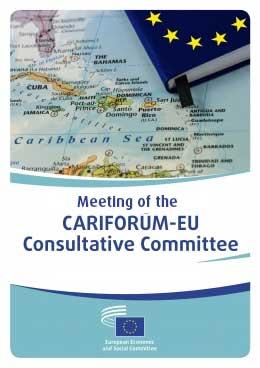
  • The 9th meeting of the CARIFORUM–EU Consultative Committee brought together civil society representatives from the Caribbean and the European Union to discuss key developments in CARIFORUM–EU relations. The agenda included updates on the implementation of the CARIFORUM–EU Economic Partnership Agreement (EPA), the provisional application of the OACPS–EU Samoa Agreement in relation to CARIFORUM, and discussions on the revision of the EPA review process.


  • The EESC: 

    • welcomes the African Union’s (AU) commitment to democratic values and to promoting democracy as highlighted in the aspirations set out in the AU 2063 Agenda;
    • believes that the Global Gateway strategy is of great importance for EU-Africa relations, and reaffirms that it will strengthen economic and political ties, ensuring respect for democratic and social principles;
    • commits to pursue and improve its activities to promote and support African civil society organisations and social partners by facilitating their establishment, organisation and action and by helping boost their institutional capacity, as a contribution to achieving the EU’s goal of making democracy resilient in Africa.
  • At its December plenary session, the European Economic and Social Committee (EEESC) hosted a debate on democracy in Africa with representatives from the African Union Economic and Cultural Council (AU ECOSOCC). Both sides agreed that civil society is the driving force for a successful EU-Africa partnership based on equality, fostering civil and social dialogue.

  • Published in
    Study
    57 pages

    The study looks at the involvement of Civil Society Organisations (CSOs) in the Economic Partnership Agreement (EPA) between the European Union (EU) and the Southern African Development Community (SADC) EPA States

  • Published in
    15 pages

    This document seeks to provide input to the Global Coalition for Social Justice. It highlights key messages from EESC opinions on the six priority areas identified by the International Labour Organization (ILO) for immediate action.

  • On 9 November 2023, the ACP-EU Follow-up Committee held a meeting for a timely update on ACP-EU relations and with a view to discuss the participation of civil society in the post-Cotonou Agreement, the so-called Samoa Agreement that has been signed on 15 November.

  • Event type
    Joint meeting

    The CARIFORUM-EU Consultative Committee (CC) was established with the task and responsibility of fostering meaningful dialogue and collaboration among delegates from civil society organizations, including the academic community, and social and economic stakeholders.

  • The AU-EU partnership for a sustainable future
    -
    Event type
    Conference

    The European Economic and Social Committee (EESC) organises regular consultations of the European Union‑Africa Economic and Social Stakeholders' Network, which gathers representatives of organised civil society (employers and chambers of commerce, employees and trade unions, cooperatives, farmers' organisations, consumers' organisations, NGOs, etc.) from both continents.

    The 8th meeting of the EU-Africa Economic and Social Stakeholders' Network will take place in Brussels, Belgium, on 28-29 June 2023, at EESC premises, with the participation of African Union Economic, Social and Cultural Council (AU ECOSOCC).