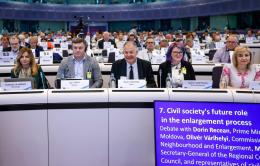
The European Economic and Social Committee (EESC) welcomed representatives from civil society organisations from candidate countries at its July plenary session, announcing the initiative to appoint Honorary Enlargement Members and invite them to participate in the daily advisory work of the Committee
In a plenary debate with Commission Vice President Dubravka Šuica, the EESC asked the Commission to present a new strategy for older persons before the end of the current mandate
Organizzazioni della società civile, persone fisiche e imprese possono presentare fin da ora i loro progetti senza scopo di lucro per partecipare al premio del CESE dedicato al sostegno del benessere mentale dei cittadini europei
Young people should receive the same pay and social security benefits as other workers, including the same minimum wages, which is still not the case in all Member States
Nella sessione plenaria di giugno il Comitato economico e sociale europeo (CESE) ha raccomandato di operare una riforma nel mercato dell'energia elettrica dell'UE liberalizzando, ove possibile, e regolamentando, ove necessario. Bisogna dare la massima priorità alla garanzia dell'accessibilità economica dell'approvvigionamento energetico di base tramite prezzi calmierati.
On 12 June, the EESC launched its first event on fighting disinformation, kick-starting an awareness-raising campaign ahead of the European Parliament elections in 2024. The event, which gathered prominent figures from the civil society, media and youth organisations, highlighted the need for a more bottom-up approach with a strong civil society network countering disinformation on the ground. However, political awareness and solid legislative framework together with independent media are also crucial in the fight against fake news penetration.
Lack of media coverage, problems in reaching citizens, financial difficulties and uncertain political follow-up were among the ECI issues discussed at the European Economic and Social Committee.
Per la prima volta dalla pandemia, sabato 6 maggio il Comitato economico e sociale europeo (CESE) ha aperto le porte al pubblico per celebrare l'Europa e discutere del futuro dell'Unione europea.
On the World Day for Safety and Health at Work 2023, the European Economic and Social Committee is calling upon the European Commission to adopt binding legislation to prevent psychosocial risks in the workplace. There is mounting evidence pointing to the fact that precarious work is taking a significant toll on workers' mental health. The call was made during yesterday’s EESC’s plenary session, chaired for the first time by the newly elected president, Oliver Röpke.
In an opinion debated and adopted in plenary, the European Economic and Social Committee renewed its request for reform of the European Semester. The opinion, which draws on a recent consultation undertaken in 23 different Member States, calls for an EU regulation to make civil society involvement in the cycle mandatory.