Fundamental Rights and the Rule of Law

This page is also available in:

The EU is not only a common market; it is a union of common values that shape the European identity. These values are set out in the Treaty on the European Union and also include the rights, freedoms and principles laid out in the Charter of Fundamental Rights: the "indivisible, universal values of human dignity, freedom, equality and solidarity; [the Union] is based on the principles of democracy and the rule of law. It places the individual at the heart of its activities, by establishing the citizenship of the Union and by creating an area of freedom, security and justice."

The Charter brings together into a single text all the personal, civic, political, economic and social rights enjoyed by people within the EU and apply to the EU institutions and Member States when they implement EU law.

The EESC is very active in the promotion of fundamental rights, the rule of law and democracy, and especially in the fight against discrimination based on race, ethnic origin, disability or gender. In 2018, it established the Group on Fundamental Rights and the Rule of Law to further expand analysis of the situation across Europe and promote a constructive dialogue amongst all stakeholders.

  • Is Europe condemned to keep pushing the same rule of law boulder uphill, only to watch it roll back down? At the EESC's seventh annual conference on fundamental rights and the rule of law, civil society and EU representatives called for stronger follow-up to identified shortcomings, as the EU considers a closer link between rule of law recommendations and funding under its next long-term budget.

  • On 26-27 October 2026, the Fundamental Rights and Rule of Law (FRRL) Group of the European Economic and Social Committee (EESC) concluded a two-day visit to Madrid. 

    This visit formed part of the second cycle of FRRL Group country visits (2024-2029), following the first cycle (2018-2024). The methodology of the Group combines exchanges with civil society, national authorities, and representatives of the European Commission, ensuring that all relevant perspectives are heard.

  • Published in
    14 pages

    Rapport sur la visite en République Tchèque – 5-6 mai 2026 et observations des autorités sur le rapport

    Le rapport relaie les points de vue de la société civile tchèque sur la liberté d’association, la liberté de réunion et l’État de droit. Ce rapport a été communiqué aux autorités du la République Tchèque, qui ont ensuite transmis leur réponse.

  • Published in
    19 pages

    Rapport sur la visite au Danemark – 9-10 juin 2026 et observations des autorités sur le rapport

    Le rapport relaie les points de vue de la société civile danoise sur la liberté d’association, la liberté de réunion et l’État de droit. Ce rapport a été communiqué aux autorités du Danemark, qui ont ensuite transmis leur réponse.

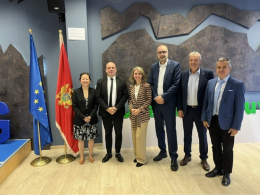
  • On 7-8 October 2026, the Fundamental Rights and Rule of Law (FRRL) Group of the European Economic and Social Committee (EESC) concluded a two-day visit to Montenegro. At the same time the EESC President also had several High-level meetings in Montenegro.

  • Published in
    20 pages

    Rapport sur la visite en Macédoine du Nord – 10-11 mars 2026 et observations des autorités sur le rapport

    Le rapport relaie les points de vue de la société civile de la Macédoine du Nord sur la liberté d’association, la liberté de réunion et l’État de droit. Ce rapport a été communiqué aux autorités de la Macédoine du Nord, qui ont ensuite transmis leur réponse.

  • In the context of repeated allegations of deterioration of rights in Türkiye, including growing restrictions on civic space for civil society and citizens, as well as weakening judicial safeguards and respect for international human rights obligations, the FRRL Group wants to express its deep concerns that Turkish comedian Deniz Göktaş was sentenced to 11 months and 20 days on 28 September. 

  • Audition publique
    Event type
    Public hearing

    Cette audition publique visera à examiner la menace croissante de la cyberviolence fondée sur le genre à l'égard des femmes et des filles, y compris la pornographie 'deepfake', le partage d'images non consensuel et les applications de 'nudification'. Ces abus sont utilisés pour intimider, réduire au silence et discréditer les femmes dans la vie publique et professionnelle.

  • En cours (updated on 23/07/2026) - Bureau decision date: 14/07/2026
    Référence
    SOC/879-EESC
    Session plénière
    611
    -
  • Published in
    90 pages

    Rapport sur la visite en Bulgarie – 11 et 12 décembre 2025 et observations des autorités sur le rapport

    Le rapport relaie les points de vue de la société civile bulgare sur la liberté d’association, la liberté de réunion et l’État de droit. Ce rapport a été communiqué aux autorités bulgares, qui ont ensuite transmis leur réponse.