
European Economic
and Social Committee
Organised civil society calls for stronger EU action on living and working conditions at Warsaw meeting

President Oliver Röpke participated in the annual meeting of the Presidents and Secretaries General of the Economic and Social Councils of the EU and the European Economic and Social Committee, held in Warsaw on 25 and 26 June 2025. Organised under the Polish Presidency of the Council of the EU, the event brought together ESCs from thirteen Member States and focused on the role of organised civil society in addressing urgent challenges around housing and working conditions.
In his opening speech, President Röpke underlined the importance of inclusive policy shaping. "Dialogue is not a luxury. It is a necessity. Organised civil society is not on the sidelines. It is at the heart of shaping fairer and more inclusive conditions for all Europeans."
Focus on housing and employment
The meeting addressed three interconnected areas: economic governance, housing, and employment. There was strong consensus on the need for more investment in affordable and sustainable housing, especially for youth, older people and low-income families. Participants also stressed the importance of national and EU strategies to combat homelessness and called for fiscal reform to make social investment more viable.
On employment, the councils highlighted rising labour shortages, job insecurity and the need for more support for mental health and work-life balance. They called for greater investment in training, better alignment of education systems with labour market needs, and stronger collective bargaining frameworks.
Interview with Newseria
Following the opening session, the President gave an interview to Edyta Piotrowska of Newseria, where he expressed appreciation for the platform the meeting provided, noting that organised civil society is ready to contribute to concrete solutions. He stressed that better housing and fair working conditions are not luxuries but foundations of social cohesion and called for stronger EU action to make them a reality across the Union.
Shared conclusions and next steps
The meeting concluded with the endorsement of joint conclusions by the EESC and national councils. These will be sent to the EU institutions in the coming weeks. The document calls for increased cooperation between Member States and EU bodies, improved housing policies, and stronger action on working conditions through social dialogue.
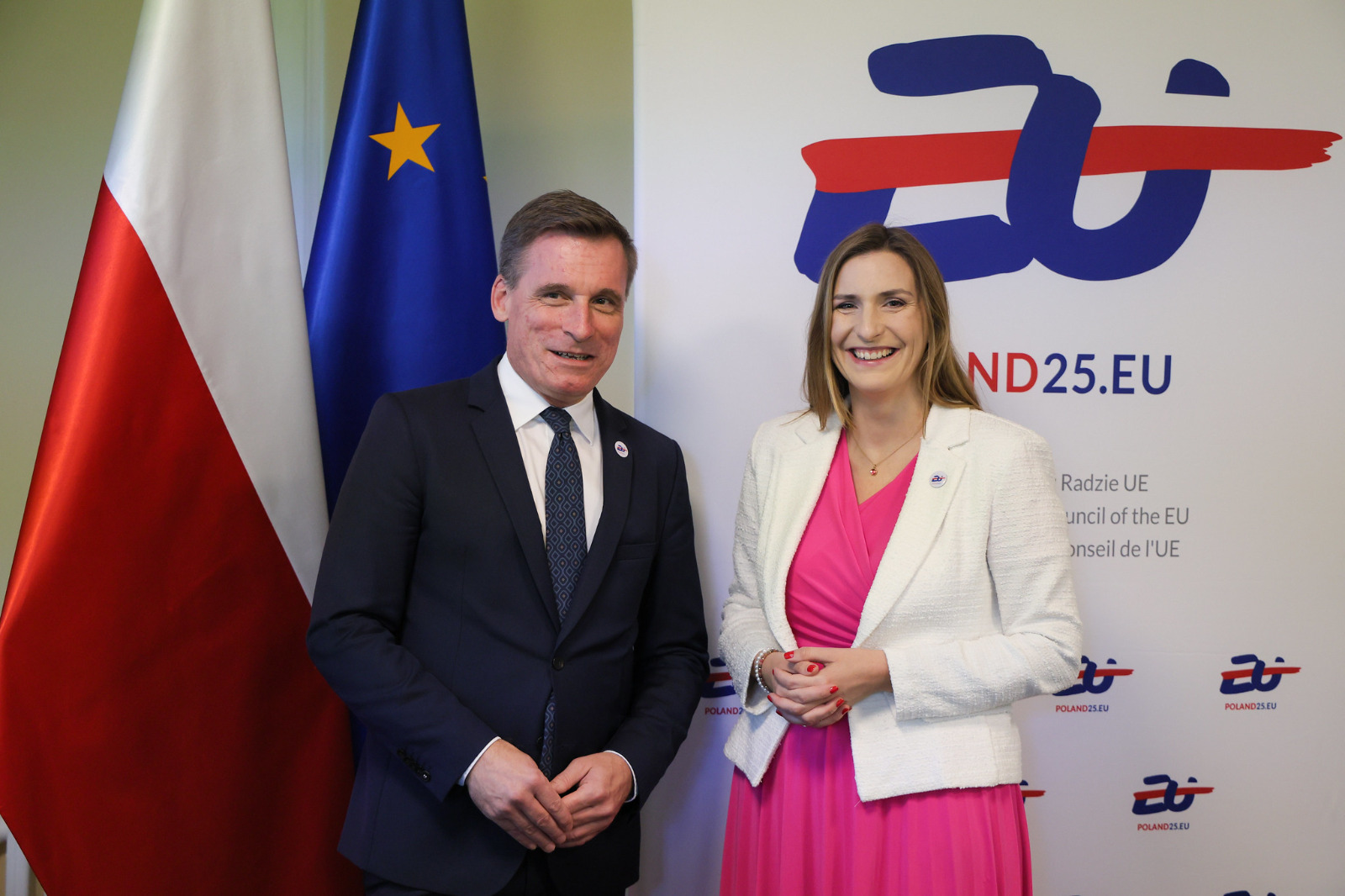
The Polish Presidency highlighted the scale and significance of civil society involvement during its term. Nearly 400 events were organised with the active participation of civil society organisations. Their contributions played a key role in shaping the Presidency’s agenda and advancing progress at the European level.
The National Economic and Social Council of Ireland proposed to host the 2026 meeting in Dublin. The offer was warmly welcomed by Röpke, who reaffirmed the EESC’s commitment to working with national councils to ensure no one is left behind.
Recommended for you
Tetyana Ogarkova: "The day of victory will come but it will not bring normality back"
Agenda
On 24 February 2022, the lives of millions of Ukrainians were turned upside down. Now, when we say the word "victory", we expect that day to be the way things used to be. A normal day, a day of peace…
Lutte contre la précarité énergétique: garantir un approvisionnement énergétique abordable devrait figurer au premier rang des priorités politiques des pays de l’UE
News
Alors que le nombre de ménages qui sont dans l’incapacité de chauffer leur logement va vraisemblablement augmenter dans l’Union, avec une inflation annuelle de l’énergie qui dépasse 40 %, il y a…
Les zones rurales ont le potentiel pour produire davantage de résultats
News
Si l’attrait de la vie à la campagne s’est accru ces toutes dernières années, de nombreuses zones rurales de l’Union restent confrontées à un certain nombre de problèmes qui dissuadent les personnes…
Pour lutter contre le sans-abrisme, il faut une approche globale et une action collective
News
Le 7 octobre dernier, le Comité économique et social européen (CESE) a tenu une conférence sur le sans-abrisme et les moyens d’éradiquer ce phénomène d’ici à 2030, en appliquant le principe du…
Un rôle actif pour la société civile organisée est essentiel à la résilience de l’Union européenne
News
Le CESE a tenu un débat en session plénière sur l’importance croissante de la société civile organisée et des villes pour mettre l’Europe en capacité de faire face aux chocs asymétriques et aux…