At its September plenary in Brussels, the European Economic and Social Committee (EESC) brought together EU leaders, civil society, youth groups, and international partners in the European Parliament hemicycle to mark the end of President Oliver Röpke’s 2023-2025 term of office. The ceremony celebrated the Committee’s recent achievements and looked ahead to the challenges set to shape Europe’s future.
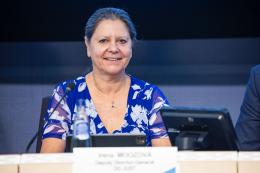
La directrice exécutive de l’entité des Nations unies pour l’égalité des sexes et l’autonomisation de la femme (ONU Femmes) et le président du Comité économique et social européen (CESE) ont signé aujourd’hui une déclaration commune essentielle en marge du Forum politique de haut niveau (FPHN) à New York. La déclaration réaffirme l’engagement commun et sans faille des deux institutions en faveur de la promotion de l’égalité entre les hommes et les femmes et de l’autonomisation des femmes et des filles dans le monde entier.
Lors d’un forum sur l’élargissement organisé par le Comité économique et social européen (CESE), les représentants de la société civile des pays candidats ont salué l’initiative lancée par le Comité en faveur des membres de pays candidats à l’adhésion. Cette initiative constitue un outil essentiel pour façonner le processus d’intégration européenne de leurs pays et pour renforcer le soutien du public à l’adhésion à l’Union européenne (UE).
The European Economic and Social Committee (EESC) reaffirmed its commitment to youth inclusion in policymaking during a high-level debate with European Commissioner Glenn Micallef at the EESC plenary session. The debate brought together EU stakeholders, youth representatives and institutional leaders to discuss the future of youth participation, intergenerational fairness and the practical tools that make youth mainstreaming a reality, chief among them the EESC Youth Test.
Lors de sa session plénière de juillet, le Comité économique et social européen (CESE) a organisé un débat sur les priorités politiques de l’actuelle présidence du Conseil de l’Union européenne (UE), dont les principaux objectifs consistent à s’attacher à ce que l’UE assume ses responsabilités en matière de sécurité et renforce sa compétitivité.
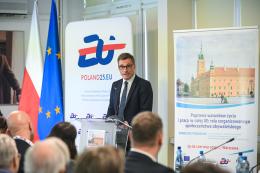
The annual meeting of the Presidents and Secretaries-General of the Economic and Social Councils (ESCs) of the EU and the European Economic and Social Committee (EESC) took place in Warsaw on 25–26 June 2025. This year's discussions focused on one of the EU’s most urgent priorities for citizens: improving living and working conditions across the Union.
The finalists for the 2025 EU Organic Awards have been officially announced, celebrating outstanding contributions to organic production and consumption across the European Union. Twenty-one finalists from thirteen EU countries have been selected across seven categories. Winners will be revealed at the official ceremony in Brussels on 23 September 2025, during the EU Organic Day celebrations.
At its June plenary, the European Economic and Social Committee (EESC) adopted a resolution contributing to the European Commission’s 2026 work programme. It outlines a wide-ranging set of proposals to boost competitiveness, strengthen strategic autonomy, enhance social cohesion and renew democratic life.
At its June plenary session, the European Economic and Social Committee (EESC) became the first EU body to formally endorse the Declaration of principles for a gender-equal society, backing the European Commission’s Roadmap for Women’s Rights. This move sends a clear signal that urgent, concrete action is needed to close persistent gender gaps.
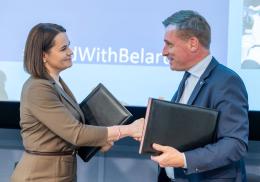
Par la signature d’un protocole d’accord avec les forces démocratiques biélorussiennes, représentées par Mme Sviatlana Tsikhanowskaïa, le Comité économique et social européen (CESE) réaffirme son soutien sans faille à une Biélorussie démocratique. Ce nouveau protocole formalise une nouvelle phase de collaboration structurée ayant pour visée d’appuyer la société civile biélorussienne et ses aspirations européennes.