L’Europe doit s’efforcer d’investir dans sa défense et sa sécurité, tout en préservant son modèle social. Des compromis financiers seront peut-être nécessaires en raison des défis géopolitiques qui nous obligent à repenser les priorités européennes. Le Comité économique et social européen (CESE) peut faciliter un dialogue social honnête sur les nouveaux besoins de l’UE.
The European Economic and Social Committee (EESC) has adopted an opinion on the European Commission’s mid-term review of cohesion policy 2021–2027, urging the EU to adapt to evolving priorities while staying true to the policy’s founding aim: to reduce regional disparities. During a plenary debate with Commission Vice-President Raffaele Fitto, the EESC called for greater flexibility, more effective funding tools, fair access for all regions and a more robust EU budget to support long-term investment.
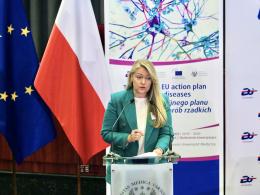
Une conférence de haut niveau organisée à Varsovie sous les auspices de la présidence polonaise du Conseil de l’Union européenne a souligné l’importance d’adopter un cadre global pour une action publique à l’échelle européenne en matière de maladies rares.
The European Economic and Social Committee (EESC), the European Training Foundation (ETF), and Eurofound are joining forces on 3 April in Tirana for a high-level event focused on promoting effective social dialogue and collaboration in the Western Balkans. Titled Enhancing quality of work and life through effective social dialogue in the Western Balkans, the by-invitation-only event will bring together key stakeholders to explore challenges and opportunities in the region’s labour markets and social policies.
As the European Union undergoes significant transformation, the European Economic and Social Committee (EESC) plays a key role in evaluating and influencing the European Commission’s 2025 Work Programme, which outlines the EU’s legislative and policy priorities. During its plenary session, the EESC discussed these priorities with Valdis Dombrovskis, European Commissioner for Economy and Productivity, emphasising economic resilience, social equity and sustainability.
Lors d’un débat avec Michael McGrath, commissaire à la démocratie, le CESE a mis en garde contre les tentatives en cours de réduire au silence, discréditer et affaiblir les défenseurs de la démocratie, de la justice sociale et des droits fondamentaux, et s’est dit disposé à s’allier à la Commission pour protéger la société civile européenne et lutter contre la polarisation.
The European Economic and Social Committee (EESC) welcomes the European Commission’s proposal to strengthen the bargaining position of farmers in food chains. However, it calls for more ambition in the Common Agricultural Policy.
La responsabilité de renforcer la cohésion pour lever les clivages qui divisent les sociétés incombe aux organisations de la société civile, qui ont la force et la motivation de protéger les espaces civiques et démocratiques. Tel est le principal message envoyé lors de la Semaine de la société civile, organisée pour la deuxième année par le Comité économique et social européen (CESE) afin d’examiner la tendance alarmante à la polarisation généralisée des sociétés de l’UE.
L’initiative citoyenne européenne s’est avérée être un outil efficace pour intensifier la participation des citoyens à la vie politique de l’Union, mais il est nécessaire de la renforcer, pour parer au risque qu’elle ne s’éloigne des préoccupations des citoyens européens ordinaires.