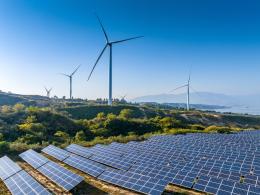
Il est ressorti d’une conférence tenue en Estonie que l’hydrogène bas carbone constitue un élément essentiel de la transition énergétique, qui peut faire de celle-ci une réalité, moyennant toutefois des infrastructures et des financements pour développer son potentiel.
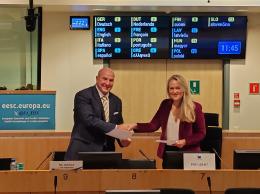
Dans une déclaration commune signée le 14 novembre 2024, Baiba Miltoviča, présidente de la section spécialisée «Transports, énergie, infrastructures et société de l’information» (TEN) du CESE, et Andres Jaadla, rapporteur d’un avis du CdR sur le logement, pressent les institutions européennes de prendre d’urgence des mesures pour sortir l’Union européenne de la crise actuelle du logement. Ils se félicitent également de la nomination d’un commissaire européen à l’énergie et au logement, qui sera chargé de présenter le tout premier plan européen pour des logements abordables.
The European Economic and Social Committee (EESC) calls on the EU to champion an innovative, sustainable, and circular bioeconomy model that aligns with the European Green Deal and climate goals. In its recent opinion, Aligning the circular economy and the bioeconomy at the EU and national level,adopted at the October plenary, the EESC outlines how a strong bioeconomy strategy can amplify Europe’s economic and ecological benefits, strengthen resilience, and support a fair transition for all.
The European Economic and Social Committee (EESC) has adopted an opinion that aims to safeguard citizens' fundamental rights in the midst of the implementation of AI technology in public services.
The European Economic and Social Committee (EESC) fully supports the objectives of the European Green Deal. However, it urgently calls for attention to be paid to the negative aspects of the deal, which have affected employment and EU competitiveness.
The European Economic and Social Committee (EESC) has laid out a bold vision for transforming the EU's agriculture, fisheries, and food systems to better withstand crises while ensuring sustainability. The opinion "Fostering sustainable and resilient food systems in times of crisis," requested by the Hungarian presidency, was adopted at the October plenary.
The European Economic and Social Committee (EESC) supports efforts to develop a more human-centred and future-proof industrial ecosystem. At the same time, it calls for an in-depth debate on Industry 5.0 and its social and economic implications.
Recycling and the recovery of strategic raw materials from waste should be stepped up, says the European Economic and Social Committee (EESC). This would reduce the waste going to landfill, but would also help the EU to lessen its dependence on third countries for raw materials.
In two new opinions adopted at its October plenary session, the European Economic and Social Committee (EESC) calls for key reforms to strengthen the competitiveness of the EU economy, based on sustainable growth and a balanced fiscal approach to supporting green and digital investments. The EESC underlines the key role of NextGenerationEU, the EU’s COVID-19 recovery instrument, and calls for similar instruments to be included in the new long-term EU budget.
Lors de sa session plénière d’octobre, le CESE a adopté un avis qui souligne que les collectivités locales, en particulier celles qui sont voisines d’installations nucléaires, et les organisations nationales de la société civile devraient avoir voix au chapitre et recevoir le soutien nécessaire à cet effet. La charge liée au traitement des déchets nucléaires ne saurait être laissée aux générations futures, raison pour laquelle il convient de recourir dans toute la mesure du possible aux techniques de recyclage.