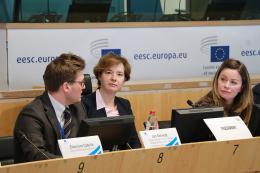
Geopolitical tensions, growing fragmentation and rising costs are reshaping international markets and business decisions. Supply chains are no longer optimised for the lowest price, but for reliability and resilience. While the World Trade Organisation (WTO) remains a cornerstone of the global trading system, many decisive developments are increasingly taking place outside its framework, endangering the international rules-based system and stability of our economies.
Minutes of the 233rd meeting of the REX Section - 23 February 2026
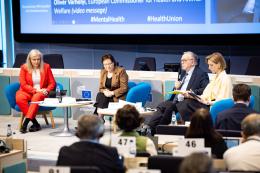
The European Economic and Social Committee (EESC) placed the emotional well-being of children and young people at the centre of its March plenary session, holding a major three-part flagship debate that brought together EU institutions, international organisations, civil society and youth representatives. Speakers urged a coordinated push for prevention, safer digital spaces and stronger community support to protect young people’s emotional well-being.
This public hearing will gather policymakers and civil society stakeholders to discuss on how public banks can better support EU industrial policy, innovation, the scale-up of EU businesses, and, ultimately, economic growth.
Event in the framework of the Cyprus Presidency of the Council of the EU
Event type
Conference
Location
Centre for Social Activities and Welfare of the Municipality of Larnaca, Faneromenis 62
Larnaca
Cyprus
Registration for in-person participation will close on Thursday 16 April 2026, noon. Streaming will be available on this page on the day of the event. Prior registration for the streaming is not required.