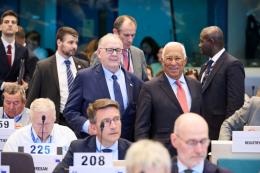
The current geopolitical context is shining a harsh spotlight on the price that Europe is paying for its dependency on third countries, as European Council President António Costa said at a plenary debate with the European Economic and Social Committee (EESC). The EU must boost its competitiveness to be able to deliver tangible results in terms of jobs, income and affordable housing.
The European Economic and Social Committee (EESC) placed fundamental rights, dignity and equality at the centre of its April plenary session, holding a high‑level debate on Union of Equality: Advancing LGBTIQ+ rights and banning conversion practices. The debate was followed by the adoption of two key EESC opinions calling for stronger enforcement of the EU’s LGBTIQ+ Equality Strategy 2026–2030 and a comprehensive EU‑wide ban on conversion practices.
The Industrial Accelerator Act (IAA) aims to support industrial transformation, strengthen strategic value chains, and accelerate the deployment of low-carbon technologies, but its implications and impact across different sectors raise concerns.
considers that the EU has a timely opportunity to accelerate the transition towards a circular bioeconomy, combining resource efficiency, sustainable biomass use and industrial competitiveness, building on upcoming legislative initiatives such as the Circular Economy Act and the EU Bioeconomy Strategy;
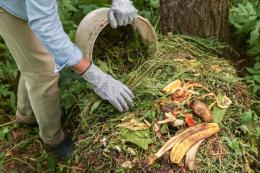
stresses that efficient use of resources requires applying the waste hierarchy and lifecycle thinking, prioritising prevention, reuse and material efficiency, while recognising both technical and biological circular pathways to achieve the best environmental outcomes;
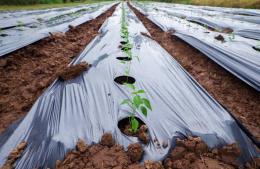
highlights the potential of nature-based biodegradable materials to reduce pollution, support regional economies and strengthen EU competitiveness, while calling for greater regulatory coherence—particularly in the implementation of packaging legislation—to avoid barriers and enable innovation.
highlights that Europe faces increasing pressure as a resource-constrained and import-dependent continent, and stresses the need to strengthen the European Green Deal and Sustainable Development Goals, ensuring coherence with circular economy, climate and biodiversity objectives to support a sustainable and competitive bioeconomy within planetary boundaries;
recalls that EU leadership in the bioeconomy requires clear, strict and enforceable principles on the sourcing and use of biomass, applied across supply chains and equally to domestic and imported materials, while addressing unfair competition from underpriced fossil-based resources;
reminds that the bioeconomy must fully respect the waste hierarchy by prioritising the reduction of resource use, ensuring that biomass is used efficiently and sustainably, and avoiding short-term applications that do not contribute to circularity.