Newsletter Info

EESC info

European Economic and Social Committee A bridge between Europe and organised civil society

JULY 2023 | EN

GENERATE NEWSLETTER PDF

Available Languages:

  • BG
  • CS
  • DA
  • DE
  • EL
  • EN
  • ES
  • ET
  • FI
  • FR
  • GA
  • HR
  • HU
  • IT
  • LT
  • LV
  • MT
  • NL
  • PL
  • PT
  • RO
  • SK
  • SL
  • SV
Editorial
United for European Values

United for European Values

Dear Readers,

We have had since 2022 a Communication Strategy, which is now entering its implementation stages.

A lot of developments are taking place, from empowering our expression to understanding and responding to our stakeholders and partners in their "style".


Read more in all languages

Dear readers,

We have had since 2022 a Communication Strategy, which is now entering its implementation stages.

A lot of developments are taking place, from empowering our expression to understanding and responding to our stakeholders and partners in their "style".

In these times of polycrisis with low levels of social and economic predictability, we have to communicate the senses of our purpose and mission with enhanced clarity and empathy. And emotional intelligence, when needed.

We must play a new role in preparing for the 2024 European elections in order to consolidate democratic values and to make Europe stronger and more resilient against authoritarian menaces.

Also, in connection with the 65th anniversary of the EESC we will enhance our legacy and improve present and future EU legislation for EU social partners, civil society and EU citizens.

Until the summer developments are revealed, enjoy the break and be prepared for the future!

Aurel Laurenţiu Plosceanu
EESC vice-president for communication


Diary Dates

18 July 2023, Brussels

Youth Climate and Sustainability Round Table #4

20-21 September 2023, Brussels

EESC plenary session

10-11 October 2023, Bilbao, Spain

Conference on Rare diseases and the European reference networks

To the point

In this column, Pietro De Lotto, president of the Consultative Commission on Industrial Change, shares the EESC's views on the "Blue Deal", one of the hot issues driving the EU agenda, and on why we need a comprehensive water strategy.

Read more in all languages

In this column, Pietro De Lotto, president of the Consultative Commission on Industrial Change, shares the EESC's views on the "Blue Deal", one of the hot issues driving the EU agenda, and on why we need a comprehensive water strategy.

Faced with water challenges, the EU needs a Blue Deal

By Pietro De Lotto, President of the Consultative Commission on Industrial Change

Water is a human right, and fundamental to all aspects of life. Access to water has been something we have taken for granted in Europe for a long time.

Read more in all languages

By Pietro De Lotto, President of the Consultative Commission on Industrial Change

Water is a human right, and fundamental to all aspects of life. Access to water has been something we have taken for granted in Europe for a long time.

But the world is facing a water crisis, and our continent is no exception. Recent reports show that the European Union is not on track to achieve the sustainable development goals related to water. Around 30% of the EU population is affected by some form of water stress. Last summer saw the worst droughts in Europe in 500 years. Water poverty - lack of access to good quality and affordable water and sanitation - is an everyday experience for millions of EU citizens today.  

The EESC strongly believes that the EU's current approach to water policies is fragmented and does not address the challenges we face sufficiently. It is high time for a change of scale, as was the case with climate policies some years ago. This is why the EESC has chosen water as its cross-cutting package this year and will be calling for an EU Blue Deal, a comprehensive strategy to address all water challenges ahead. Water is vital, and can therefore no longer be treated as one of the pillars of the EU Green Deal - it deserves a policy of its own.

Across its sections, the EESC is working on a set of own-initiative opinions, covering economic, social, environmental and geopolitical aspects of water challenges. We examine the impacts of these on agriculture, industries, infrastructures and sustainable consumption, highlight the need for foresight in the EU on water and the need for reliable data, and call for adequate financing.  

We believe that there is a need to integrate water better into all EU policies, including EU industrial policy. The EU also has the opportunity to position itself as a frontrunner in this area. To support the transformation of our society, Europe must become the world leader in water-efficient technologies. These are an important part of the solution for all society, making agriculture and public and private consumption more water-efficient and sustainable and contributing to our competitiveness and to future employment.

Our aim is to have the European Commission adopt water as one of its political priorities for the next mandate. On 26 October, the EESC will adopt its call for an EU Blue Deal and deliver concrete and meaningful proposals for a new European water strategy.

But we cannot achieve this all alone. The EESC is working closely with key stakeholders and institutions for an ambitious water policy for Europe. We will monitor the take-up of our proposals and make sure that there will be follow-up actions in the months and years to come on this topic, which directly impacts the lives of each and every citizen. I invite you to join us, to support us, in our call for an EU Blue Deal.

One question to...

One question to

In our "One question to…" column, we ask EESC members to highlight the importance of a report they have been working on.

This time we talked to Giuseppe Guerini, EESC member and rapporteur for the opinion on Review of the Bank crisis management and deposit insurance framework. The opinion is scheduled for adoption at the July plenary session.


Read more in all languages

In our "One question to …" column, we ask EESC members to highlight the importance of a report they have been working on.

This time we talked to Giuseppe Guerini, EESC member and rapporteur for the opinion on Review of the Bank crisis management and deposit insurance framework. The opinion is scheduled for adoption at the July plenary session.


Giuseppe Guerini: "The European Deposit Guarantee Scheme is key to complete the Banking Union"

EESC info: "What is the Committee's position on the Eurogroup's proposal and subsequent legislative proposals on banking union? In particular, what is it stance on crisis management and deposit guarantees?"

Read more in all languages

EESC info: "What is the Committee's position on the Eurogroup's proposal and subsequent legislative proposals on banking union? In particular, what is it stance on crisis management and deposit guarantees?"

Giuseppe Guerini: On 18 April 2023, the European Commission published the Bank crisis management and deposit insurance package, which aims to broaden the scope of application of the resolution regime to small and medium-sized banks, preserve financial stability, protect taxpayers and depositors, and support the real economy and its competitiveness.

The EESC opinion, which was requested by the Spanish presidency of the Council, endorses the Commission proposal, but stresses the need to strike a balance between flexibility and predictability to respond to banking crises.

As stated in the opinion, "recent banking crises have shown the importance of a speedy and flexible action, and a swift transfer of a troubled bank to a healthy one.

The EESC is concerned about expanding the scope of the resolution and its capital requirements to smaller and local banks, as this could impact these entities negatively.

Henceforth, a beefed-up public interest assessment, which will determine if the resolution regime is applicable, must be properly balanced and guarantee a proportional application, while minimising uncertainty as to how a crisis would be solved.

A pragmatic and flexible procedure should be achieved in terms of the regulatory approach, the tools to be used and the speed of execution, the implications of the response, the cooperation among stakeholders, and the nature of the resources used. This will prevent damage to the interest of smaller banks, especially local banks, and better protect the economic ecosystem where they operate.

The European Deposit Guarantee Scheme is essential for the completion of the Banking Union, and the use of the Deposit Guarantee Scheme and the Single Resolution Fund are steps towards it. However, until this is a reality, inefficiencies will continue to exist and markets will still be fragmented.

The surprise guest

The surprise guest

In the "Surprise guest" column we welcome distinguished personalities from science, journalism, culture and other spheres of public life. Our guest this month is Boško Savković, a Serbian writer, journalist and film/documentary producer. He is co-chair of the EU-Serbia Joint Consultative Committee, a body operating under the EESC's External Relations Section to promote closer ties between civil society in the EU and Serbia, and a member of the Presidency of Serbia's Employers' Union.

Read more in all languages

In the "Surprise guest" column we welcome distinguished personalities from science, journalism, culture and other spheres of public life. Our guest this month is Boško Savković, a Serbian writer, journalist and film/documentary producer. He is co-chair of the EU-Serbia Joint Consultative Committee, a body operating under the EESC's External Relations Section to promote closer ties between civil society in the EU and Serbia, and a member of the Presidency of Serbia's Employers' Union.

Mr Savković has worked and published in many newspapers of former Yugoslav and later Serbia. During the war in the ex-Yugoslavia, he was a war reporter for the Intervju newspaper and TV Politika. Revolted by media censorship, he left Serbian media in 1993 and established his marketing agency "Alternative", which is still successfully operating in TV production, publishing, and graphic and web design. In 1996 he founded the satirical newspaper "Our Sow", which became a symbol of resistance to the regime of Slobodan Milosevic.

He is the author of three books: "Fake fighters run a lap of honour" (1989), which was made into a documentary; "Rape of the Seventh Force" (1994) and "Mysteries that Changed Serbia" (1997).

He also worked on the promotion of Miroslav's Gospel, which is part of Serbia's rich medieval cultural heritage, and produced the film "In the Beginning was the Word". In 2008, he founded the Silafest film festival. He has been awarded numerous prizes in Serbia and at International Film Festivals, including the Gold Dolphin for Best Documentary at the 2011 Cannes film festival for "Winter Fruits", and the Cannes Silver Dolphin in 2013 for his film "After the Bombs".

During a visit to the EESC in June this year, Mr Savković personally thanked the Committee's Presidency for its support when he was accused of calling for a violent overthrow of the Serbian Constitution. A few days after the EESC's appeal he was released.

  • Boško Savković will attend the EESC July plenary session, where he will take part in a debate on "The future role of civil society in the enlargement process" along with a number of other guest speakers from the candidate countries.


Boško Savković: "I am no Che Guevara, I am just one of the citizens asking for a safe country"

EESC info: Tell us about the incident which led to your arrest and imprisonment

Boško Savković: On 4 June 2023, a huge demonstration was organised in Belgrade following two massacres which saw 18 people killed, half of them children. People believe that it was a political demonstration. On the contrary, it was a peaceful demonstration and one of the biggest. People were asking for the minister in charge of the police and the members of the Electronic Media Regulatory Authority to be replaced.

Read more in all languages

EESC info: Tell us about the incident which led to your arrest and imprisonment

Boško Savković: On 4 June 2023, a huge demonstration was organised in Belgrade following two massacres which saw 18 people killed, half of them children. People believe that it was a political demonstration. On the contrary, it was a peaceful demonstration and one of the biggest. People were asking for the minister in charge of the police and the members of the Electronic Media Regulatory Authority to be replaced.

I was carrying a banner, which on one side said "PINK STINK" (PINK is the biggest progovernment media group in Serbia) and on the other "Vultures and hyenas walk together for a safe Serbia", a hint to the motto "vultures and hyenas for safety" used by some government members in Parliament. Someone came and tied a puppet to the banner that looked like a hung Mr Vučić. The puppet was soon taken down but photos had already been shared on social media and were going viral.

Although I was not in the pictures, I was accused of this act and charged with attempting to subvert the constitutional order in Serbia, which carries some 30 years in jail. Four policemen came to arrest me. "Why four?", I asked. "Two for you and two for the puppet", they said. But they found neither the banner, which had been left in my friend's car, nor the puppet.

Your detention mobilised a great number of people in Serbia and Brussels. As you are the co-chair of the EESC's EU-Serbia Joint Consultative Committee , the EESC sent out a tweet demanding your immediate release which reached 27k views. How do you feel about that?

I was in jail, I didn't have any idea what was happening. The only thing I know is that my wife called the EESC Vice-President, Mr Plosceanu, and the EESC responded immediately, and so did the media, civil society and NGOs in my country. People know me in Serbia and they all reacted, organising demonstrations outside the Palace of Justice. But at that time, I was unaware of all this. When I was given 30 days in prison, I started thinking about all the things that could happen to me and the years I would spend in jail. You can't think clearly in these moments, even though I tried to use my background as a lawyer to think rationally.

I think people understood that I was not guilty, through the pressure from the EU institutions, from NGOs, from people, so they talked to the Serbian authorities and the result was a plea bargain to be signed with the prosecution in exchange for a conditional sentence of six months, with a general admission of guilt on my part.

I am no Che Guevara, I am just one of the citizens protesting in the street, asking for a safe country. Nothing else. I am a writer, a journalist and a film maker. But we are in a situation where members of the government speak against actors, media people, journalists and citizens, and people have taken to the streets because they don't want to listen to this hate speech in Parliament anymore.

Do you think that this incident could have an impact on Serbian society?

It could, but we need free and independent media. There are only a few independent media outlets in Belgrade. Outside the capital, in smaller towns and cities, people don't know what is going on. This is an information war and a war against fake news from the government, who present a totally distorted image of the demonstrations and people's demands.

Do you think this event will leave a lasting mark on you?

I want to leave this incident behind me because jail is no place for decent people. I don't want to fear because one moment of fear can take away ten moments of your life. But fear is an instinct we all share. I am not a revolutionary, I am just a man who wants to have the right to speak up. Do I ask for too much? These are just some of the basic values of the European Union: free justice, free speech and the right to think for oneself.

What kind of support do you expect from the Committee and the EU?

Even simply following the situation in Serbia and monitoring the developments every day is good enough. It is also important for the EU institutions to follow the media and the news coming from Serbia. Support at any level is really useful for us. For example, two journalists are in jail right now, so sending political and diplomatic messages to our government would help. My idea is Europe, a European way for Serbia.

Can you tell us a bit more about the situation of the media in Serbia?

We have some independent media, but they are not enough and don't reach the whole country. I also think that we don't have enough media to promote the EU, and that is why the idea of Europe is not popular in Serbia. Archimedes, the Greek philosopher, once said "Give me a place to stand and I will move the world". I will say: "Give me media for two months and I will change the country". There is no doubt that a Serbia with free media would bring about change. We now have some groups for the protection of journalists, but we don't need to protect journalists as if they were endangered animals.

And what about the new generation of journalists?

They are doing their job with great passion and dedication. They just believe that impartial information and non-partisan news are good for a country and for society. I know that they turn down job offers from TV channels that pay well, where all they would have to do is toe the line. But there are some things that money cannot buy, like dignity. This young generation has dignity. They are trying to build a professional career in a way that when they wake up in the morning they can look at themselves in the mirror with no shame.

How do you see the future of Serbia?

Serbia's future is in the EU. My daughter is 23. I am sure that one day she will be living in the European Union, but I don't feel the same for myself. I don't know how long it will take for Serbia to meet EU standards or if the EU will set new standards for Serbia. But I think that there is only one road for Serbia to take.

I was at a conference in Thessaloniki 20 years ago where participants said that they needed Serbia in the EU because Serbia is the only land that can connect the Western Balkans to the EU. And it is true, because you can travel by ship, by train, by airplane and now there is a connection via Bulgaria and Romania. So, the destiny of the Western Balkans is inextricably tied to the destiny of Serbia. Somehow, no other country in the region could be a part of the EU on its own.

EESC News

Electricity market reform - EESC proposes "E-Facility" to buy and sell power

The Committee supports the creation of a future electricity market based on a public-private partnership and a mix of regulation and liberalisation.

Read more in all languages

The Committee supports the creation of a future electricity market based on a public-private partnership and a mix of regulation and liberalisation.

At the heart of this model is a government-established "E-facility", which buys electricity from producers and sells it to suppliers of household customers, SMEs, Citizen Energy Communities and large-scale consumers and, where appropriate and possible, to other countries.

The "E-facility" would run tenders and sign long-term contracts of various types with electricity producers, such as power purchase agreements (PPA), contracts for difference (CfD) and cost+ contracts.

This is the key reform that should be carried out in the EU's current electricity market, according to the EESC opinion drafted by Jan Dirx and Christophe Quarez, adopted at the plenary session on 14 June 2023.

"The Committee has long advocated for a reform of the EU's electricity market," said Mr Dirx. "We think the way forward is a hybrid model based on the principle of 'liberalise where possible and regulate where necessary'".

"Energy is a key building block of our economic and social system and should not be treated like any other commodity. Energy is a central part of public services," stressed Mr Quarez. "With our proposal, the government is responsible for delivering the objectives of sustainability, affordability and security of supply." (mp)

Energy crisis – Future measures must be tailored, targeted and transition-proof

The EESC recommends establishing a "Green triple-T" standard to assess the impact of future interventions on the EU's economic system.

Read more in all languages

The EESC recommends establishing a "Green triple-T" standard to assess the impact of future interventions on the EU's economic system.

Building on the recommendations of the European Central Bank (ECB), the Committee stresses that untargeted price measures would only prolong high inflation in the long run. If not phased out in time, they might compromise the ECB's ability to achieve its medium-term objectives and result in monetary tightening for longer than desirable.

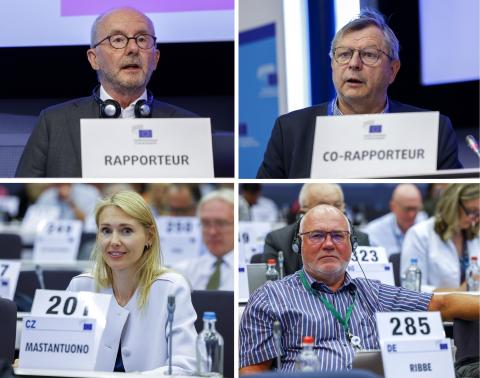
According to the EESC opinion on The impact of the energy crisis on the European economy, drawn up by Alena Mastantuono and adopted at the June plenary session, the European Union needs to move beyond emergency fiscal responses and focus on structural changes that will enable it to move away from fossil fuels more quickly.

"We firmly believe that the lessons learned from the negative effects of the energy crisis on the EU's economic performance must be reflected in the next policy steps," said Ms Mastantuono.

To ensure it stays competitive, the EU needs reliable and secure supplies of affordable energy based on an integrated energy market with a large share of clean energy that is resilient and can withstand disruptions and shocks. (mp)


The EU should ban unrepairable products

The EESC has suggested that products which cannot be repaired should not be marketed in Europe, and that merely requiring producers to inform consumers when a product cannot be fixed is not enough.

Read more in all languages

The EESC has suggested that products which cannot be repaired should not be marketed in Europe, and that merely requiring producers to inform consumers when a product cannot be fixed is not enough.

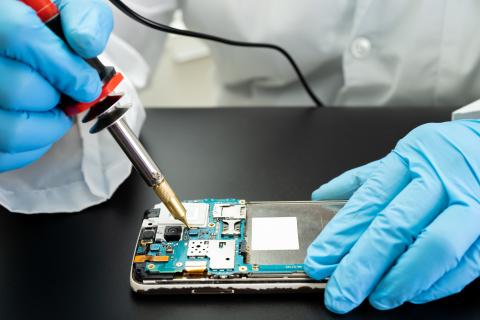
The EU's new Right to Repair is a great step forward on paper, says the EESC. But a consumer wishing to fix a smart phone or an appliance that breaks down rather than buying a new one could stumble into a number of practical hurdles that will make it too hard or expensive to have it repaired, if not downright impossible. The EU should go further and ask Member States to ban any practice of intentionally making products unrepairable.

There can be no right to repair if objects are designed to be unrepairable, says Thierry Libaert, rapporteur for the EESC opinion.

In its opinion on the proposed directive, the EESC suggests a number of practical measures to beef it up and ensure that the repair option remains viable and affordable beyond the guarantee period, also from a business perspective. Proposals include:

  • offering incentives to opt for repair – even  simple ones, like offering an extension of the guarantee period when a product is repaired during that time;
  • allowing innovative solutions such as 3D printing to produce spare parts, or refurbishing, which involves giving products a second life, or developing a market for second-hand parts;
  • launching training and retraining programmes to teach repairers the skills they need for a job which used to be based on mechanics, but is now increasingly confronted with connected devices. More generally, there is a need to address the shortage of repair workers in Europe.

The repair sector creates value and high-quality jobs in Europe which are hard to delocalise. It generates 404 jobs per 10 000 tonnes of repaired materials – 50 times more than disposing of these materials as waste, which has become the predominant trend in recent years. 65% of consumers dispose of their faulty products, and this translates into 7.5 million tons of waste a year.

Greenwashing: no to claims based on carbon offsets

Like the Right to Repair Directive, the Green Claims Directive is intended to empower Europeans to buy sustainably. Consumers are more and more willing to do so, but have very little trust in producers' claims about the environmental performance of their products and services and are confused by the multitude of green labels on the market.

The new directive should make environmental labels and claims credible and trustworthy, but it has weaknesses. In the EESC's view, it should ban claims based on offsetting, since several consumer authorities and a number of court cases have found that claims such as "climate-neutral" or "plastic-compensated" based on counterbalancing emissions by investing in climate solutions projects (such as planting trees) are scientifically incorrect and always misleading to consumers.

The EESC also flags up the need for consistent legislation. There is a danger that what's pushed out the door comes back through the window, says EESC rapporteur Angelo Pagliara. The Green Claims Directive should be a model for a minimum level of protection against greenwashing. Its requirements should be reflected in sectoral legislation, so that there is no way to opt out, find loopholes or weaken consumer protection.

Read the EESC opinion on the Right to Repair package
Read the EESC opinion on the Green Claims Directive


The EESC proposes the creation of a European Food Policy Council

The Council would help address the many crises currently affecting food systems and anticipate future challenges that will arise with the accession of Ukraine to the EU.

Read more in all languages

The Council would help address the many crises currently affecting food systems and anticipate future challenges that will arise with the accession of Ukraine to the EU.

The European Union's food system is currently facing multiple crises as it tackles environmental, climate, health and social challenges. The prospect of Ukraine's future accession also raises issues and is expected to require a CAP reform. To best face these changes, the EESC is proposing the creation of a European Food Policy Council (EFPC), ahead of the forthcoming Framework for Sustainable Food Systems.

The EFPC can help accelerate the convergence of EU, national and local policies. Most importantly, it can help improve EU food policy. The rapporteur for the opinion, Piroska Kállay, said: "We strongly believe that inclusiveness and dialogue among various food system stakeholders and authorities will increase the quality and legitimacy of food policy-making and that a European Food Policy Council is a tool to achieve a more integrated, participatory and democratic approach to food governance".

The EESC is prepared to host the EFPC and would like to see it modelled on the very successful European Circular Economy Stakeholder Platform, which it co-owns with the Commission.

The EFPC would promote sustainable and balanced development of both rural and urban areas. It would include academics, scientists, representatives from the food supply chain, civil society organisations, educators, youth representatives and EU policy-makers. Over time, it would also include representatives from local, regional and national authorities, ensuring an equal participation of Member State representatives at EU level. (ks)

Young people: discriminated against solely based on their age

Young people should receive the same pay and social security benefits as other workers, including the same minimum wage, which is still not the case in all Member States.

Read more in all languages

Young people should receive the same pay and social security benefits as other workers, including the same minimum wage, which is still not the case in all Member States.

According to the European Economic and Social Committee, the EU and the Member States need to put an end to discriminatory practices against young people, such as low youth minimum wages and unpaid traineeships. Young people also need to be more directly involved in designing policies, especially those affecting them.

These demands, put forward by the EESC in two opinions adopted at its plenary session on 15 June, coincided with the European Parliament's adoption of a report on quality traineeships which called on the Commission to propose a directive that would make it illegal to employ interns and trainees for longer periods without pay.

"Too many young people subject to lower minimum wages or undertaking unpaid internships have a negative experience of the labour market. We cannot be blind to this reality in Member States today," said Michael McLoughlin, rapporteur of the opinion The equal treatment of young people in the labour market.

"Young people have the right to be listened to and to act," said Nicoletta Merlo, rapporteur of the opinion Cooperation on youth, requested by the Spanish Presidency of the Council of the EU, which aims to give fresh impetus to the EU youth agenda.

"Their participation must be encouraged throughout the whole process of designing, implementing and following up public policies, which have to stress the importance of the role of youth organisations and take into consideration the new informal ways in which young people get together, cooperate and engage in dialogue," Ms Merlo said.

The EESC has asked for young people to have the same working conditions and employment benefits, social security and social assistance as other workers. Under the equal pay for equal work principle, they should be entitled to the same minimum wage as other workers. This is currently not the case in some countries that have established separate, lower minimum wages for youth, despite the fact that 1 in 4 young workers are minimum-wage earners, compared to 1 in 10 other workers.

The EESC's new president, Oliver Röpke, has put great emphasis on strengthening dialogue with young people and involving them in policymaking.

In a discussion with youth organisations held during the plenary session, Mr Röpke said: "We are committed to a more inclusive model that puts young people at the heart of the engagement process. I have made it my political priority to open the doors of the EESC to young people, and I don't intend to stop at EU borders. I want to reach out to youth organisations from candidate countries as well."

The discussion saw the participation of representatives of the European Youth Forum, Generation Climate Europe and ReDI School of Digital Integration. (ll)


EESC backs calls to prioritise fundamental social rights over economic freedoms under EU law

The EESC has asked the Spanish Presidency of the Council of the EU to push forward with the proposal to make the Social Progress Protocol a binding legal instrument to help strengthen and preserve social rights in Europe

Read more in all languages

The EESC has asked the Spanish Presidency of the Council of the EU to push forward with the proposal to make the Social Progress Protocol a binding legal instrument to help strengthen and preserve social rights in Europe

The European Economic and Social Committee has voiced its agreement with recent proposals to amend the EU Treaties to include the Social Progress Protocol (SPP), an instrument which would give priority to fundamental social rights over economic freedoms in the event of conflict and in EU policies. This would ensure legal certainty and equal treatment of workers in all Member States.

In an exploratory opinion requested by the Spanish Presidency of the Council of the EU, the EESC said the SPP would secure social progress by promoting and safeguarding the highest standards of social rights in all EU policies and preventing backsliding.

The opinion was adopted at the EESC plenary session on 15 June by 132 votes to 102 with 7 abstentions. However, it did not receive the backing of the EESC Employers' Group, which tabled a counter-opinion opposing the inclusion of the SPP in primary EU law. The counter-opinion was rejected but received more than a quarter of the votes cast and is therefore appended to the main opinion.

The rapporteur for the opinion, Maria del Carmen Barrera Chamorro, said: "The SPP would uphold the principle of not backsliding in respect of social standards. It would prevent any policies being adopted which would run counter to the interests of people, which is what happened with the austerity policies."

"Now, more than ever, we have to be on our guard to make sure that we defend social and civic rights and that they are uniformly applied across the entire EU. They have to be treated as more important than the free market, especially in cases of dispute," said co-rapporteur Diego Dutto.

The EESC said it saw the Spanish Presidency as a great opportunity to push forward the proposal. It encouraged the presidency to convene a meeting of the Council of Social Affairs Ministers to agree on a joint proposal and plan a specific EU summit to adopt it.

The SPP was first proposed by the European Trade Union Confederation (ETUC) in 2008 in response to European Court of Justice rulings in favour of economic freedoms. The call was taken up again last year in the conclusions of the Conference on the Future of Europe (CoFoE), with the European Parliament adopting a resolution calling for the SPP to be incorporated into the EU Treaties.

The EESC Employers' Group said that they believed that social and economic rights should enjoy the same level of protection and that the SPP would be in serious danger of undermining the very basis for social progress. (ll)


Global HIV epidemic persists: Urgent need for community engagement and anti-stigma efforts

HIV prevention, continued care and eradicating discrimination remain critical to tackle the ongoing global public health crisis, says EESC

Read more in all languages

HIV prevention, continued care and eradicating discrimination remain critical to tackle the ongoing global public health crisis, says EESC

The European Economic and Social Committee is backing the efforts of the Spanish Presidency of the Council of the EU to put the goal of eliminating HIV-related stigma and discrimination by 2030 high on the EU agenda.

In an opinion adopted at its plenary session in June, the EESC said it agreed that European institutions should issue a high-level declaration on ending the stigma and discrimination against people infected with HIV, which should be presented to the European Parliament on 1 December 2023.

The EESC also called for a more ambitious new target for preventing and controlling the spread of the HIV infection, aiming for coverage levels as high as 95% for testing, treatment, and virological suppression across all nations.

"We are now trying to understand the situation with HIV after a gap of more than a decade. The issue has been neglected for too long," said rapporteur of the opinion Pietro Barbieri. "What we need is the greatest possible commitment, we need to work together with communities, doctors, schools and in the workplace."

It is important to ensure equal opportunities for individuals with HIV in the workplace, including flexible hours and extended leave. Awareness campaigns, training, and information dissemination in schools, civil society, and youth organisations are essential to combat stigma and discrimination.

"Despite the decline in the number of HIV diagnoses, we must not let our guard down. In order to control the spread of infection, early diagnosis, early start of treatment and continuity in care are essential," said co-rapporteur of the opinion, Nicoletta Merlo.

HIV continues to be a major public health issue all over the world, still affecting more than 36 million people, of which 2.3 million live in the WHO European Region. Eastern regions of the European continent are particularly affected, with Ukraine having the second-largest AIDS epidemic in the Eastern Europe and Central Asia region.

HIV primarily affects marginalised groups such as drug users, men who have sex with men, transgender individuals, migrants, and prisoners. Stigma and fear deter individuals from seeking services, resulting in delayed testing and diagnoses, with over 50% occurring at an advanced stage. This increases transmission risk and preventable deaths, especially in areas lacking adequate AIDS treatment.

Comprehensive strategies integrating care and prevention, along with innovative testing methods like rapid and self-testing, are crucial to combat the epidemic. (ll)

EESC suggests innovative revenue streams for the EU budget

The EESC provided its policy recommendations for a new generation of own resources for the EU budget. In a new opinion, the Committee urges the Commission to further develop the Framework for Income Taxation (BEFIT) and suggests considering an EU-wide tax on digital transactions and a levy targeting companies which import products from third-country manufacturers that do not ensure proper protection of workers.

Read more in all languages

The EESC provided its policy recommendations for a new generation of own resources for the EU budget. In a new opinion, the Committee urges the Commission to further develop the Framework for Income Taxation (BEFIT) and suggests considering an EU-wide tax on digital transactions and a levy targeting companies which import products from third-country manufacturers that do not ensure proper protection of workers.

Revenue sources for the EU budget need to be rethought in the context of post-pandemic budgetary pressures faced by Member States, the ongoing international tensions and the current higher interest rate environment.

"We advocate for a strong EU budget, providing the EU with the necessary financial means to achieve its political ambitions, and for moving to more genuine own resources that would help steer us away from the focus on net balances, which is detrimental to European integration", rapporteur Philip von Brockdorff commented during the opinion adoption in plenary. A Commission proposal for an adjusted set of own resources, based on corporate taxation and released on 20 June 2023, completed the three other proposals for new sources of revenue that were presented in 2021 but have not yet been adopted by the Council.

As a prerequisite to proposing an own resource based on corporate taxation, the EESC urges the Commission to develop the Business in Europe: Framework for Income Taxation (BEFIT) tool as soon as possible. The Committee also deems it reasonable to explore the possibility of including financial services in BEFIT or of working on a global financial transaction tax (FTT) as proposed by the European Parliament. Further to this, the EESC asks the Commission to consider an additional levy targeting EU companies importing products from third-country manufacturers that do not ensure proper protection of workers. (tk)

Civil society and independent media are the firewall against disinformation

A strong civil society network is one of the key weapons to fight disinformation on the ground, together with political awareness, a solid legislative framework and independent media.

Read more in all languages

A strong civil society network is one of the key weapons to fight disinformation on the ground, together with political awareness, a solid legislative framework and independent media.

On 12 June, the EESC launched the first of a series of events meant to raise awareness about disinformation ahead of the 2024 European elections. The event took place in Sofia, following the finding that 55% of Bulgarians think they are often exposed to disinformation and fake news.

What emerged from discussions is that civil society organisations, government and independent media must work together to set up a firewall against information manipulation, which is gaining more and more ground as a weapon of foreign interference.

The rise of disinformation is a particularly worrying trend in view of the forthcoming European elections. EESC President Oliver Röpke underlined that: "Disinformation, now also complemented by war propaganda, is used to blur reality and seed discord, making an objective debate impossible. Next year, the biggest democratic moment in Europe will take place. European citizens have the right to make their choice based on factual information, and I think we must all contribute to a campaign where there is no place for disinformation and foreign interference."

Kiril Valchev, director general at the Bulgarian News Agency (BTA) argued that the best weapon to fight disinformation is information, not censorship. "We should let information circulate freely and make it accessible to the public".

Alice Stollmeyer founder and executive Director at "Defend Democracy" said: "Civil societies on their own can't defeat disinformation. What they can do is organise and take action together by pushing big tech companies who own social media platforms for more accountability".

The discussion also demonstrated the critical role of independent media in debunking disinformation. Independent Russian journalist, Tikhon Dzyadko, editor-in-chief of TV Rain, said that independent media were working hard to provide evidence and fact-based information to Russians in the fight against Russian propaganda. "The Russian government does not want people to know the truth". (at)

New publication: The EESC's activities during the Spanish Presidency

The European Economic and Social Committee will play a major role during the new Spanish presidency of the Council of the European Union, as it has been asked by the presidency to prepare a considerable number of opinions.

Read more in all languages

The European Economic and Social Committee will play a major role during the new Spanish presidency of the Council of the European Union, as it has been asked by the presidency to prepare a considerable number of opinions.

The Spanish presidency of the Council of the European Union comes at a critical juncture for Europe. The time has come for the EU to become more resilient.

Europe has been confronted with a plethora of crises over the last few years: this has shone a spotlight on our vulnerability and made it clear that the European Union needs to develop its strategic autonomy. Open strategic autonomy, a key component which will add resilience to the EU's objectives of a greener, more digital and social Europe, is therefore at the heart of the Spanish presidency's priorities.

In June 2024, EU citizens will participate in the biggest exercise in democracy to take place on this continent: the European Parliament elections. With this in mind, it is paramount to ensure that the safeguards needed to defend our democracy are in place: this is particularly relevant when it comes to combating foreign interference, so that the elections are not fertile ground for disinformation, propaganda and cyberattacks.

The European Economic and Social Committee will be working closely with the Spanish presidency, conveying the views of European civil society organisations. At the Spanish presidency's request, the EESC will prepare no fewer than 22 exploratory opinions on a raft of issues, including the green and digital transitions, the social dimension of the EU and the future of Europe. These in-depth and ambitious opinions, together with a number of events and conferences on topics such as energy poverty, rare diseases and the social economy, will enable the EESC to contribute to the Spanish presidency's debates.

The Committee looks forward to working with the presidency to deliver a more resilient, more inclusive and safer Europe, a Europe which works for its people and is up to the challenges which lie ahead.

This brochure is available in EN, FR, DE and ES on the EESC internet site. (af)

News from the Groups

EESC Employers' Group gets solid backing for counter opinion on Social Progress Protocol

By the EESC Employers' Group

At the EESC's June Plenary session, the Employers' Group put forward a counter-opinion to strongly voice its concern about adding a Social Progress Protocol that would fundamentally change the nature and functioning of the EU social market economy.

Read more in all languages

By the EESC Employers' Group

At the EESC's June Plenary session, the Employers' Group put forward a counter-opinion to strongly voice its concern about adding a Social Progress Protocol that would fundamentally change the nature and functioning of the EU social market economy.

The ETUC proposal for a Social Progress Protocol would introduce the primacy of social, labour and trade union rights not only in their interaction with economic freedoms, but also in relation to the internal market, competition and any other policy measures of the Union, including areas such as economic governance, trade, digitalisation and the environment.

"Giving a general priority to social rights over economic freedoms would be as wrong as giving general priority to economic freedoms," said Stefano Mallia, President of the Employers' Group.

A Social Progress Protocol, would indeed call for a Treaty change, putting an end to the existing balance between social rights and the four freedoms underpinning the internal market - a balance currently ensured by several provisions of the Treaties.

"Rather than the EU coming up with a Social Progress Protocol which would distort the balance between economic freedoms and social rights, and interfere with well-defined EU and national competences, it is important to progress towards a shared understanding of what constitutes the added value of EU, in terms of employment and social policies", said Mariya Mincheva, EESC Employers' Group member, who introduced the counter opinion.

The EESC Employers' Group counter-opinion, which has obtained 101 votes in favour, 133 against with 7 abstentions, is appended to the EESC opinion.

Opinion SOC/756 "Social Progress Protocol" (Counter-opinion attached): https://europa.eu/!jdMJ7Q

  • See also "EESC backs calls to prioritise fundamental social rights over economic freedoms under EU law" (above).

A Social Progress Protocol for working people

By the EESC Workers Group

A Social Progress Protocol enshrined in EU fundamental law would meet workers' demands for robust social protection from Europe.

Read more in all languages

By the EESC's Workers Group

A Social Progress Protocol enshrined in EU fundamental law would meet workers' demands for robust social protection from Europe.

Decent wages and proper working conditions are a basic right for everyone. Securing this fundamental right is essential for society to progress. It is the cornerstone of a sound social market economy that seeks progress in economic and competitiveness gains while establishing social policies to secure social progress and democratic values. The two cannot be separated: this was one of the main concerns expressed by workers and citizens during the Conference on the Future of Europe.

When people hear about the single market, they ask how it will improve their everyday lives. They want robust social protection, a minimum income, stronger social dialogue and collective bargaining, equal opportunities in the job market - which includes putting an end to social dumping - fair tax policies, affordable housing and gender equality.

A social progress protocol would provide a tangible answer to those practical concerns, promoting and protecting the highest standards of social rights and preventing any backsliding or circumvention.

At a time when human rights, the rule of law and democracy are increasingly being challenged, the EU needs to reaffirm its commitment to these fundamental values by placing Social Europe at the heart of its ambitions. People need the assurance that their social rights will not be set aside in favour of economic and market dynamics, as was the case with the austerity measures taken in response to the 2008 financial crisis.

  • See also "EESC backs calls to prioritise fundamental social rights over economic freedoms under EU law" (above)

The ageing population in Europe: an essential topic for EU policy-making

By Miguel Ángel Cabra de Luna, member of the EESC Civil Society Organisations' Group

A new EESC opinion puts forward a number of policy proposals on how best to respond to a growing challenge: the huge increase in the number of older people in Europe.

Read more in all languages

By Miguel Ángel Cabra de Luna, member of the EESC Civil Society Organisations' Group

A new EESC opinion puts forward a number of policy proposals on how best to respond to a growing challenge: the huge increase in the number of older people in Europe.

According to recent data and projections, the number of over 65s in Europe is expected to increase by 44.7% between 2019 and 2050. The COVID-19 pandemic highlighted the strategic challenge that an ageing population represents for the EU and the need to reform and improve long-term care for the elderly. So now that the World Health Organisation has declared the end of the COVID-19 emergency, and with the EU in talks on a new strategy on ageing, it is the perfect time to reflect on the effects the pandemic has had on the older population.

Through its opinion Towards a new care model for older people: learning from COVID-19, for which I was rapporteur, the EESC highlighted, already in January 2022, the urgent need for a paradigm shift and a change in the way we invest in care for older people, making several recommendations. Now a new opinion to be put to the vote at the EESC plenary in July elaborates on these issues.

The opinion stresses the need to adopt a new European strategy on older people aimed at protecting their rights and ensuring their full participation in society and the economy. It also suggests creating a European agency for older people, declaring a European year of older persons, adopting a UN convention on the rights of older people, and updating or establishing laws on supporting older people and protecting their autonomy. Furthermore, we highlight the need for more funding and universal access to care, and for development and training in innovative technologies that promote autonomy and care, and measures to ensure adequate training for carers.

It is important to take older people into consideration in European policies, and to ensure accessible and quality long-term care for them and their families, in order to ensure their autonomy, well-being and dignity. It is also important that the approach to age and older people not be seen as a burden or an expense for society, but rather as a part of the social and economic benefits that will be achieved by ensuring the greater active inclusion of older people.

The EESC will continue to contribute with its ideas and proposals in this regard. Its members believe that it should be a priority subject in view of the 2024 European elections. The credibility of the European social model is at stake, particularly in a Europe that is ageing faster than any other region on the planet.

Editors

Ewa Haczyk-Plumley (editor-in-chief)
Daniela Marangoni (dm)
 

Contributors to this issue

Millie Tsoumani (mt)
Daniela Marangoni (dm)
Daniela Vincenti (dv)
Ewa Haczyk-Plumley (ehp)
Giorgia Battiato (gb)
Jasmin Kloetzing (jk)
Katerina Serifi (ks)
Katharina Radler (kr)
Laura Lui (ll)
Marco Pezzani (mp)
Margarita Gavanas (mg)
Margarida Reis (mr)
Pablo Ribera Paya (prp)
Aude François (af)
Thomas Kersten (tk)

Coordination

Agata Berdys (ab)
Giorgia Battiato (gb)


Address

European Economic and Social Committee
Jacques Delors Building,
99 Rue Belliard,
B-1040 Brussels, Belgium
Tel. (+32 2) 546.94.76
Email: eescinfo@eesc.europa.eu

EESC info is published nine times a year during EESC plenary sessions. EESC info is available in 24 languages
EESC info is not an official record of the EESC’s proceedings; for this, please refer to the Official Journal of the European Union or to the Committee’s other publications.
Reproduction permitted if EESC info is mentioned as the source and a link  is sent to the editor.
 

July 2023
08/2023

Follow us

  • Facebook
  • Twitter
  • LinkedIn
  • Instagram