
European Economic
and Social Committee
Speech by Diversity Europe Group President Séamus Boland on the new EU-UK Trade and Cooperation Agreement
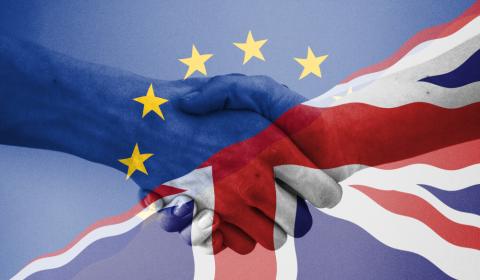
EESC plenary debate with Michel Barnier, Head of the European Commission's Task Force for Relations with the United Kingdom
Dear Mr Barnier,
The last time you came to speak at the Committee, I referred to you as the 'mid-wife' to Brexit. I don't know whether you appreciated the comment, but you probably remember it! But now that the child prodigy has finally arrived, we will all have to adapt.
As an Irishman myself, obviously the Brexit process and final deal have been of extreme importance. And I would like to thank you personally, for having successfully delivered a deal under such difficult circumstances. I would also like to thank you for having defended so vehemently the red lines regarding the island of Ireland and the integrity of Irish Peace Process. As you have always said Mr Barnier: This negotiation (should) not only be financial, legal or technical…it (should) first be human, social and economic
.
There was never going to be a 'good' Brexit deal for the EU. You have repeated this yourself on numerous occasions. It would definitely have been much worse without a deal in December. But whichever way we look at it, Brexit has led to a loss of one quarter of EU defence spending and to a reduction of the EU's GDP equivalent to 18 of its 27 Member States. Squabbles over the diplomatic status of the EU Ambassador to the UK, reveal that we already entering a phase of strained relations. As was written in a recent article in the 'Economist', the UK will be …a neighbour too small to worry much about, but too big to ignore
.
So although it is true that the UK's departure was orderly, that the UK now has a worse trading access to the EU and that the whole process has largely removed the temptation for other countries to follow – nonetheless, I think that we are all left with a bitter taste.
I believe that those Brexiteers who are honest with themselves about the deal, will also be left feeling rather more disappointed than they would like to admit. The agreement does not cover all of Britain's trade, notably not services, which constitute 80% of Britain's economy. And nowhere is the deal thinner than in financial services, which is at the heart of the British economy. The UK will have less access to EU security and police databases and the necessity for work visas for EU citizens will make life much harder for many UK services business.
There are already backlogs of trucks at the borders in both directions, as if it is a great surprise that there is more red tape when you leave the EU Single Market. Of course, there is also the tricky business of continued high rates of access of EU fishing boats to UK waters…
Without doubt, the EU and the UK will continue to be tied together in negotiations for many years to come. Not least, because the deal foresees five-year reviews of its implementation. Ironically, it now seems that 48% of Britons think the country should have remained in the EU, compared to only 38% who think it should have left. But it is too late to call on the rights of European citizenship or to request 'Civis Romanus sum', as Romans did when travelling from the British Isles to the Middle East.
Work organisation
Downloads
-
Speech by Séamus Boland
Recommended for you
Tetyana Ogarkova: "The day of victory will come but it will not bring normality back"
Agenda
On 24 February 2022, the lives of millions of Ukrainians were turned upside down. Now, when we say the word "victory", we expect that day to be the way things used to be. A normal day, a day of peace…
Lutte contre la précarité énergétique: garantir un approvisionnement énergétique abordable devrait figurer au premier rang des priorités politiques des pays de l’UE
News
Alors que le nombre de ménages qui sont dans l’incapacité de chauffer leur logement va vraisemblablement augmenter dans l’Union, avec une inflation annuelle de l’énergie qui dépasse 40 %, il y a…
Les zones rurales ont le potentiel pour produire davantage de résultats
News
Si l’attrait de la vie à la campagne s’est accru ces toutes dernières années, de nombreuses zones rurales de l’Union restent confrontées à un certain nombre de problèmes qui dissuadent les personnes…
Pour lutter contre le sans-abrisme, il faut une approche globale et une action collective
News
Le 7 octobre dernier, le Comité économique et social européen (CESE) a tenu une conférence sur le sans-abrisme et les moyens d’éradiquer ce phénomène d’ici à 2030, en appliquant le principe du…
Un rôle actif pour la société civile organisée est essentiel à la résilience de l’Union européenne
News
Le CESE a tenu un débat en session plénière sur l’importance croissante de la société civile organisée et des villes pour mettre l’Europe en capacité de faire face aux chocs asymétriques et aux…