
European Economic
and Social Committee
No cloud-free honeymoon for EU-US trade relations with Biden
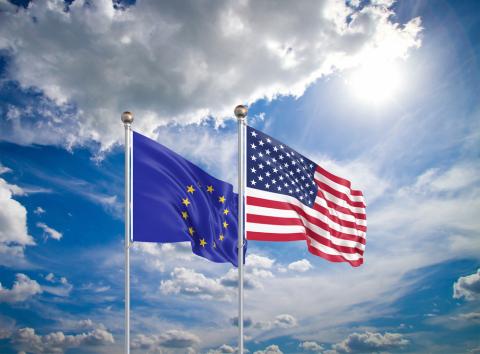
With a sigh of relief, the European Union welcomes Joe Biden as the new US president. The Trump administration systematically tried to undermine EU unity[1], contrary to established US policy since World War II. Europe now looks forward to a fresh start. Mr Biden knows Europe well. He sees the EU as a stable US ally and values European unity.
Nevertheless, there will be no cloud-free honeymoon for EU-US relations after 20 January. The world is increasingly unstable and rough. Autocracy is on the rise. China is a systemic challenger. Russia and Turkey make waves in nearby waters. Africa is looking for direction. The rules-based international system gives way to power games. The US itself has big domestic problems to tackle, as recent events have shown.
The public perception of trade in the US has shifted of late. The high cost of recent random escalations has underlined the value of wise behaviour in trade policy. The effects of trade on labour and the environment will be given more priority with a Democrat in the White House. Additionally, Biden will place EU-US trade relations in a wider context including defence spending and a common approach to China.
In this new setting, the EU and the US must develop a joint vision on how to secure their interests as liberal democratic powers[2], as the foundation for their future common trade agenda. The European Commission already laid out its blueprint in its "New EU-US Agenda for Global Change", presented in December[3].
There is probably no prospect for a comprehensive trade agreement any time soon. The wounds of the Transatlantic Trade and Investment Partnership (TTIP) have not completely healed. Nevertheless, important concrete steps can be made. I will only mention a few.
In the digital field, there are diverging views. But there is also common ground: the huge market power and privileged tax situation of a handful of mega tech companies worry both the EU and the US[4]. The EU must define a common strategy with the US instead of letting its policies be framed as directed against the US. Much can then be achieved.
Progress could also be made on environmental goods, services and standards. A key issue here is the Carbon Border Adjustment Mechanism (CBAM) for selected sectors, a key element of the European Green Deal. It is unlikely that such a mechanism will be clearly compatible with World Trade Organization (WTO) rules. To avoid unpredictable WTO disputes, the EU should develop the CBAM in close consultation with major trade partners. With the US re-entering the Paris Climate Agreement, the circumstances are promising. This could be done in the context of the Transatlantic Green Agenda, proposed by the Commission.
If we turn to subsidies, the WTO issued its final ruling in the long-standing Boeing-Airbus dispute. Now that both parties were authorised to impose compensatory tariffs, negotiations on a settlement should start immediately.
Another pressing issue is to reanimate the WTO. It needs its two legs: litigation and negotiation. Restoring the function of the Appellate Body may be doable. A more complicated matter is how to incorporate into the WTO's market-based system the ever growing Chinese economy, whose internal way of operating clashes with the WTO's system. For meaningful WTO negotiations, China must be at the table.
China is of course the major issue for both the EU and the US. There are many common trade concerns varying from disciplining state-owned enterprises to reciprocal market access and "decoupling" tech communities. The EU and the US agree that China is a systemic competitor. All the same, views diverge on how to tackle these issues. A diversified approach might be instrumental in reaching the common goal. The EU ventured itself on this path by agreeing "in principle" to the Comprehensive Agreement on Investment in December. The two transatlantic partners should also explore the possibilities the OECD could offer to furnish the international economic system for the new Chinese reality.
In 2020, the EU launched its concept of "open strategic autonomy" to strengthen its position in the world. Full autonomy for the EU is neither feasible nor desirable. But the EU should certainly strive for a greater degree of autonomy. In an unfriendly world, the EU must be able to take care of itself in emergencies. In trade policy, this does not mean protectionism. However, in fields such as energy, defence, key technologies and raw materials, the EU must be free from external pressure. It should invest in its own strength. That is the best basis for being a good ally, and a good trade partner, to the US.
Text by Winand Quaedvlieg, Vice-president of the EESC Employers' Group
[1] Anthony Luzzatto Gardner, Stars with stripes; the essential partnership between the European Union and the United States, Palgrave Macmillan, 2020.
[2] Elmar Hellendoorn, The New Atlanticist, https://www.atlanticcouncil.org/uncategorized/how-the-us-and-europe-should-rethink-their-economic-relationship-in-the-biden-years/
[3] https://ec.europa.eu/commission/presscorner/detail/en/ip_20_2279
[4] US sues Facebook for "years-long" abuse of monopoly power, Financial Times, 9 December 2020.
Work organisation
Recommended for you
Tetyana Ogarkova: "The day of victory will come but it will not bring normality back"
Agenda
On 24 February 2022, the lives of millions of Ukrainians were turned upside down. Now, when we say the word "victory", we expect that day to be the way things used to be. A normal day, a day of peace…
Lutte contre la précarité énergétique: garantir un approvisionnement énergétique abordable devrait figurer au premier rang des priorités politiques des pays de l’UE
News
Alors que le nombre de ménages qui sont dans l’incapacité de chauffer leur logement va vraisemblablement augmenter dans l’Union, avec une inflation annuelle de l’énergie qui dépasse 40 %, il y a…
Les zones rurales ont le potentiel pour produire davantage de résultats
News
Si l’attrait de la vie à la campagne s’est accru ces toutes dernières années, de nombreuses zones rurales de l’Union restent confrontées à un certain nombre de problèmes qui dissuadent les personnes…
Pour lutter contre le sans-abrisme, il faut une approche globale et une action collective
News
Le 7 octobre dernier, le Comité économique et social européen (CESE) a tenu une conférence sur le sans-abrisme et les moyens d’éradiquer ce phénomène d’ici à 2030, en appliquant le principe du…
Un rôle actif pour la société civile organisée est essentiel à la résilience de l’Union européenne
News
Le CESE a tenu un débat en session plénière sur l’importance croissante de la société civile organisée et des villes pour mettre l’Europe en capacité de faire face aux chocs asymétriques et aux…