
European Economic
and Social Committee
EU raw materials sector: EESC calls for digitalisation of mining to enhance the resilience of European industrial supply chains
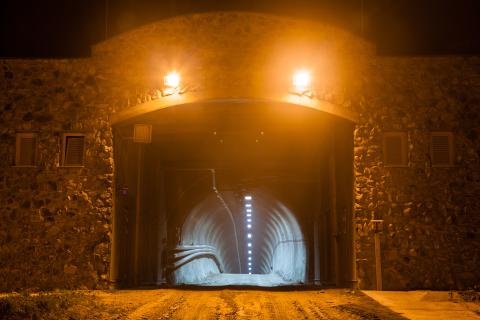
Securing sustainable access to raw materials, including metals, industrial minerals and construction raw materials, and particularly critical raw materials (CRM), is of huge importance to the European economy, where at least 30 million jobs depend on the availability of raw materials. The ongoing COVID-19 pandemic is highlighting the importance of digital transformation.
At its September plenary, and at a crucial moment for the implementation of the Green Deal and the EU recovery plan, the EESC adopted an own-initiative opinion on Digital Mining in Europe: New solutions for the sustainable production of raw materials drafted by Marian Krzaklewski and Hilde Van Laere.
In the opinion, the EESC recommends the digitalisation of the EU raw materials sector as a unique opportunity to enhance the resilience of European industrial supply chains, to improve the environmental performance of the minerals sector and to increase transparency and dialogue with citizens and communities affected by mining activities.
The EESC points out the importance of having a global, comprehensive minerals intelligence network to underpin the digital transformation and informed decision-making at EU level. The Joint Research Centre (JRC) is developing and maintaining a European raw materials information system, which is acknowledged by the EESC.
Considering the challenges posed by digitalisation and the threats to the mineral raw materials industry caused by the COVID-19 pandemic, the EESC is calling on the European Commission to promote a comprehensive dialogue process among the social partners through the existing sectoral social dialogue mechanism. Changes in the nature and composition of the workforce, alongside the implementation of a "work anywhere and anytime" model enabled by the digital transformation will have a significant impact on traditional mining communities in Europe. The EESC considers that this requires a proactive approach based on inclusive social dialogues to help communities understand their underlying capacities and support the transition of their economies toward new areas.
''What will be a major question going forward is how the mining companies use and engage with digital technologies, which have become intertwined with how many companies are dealing with the pandemic. Entire labour forces are having to work virtually and embrace new technologies, while social distancing requirements mean that remote monitoring of operations has never been more necessary
'', conclude Mr. Krzaklewski and Mrs Hilde Van Laere.
The EESC believes that the EU and the Member States must actively support the digital transformation of the EU mining sector. This is a crucial step in increasing the resilience of the EU industry and the raw materials value chain. Mines using digital technologies, including integrated automation, cognitive networks and real-time analytics, are more efficient, clean and safe. Reduced environmental footprints and safer environments are easier to achieve in "smart mines", and this is crucial to getting the "social licence" to operate in Europe.
Work organisation
Recommended for you
Tetyana Ogarkova: "The day of victory will come but it will not bring normality back"
Agenda
On 24 February 2022, the lives of millions of Ukrainians were turned upside down. Now, when we say the word "victory", we expect that day to be the way things used to be. A normal day, a day of peace…
Lutte contre la précarité énergétique: garantir un approvisionnement énergétique abordable devrait figurer au premier rang des priorités politiques des pays de l’UE
News
Alors que le nombre de ménages qui sont dans l’incapacité de chauffer leur logement va vraisemblablement augmenter dans l’Union, avec une inflation annuelle de l’énergie qui dépasse 40 %, il y a…
Les zones rurales ont le potentiel pour produire davantage de résultats
News
Si l’attrait de la vie à la campagne s’est accru ces toutes dernières années, de nombreuses zones rurales de l’Union restent confrontées à un certain nombre de problèmes qui dissuadent les personnes…
Pour lutter contre le sans-abrisme, il faut une approche globale et une action collective
News
Le 7 octobre dernier, le Comité économique et social européen (CESE) a tenu une conférence sur le sans-abrisme et les moyens d’éradiquer ce phénomène d’ici à 2030, en appliquant le principe du…
Un rôle actif pour la société civile organisée est essentiel à la résilience de l’Union européenne
News
Le CESE a tenu un débat en session plénière sur l’importance croissante de la société civile organisée et des villes pour mettre l’Europe en capacité de faire face aux chocs asymétriques et aux…