
European Economic
and Social Committee
President Boland in Moldova: advancing EU accession with civil society at the heart
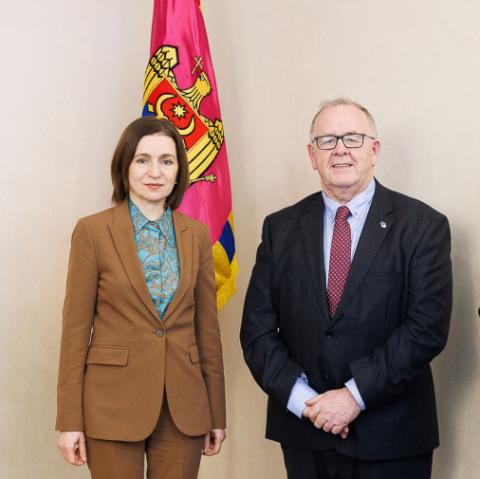
On a mission to Moldova, European Economic and Social Committee (EESC) President Séamus Boland met with Moldova’s political leadership, civil society organisations and young people to reaffirm the EESC’s strong support for the country’s European path. Throughout the visit, he underlined the importance of maintaining reform momentum and ensuring the full and meaningful involvement of civil society in the EU accession process.
“This is my first visit as President to an EU candidate country, which reflects the strategic importance we attach to Moldova’s EU accession,” said President Boland. “Reforms must not only be adopted, but understood, supported and sustainable - and civil society plays a key role in making that happen.”
Sustaining reform momentum at the highest level
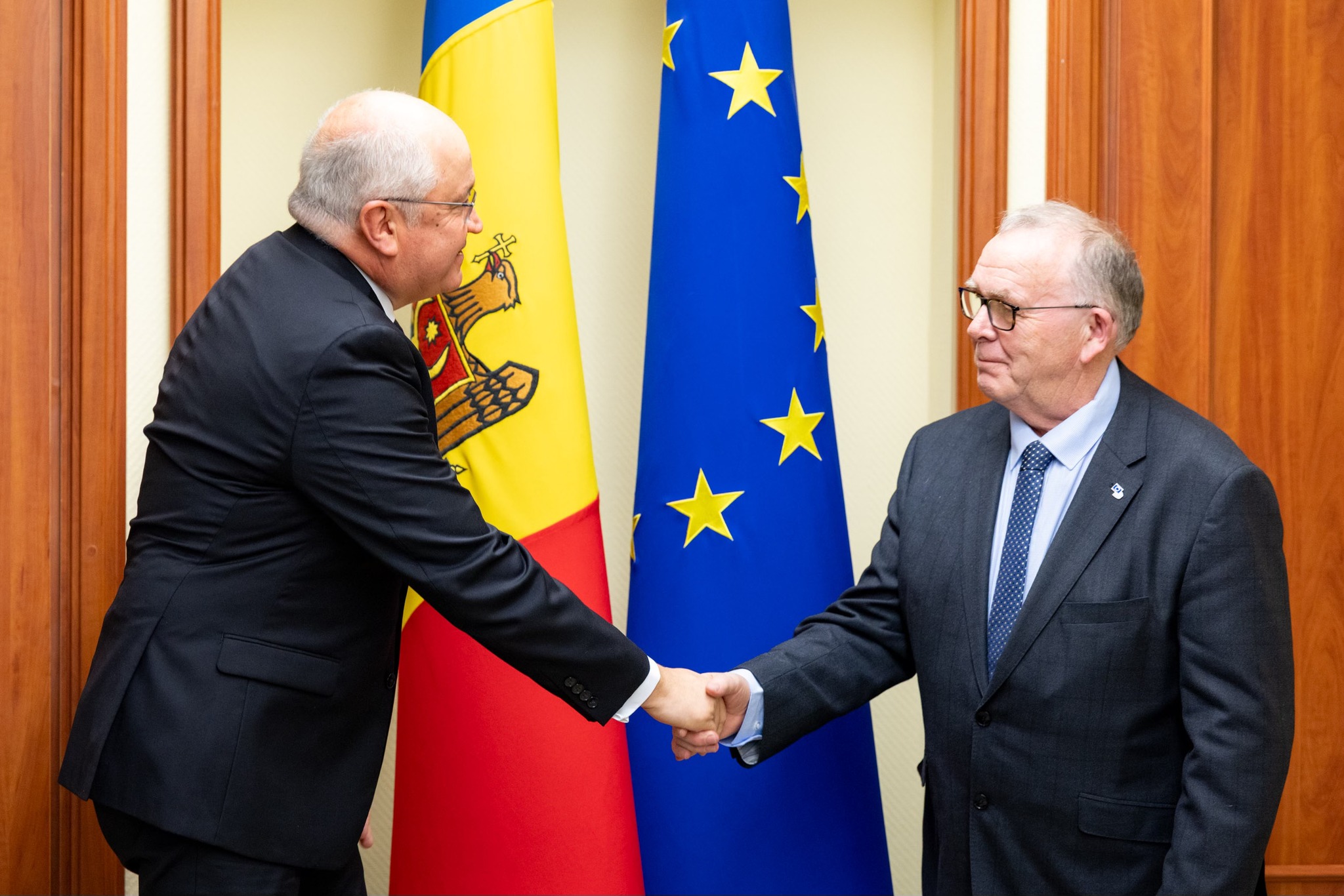 In Chișinău, President Boland held a series of high-level meetings with Moldova’s key institutional leaders, focusing on advancing reforms and strengthening resilience in a complex geopolitical context.
During his meeting with Maia Sandu, President of Moldova, discussions centred on consolidating progress on the EU accession path and ensuring that reforms translate into tangible improvements for citizens. Both sides emphasised the importance of inclusion and citizen engagement in shaping Moldova’s future within the EU.
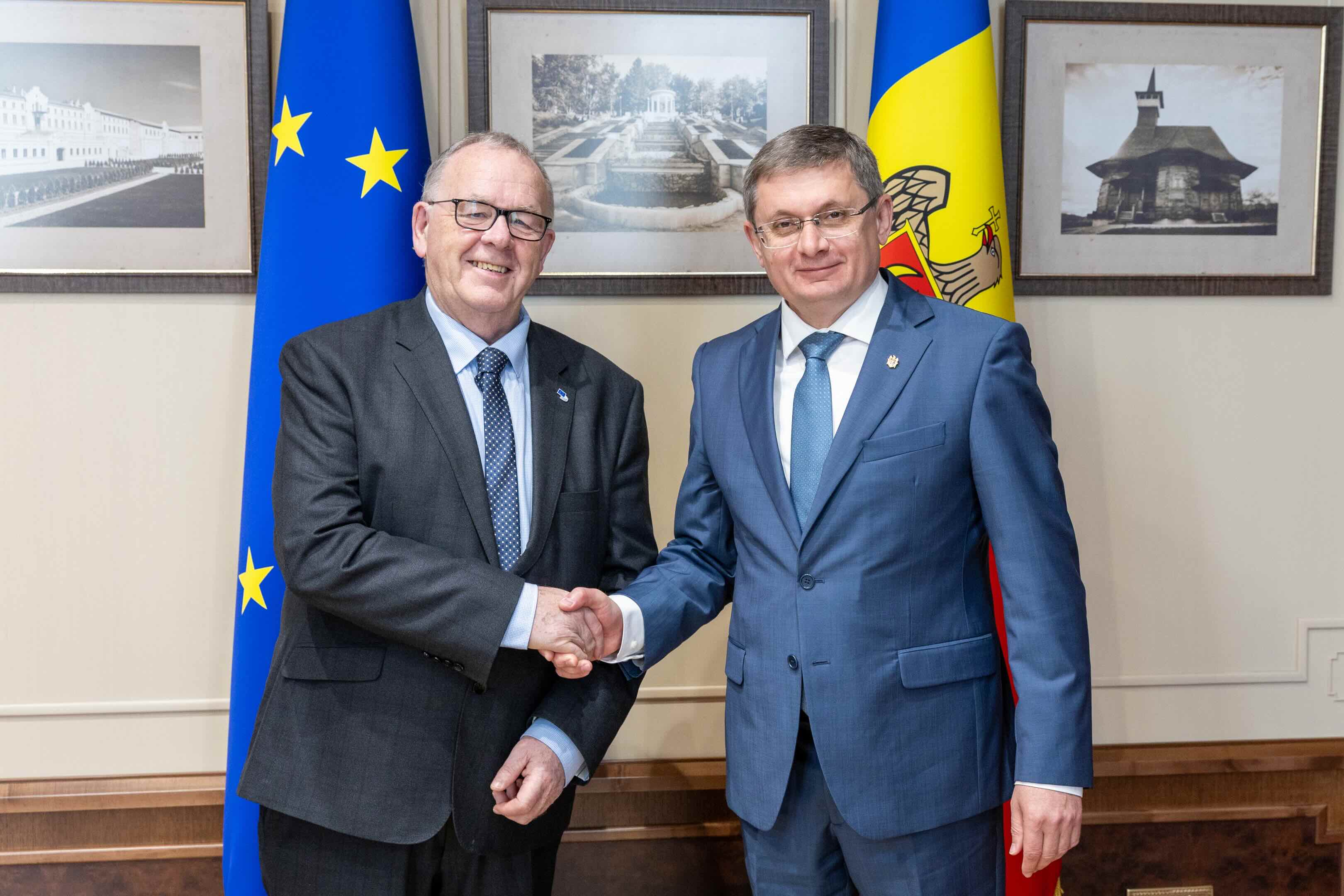
A constructive exchange with the Prime Minister, Alexandru Munteanu, focused on advancing reforms while reinforcing institutional and economic resilience. President Boland also met with Igor Grosu, Speaker of the Parliament of Moldova to discuss legislative priorities, democratic resilience and the role of parliament in supporting Moldova’s European ambitions.
In his meeting with Cristina Gherasimov, Deputy Prime Minister for European Integration, discussions focused on reform delivery, institutional readiness and the importance of ensuring a transparent and inclusive accession process.
The President's meeting with Natalia Plugaru, Minister of Labour and Social Protection, was an opportunity to highlight the social dimension of EU integration. Ensuring fair working conditions, strong social protection systems and inclusive labour market policies were identified as essential to delivering concrete benefits for citizens.
“Moldova’s EU path is entering a decisive phase,” President Boland noted. “Delivering reforms that improve people’s lives must remain the priority.”
Civil society at the heart of Moldova’s European path
 A central focus of the visit was engagement with civil society, reflecting the EESC’s role as the voice of organised civil society at EU level. President Boland met with a wide range of civil society organisations and social partners, including trade unions and business representatives.
These exchanges highlighted the critical contribution of civil society to shaping reforms, strengthening public trust and bridging the gap between citizens and decision-makers. Stakeholders pointed to key priorities such as improving coordination between central and local authorities, promoting inclusion, supporting independent media and ensuring transparent governance.
“Civil society is not an add-on – it is a driving force of reform,” the President stressed. “Its full involvement is essential to building trust and ensuring lasting change.”
A decade of dialogue through the Civil Society Platform
A key milestone of the visit was the opening of the 17th meeting of the EU–Moldova Civil Society Platform, marking nearly a decade of structured dialogue between civil society actors from Moldova and the European Union.
Co-led by the EESC, the Platform plays a central role in monitoring the implementation of the EU–Moldova Association Agreement and supporting inclusive participation in the accession process. President Boland praised its contribution to building trust and ensuring that reforms are anchored in society.
“You can count on the EESC to keep walking this path with you,” he said, reaffirming the Committee’s long-term commitment to Moldova’s European journey.
Strengthening resilience and investing in the future
 Beyond institutional engagement, the visit also addressed broader challenges linked to democratic resilience, including disinformation, the protection of fundamental rights and the need to reinforce trust in public institutions.
Engagement with young people was another highlight of the mission. During a visit to the Academy of Economic Studies of Moldova, President Boland exchanged with students on their expectations for the country’s European future, underlining the importance of youth participation in shaping policymaking.
Reflecting on the mission, President Boland emphasised the importance of partnership and shared responsibility: “The strength of Moldova’s European future will depend on the resilience of its institutions, the inclusiveness of its reforms and the active engagement of its citizens.”
The visit reaffirmed the EESC’s commitment to supporting Moldova every step of the way – through dialogue, cooperation and a strong partnership with civil society.
Work organisation
Recommended for you
Tetyana Ogarkova: "The day of victory will come but it will not bring normality back"
Agenda
On 24 February 2022, the lives of millions of Ukrainians were turned upside down. Now, when we say the word "victory", we expect that day to be the way things used to be. A normal day, a day of peace…
Lutte contre la précarité énergétique: garantir un approvisionnement énergétique abordable devrait figurer au premier rang des priorités politiques des pays de l’UE
News
Alors que le nombre de ménages qui sont dans l’incapacité de chauffer leur logement va vraisemblablement augmenter dans l’Union, avec une inflation annuelle de l’énergie qui dépasse 40 %, il y a…
Les zones rurales ont le potentiel pour produire davantage de résultats
News
Si l’attrait de la vie à la campagne s’est accru ces toutes dernières années, de nombreuses zones rurales de l’Union restent confrontées à un certain nombre de problèmes qui dissuadent les personnes…
Pour lutter contre le sans-abrisme, il faut une approche globale et une action collective
News
Le 7 octobre dernier, le Comité économique et social européen (CESE) a tenu une conférence sur le sans-abrisme et les moyens d’éradiquer ce phénomène d’ici à 2030, en appliquant le principe du…
Un rôle actif pour la société civile organisée est essentiel à la résilience de l’Union européenne
News
Le CESE a tenu un débat en session plénière sur l’importance croissante de la société civile organisée et des villes pour mettre l’Europe en capacité de faire face aux chocs asymétriques et aux…