
European Economic
and Social Committee
President Boland in New York and Washington D.C. to stand up for global cooperation and build bridges with civil society across the Atlantic
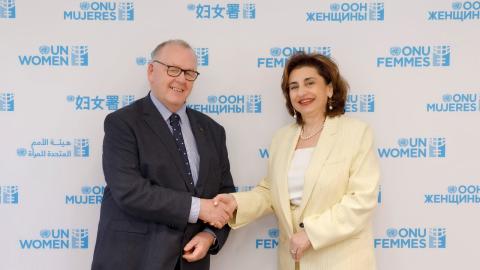
On a mission to United Nations headquarters in New York and the World Bank and Capitol Hill in Washington D.C., European Economic and Social Committee (EESC) President Séamus Boland met with several high-level UN, political and civil society leaders. He stressed the EESC's firm commitment to international cooperation and the importance of civil society participation to strengthening multilateralism, sustainable development and democracy.
"Multilateralism is severely under threat. But we can't hope to effectively tackle global challenges without global solutions," said President Boland. "Multilateralism must be defended but it must also be modernised. Civil society participation is essential to this and restoring trust in international cooperation."
A defender and constructive partner of the UN
In New York, President Boland's mission began with a meeting and briefing with EU Ambassador to the United Nations Stavros Lambrinidis, which focused on the importance of the EU's continued leadership role at the UN in today's shifting global landscape and civil society's essential position in connecting global action to citizen's lives.
Civil society participation in multilateral governance, the Sustainable Development Goals and post-2030 were the focus of the exchange with the President of the UN Economic and Social Council (ECOSOC) Lok Bakhadur Thapa. With Ambassador Laura Dupuy Lasserre, Chair of the Group of 77 countries at the UN, President Boland discussed how the EESC can build on its cooperation and dialogue with the Global South. A fruitful meeting was also held with Earle Rattray, Chef de Cabinet of the UN Secretary-General, in the context of future engagement with UNSG Antonio Guterres and Deputy Secretary-General Amina Mohammed.
Additionally, an extended meeting hosted by the Irish Ambassador to the UN Fergal Mythen at his official residence offered a valuable opportunity to exchange views and discuss shared priorities with a group of high-level UN policy and decision makers, including from UNFPA, OHCHR, UNANIMA, and the UN Youth and Partnerships Offices.
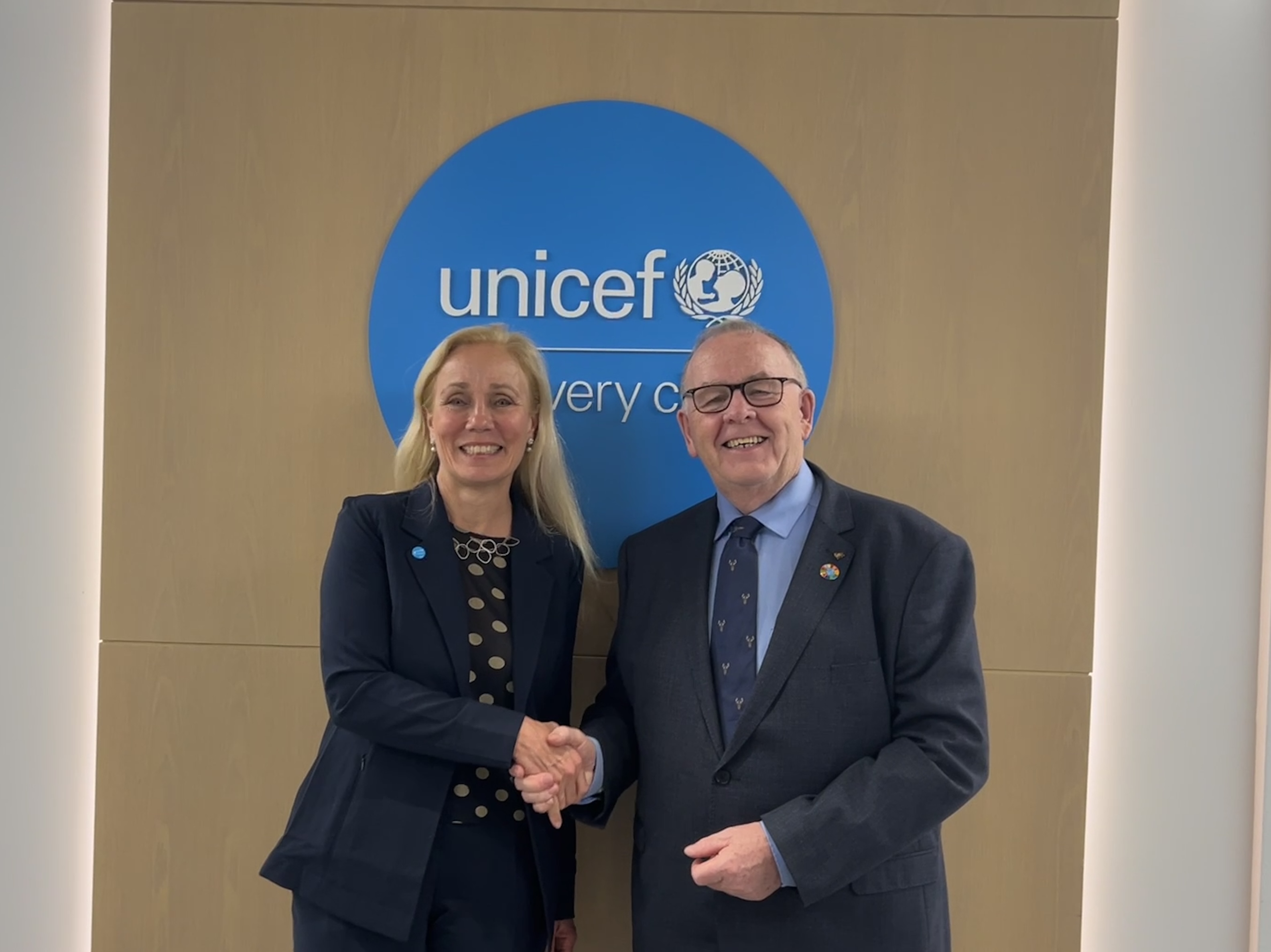
Subsequent bilateral meetings included leadership across UN agencies: UN Women Executive Director Sima Sami Bahous, UNICEF Assistant Secretary-General and Deputy Executive Director Kitty van der Heijden, and UNDP Associate Administrator Haoliang Xu. Conversations focused on building cooperation to better tackle shared priorities including poverty reduction, unlocking progress for women and children, and inclusive sustainable development post-2030.
"Ending poverty and reducing inequality must be at the heart of both EU policy and the future global framework," said President Boland.
A bridge for civil society across the Atlantic
In Washington, D.C., the focus remained on sustainable and inclusive economic development, with the President's participation in the World Bank and IMF Spring Meetings. Strengthening ties with civil society across the Atlantic, as well as defending democracy, was also a key priority in the US capital.
"On both sides of the Atlantic we're seeing more polarization, disinformation and declining trust, putting democracies under serious strain," said President Boland. "The answer to this is more democracy, not less."
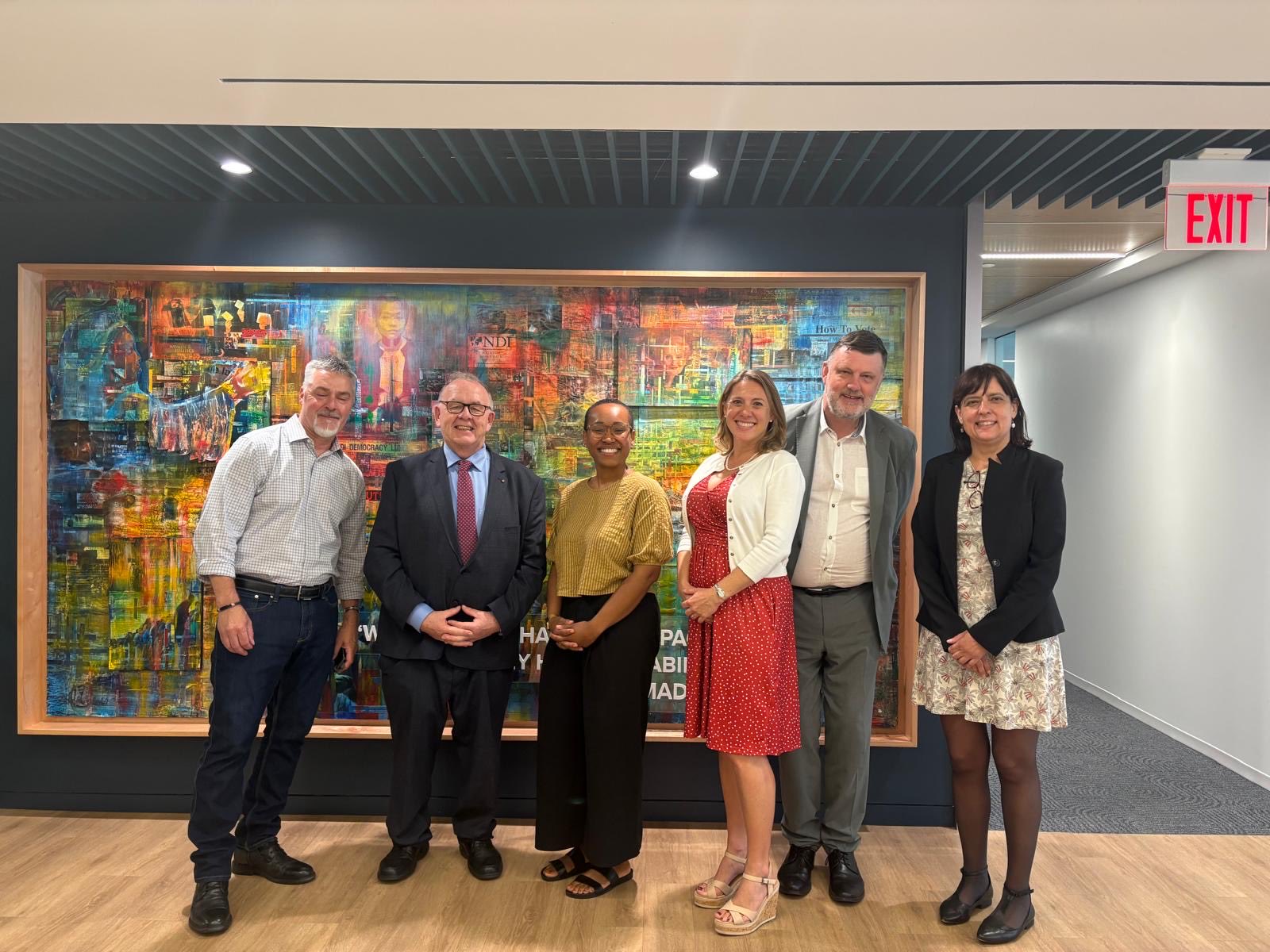
Meetings with civil society leaders included US Chamber of Commerce Senior Vice President Marjorie Chorlins and American Farm Bureau Federation’s Managing Director Ryan Yates. These focused on the importance of economic resilience, social impact and sustainability, and how to strengthen the transatlantic partnership to deliver for people.
On Capitol Hill, the President held a valuable exchange with the team of Senator Bernie Sanders, which focused on people-centred multilateralism and the connection between inequality, instability and conflict.
The President's participation in the World Bank and International Monetary Fund Spring Meetings included a valuable exchange with Managing Director and Chief Knowledge Officer at the World Bank Paschal Donohue, a meeting with Governor of the Central Bank of Ireland Gabriel Makhlouf, as well as civil society events on resilient food systems, job creation and the economic empowerment of women.
Reflecting on his time in the US, President Boland said: "The inclusion of civil society is more important than ever – in the EU, the USA, and around the world – to support participation, to strengthen democracy and to reinforce trust."
He added: "The EESC is happy to be a bridge across the Atlantic, as well as around the world, for civil society. In these turbulent times with civic space and global cooperation under strain, we must support and learn from each other."
Work organisation
Recommended for you
Tetyana Ogarkova: "The day of victory will come but it will not bring normality back"
Agenda
On 24 February 2022, the lives of millions of Ukrainians were turned upside down. Now, when we say the word "victory", we expect that day to be the way things used to be. A normal day, a day of peace…
Lutte contre la précarité énergétique: garantir un approvisionnement énergétique abordable devrait figurer au premier rang des priorités politiques des pays de l’UE
News
Alors que le nombre de ménages qui sont dans l’incapacité de chauffer leur logement va vraisemblablement augmenter dans l’Union, avec une inflation annuelle de l’énergie qui dépasse 40 %, il y a…
Les zones rurales ont le potentiel pour produire davantage de résultats
News
Si l’attrait de la vie à la campagne s’est accru ces toutes dernières années, de nombreuses zones rurales de l’Union restent confrontées à un certain nombre de problèmes qui dissuadent les personnes…
Pour lutter contre le sans-abrisme, il faut une approche globale et une action collective
News
Le 7 octobre dernier, le Comité économique et social européen (CESE) a tenu une conférence sur le sans-abrisme et les moyens d’éradiquer ce phénomène d’ici à 2030, en appliquant le principe du…
Un rôle actif pour la société civile organisée est essentiel à la résilience de l’Union européenne
News
Le CESE a tenu un débat en session plénière sur l’importance croissante de la société civile organisée et des villes pour mettre l’Europe en capacité de faire face aux chocs asymétriques et aux…