
European Economic
and Social Committee
Civil Society Highlighted as Driver of Peace and Reparative Justice at 2025 AU ECOSOCC Citizens’ Forum
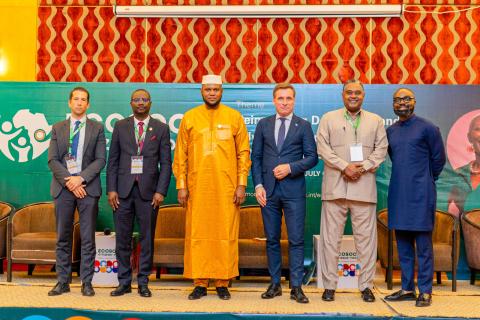
The European Economic and Social Committee (EESC) President Oliver Röpke led a high-level mission to Malabo this week, reaffirming the EESC’s strategic partnership with the African Union Economic, Social and Cultural Council (AU ECOSOCC). The visit centred on civil society’s role in peacebuilding, democratic renewal, and reparative justice across Africa and the broader Global South.
President Röpke participated in two flagship events hosted by ECOSOCC: the Inter-Regional CSO Dialogue on Peacebuilding and the 2025 ECOSOCC Citizens’ Forum under the theme Reimagining Democracy and Advancing Reparative Justice: A New Social Contract. His presence underscores the importance the EESC places on its formal cooperation with AU ECOSOCC, established through a Memorandum of Understanding signed in 2024.
Addressing the opening ceremony of the Citizens’ Forum, the President stressed the need to place civil society at the centre of global governance and democratic reform. "There is no democracy without justice. And no justice without civil society at the center. In Malabo, we are not just talking about a new social contract. We are demanding it."
At the Inter-Regional Dialogue on 7 July, Röpke delivered a keynote intervention on the role of civil society in African peacebuilding. He emphasised that civil society actors are not bystanders but essential partners in conflict prevention, reconciliation, and social cohesion. "We must ensure that civil society is not only responding to crises but shaping the policies that prevent them," he stated.
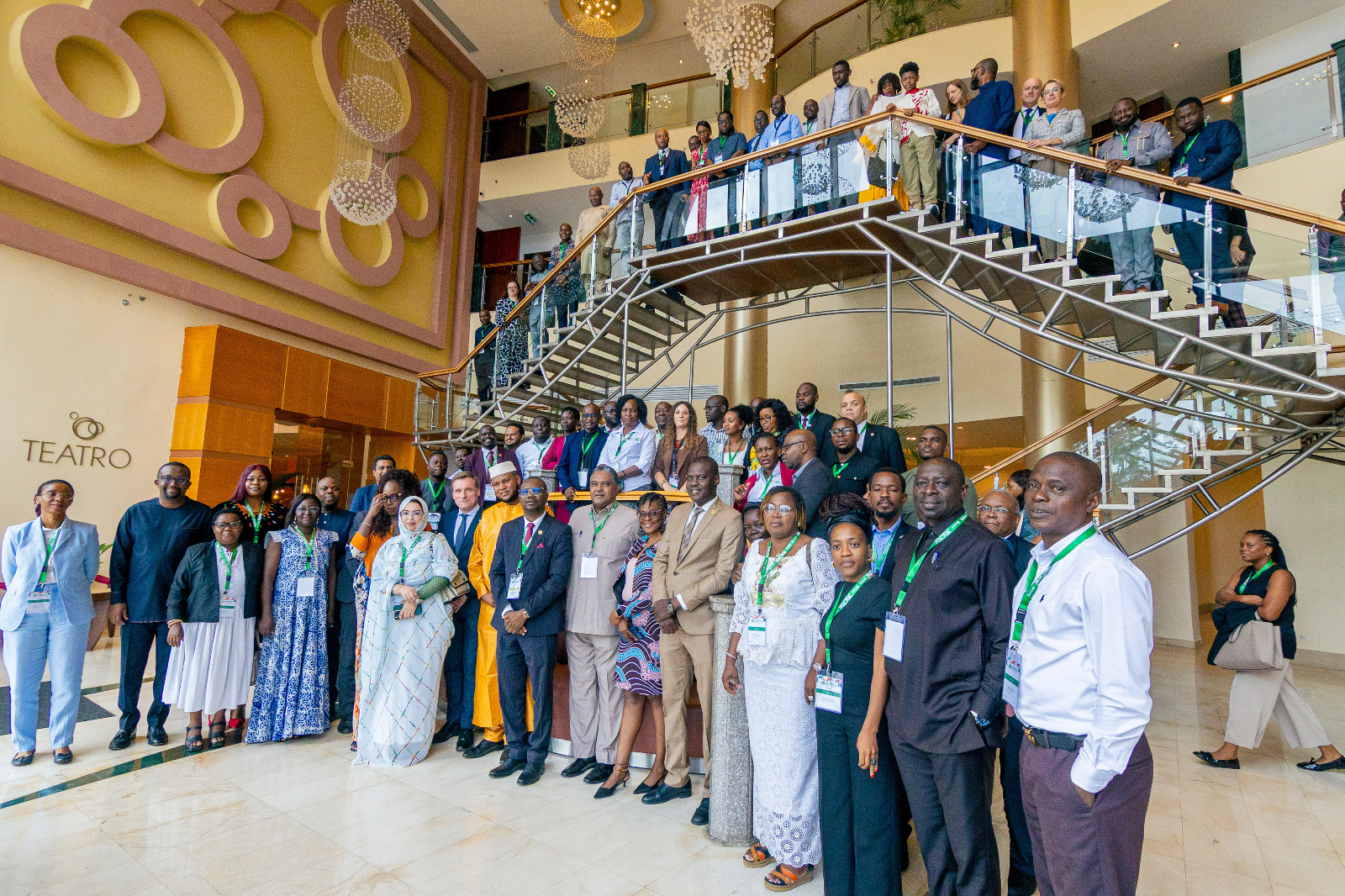
The Malabo mission included engagement with key African and international stakeholders, including AU representatives, and grassroots leaders. President Röpke was joined by EESC members Josiane Willems, Chair of the ACP–EU Follow-up Committee, and Stefano Palmieri and Milena Angelova.
The outcomes of the Citizens’ Forum will feed into the civil society track of the upcoming AU–EU Summit in Luanda in November. The EESC will work with ECOSOCC to ensure that recommendations from African civil society are integrated into that process.
“This is not a side conversation. This is central to the future of the EU–AU partnership,” President Röpke said. “We are here to listen, to partner, and to act.”
Recommended for you
Tetyana Ogarkova: "The day of victory will come but it will not bring normality back"
Agenda
On 24 February 2022, the lives of millions of Ukrainians were turned upside down. Now, when we say the word "victory", we expect that day to be the way things used to be. A normal day, a day of peace…
Lutte contre la précarité énergétique: garantir un approvisionnement énergétique abordable devrait figurer au premier rang des priorités politiques des pays de l’UE
News
Alors que le nombre de ménages qui sont dans l’incapacité de chauffer leur logement va vraisemblablement augmenter dans l’Union, avec une inflation annuelle de l’énergie qui dépasse 40 %, il y a…
Les zones rurales ont le potentiel pour produire davantage de résultats
News
Si l’attrait de la vie à la campagne s’est accru ces toutes dernières années, de nombreuses zones rurales de l’Union restent confrontées à un certain nombre de problèmes qui dissuadent les personnes…
Pour lutter contre le sans-abrisme, il faut une approche globale et une action collective
News
Le 7 octobre dernier, le Comité économique et social européen (CESE) a tenu une conférence sur le sans-abrisme et les moyens d’éradiquer ce phénomène d’ici à 2030, en appliquant le principe du…
Un rôle actif pour la société civile organisée est essentiel à la résilience de l’Union européenne
News
Le CESE a tenu un débat en session plénière sur l’importance croissante de la société civile organisée et des villes pour mettre l’Europe en capacité de faire face aux chocs asymétriques et aux…