
European Economic
and Social Committee
EESC warns Europe could lose its steel industry without urgent action
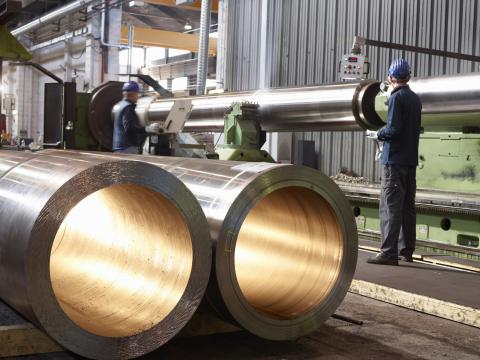
Europe’s steel industry is facing serious challenges with wide-reaching implications. Without swift and decisive action, factories could close, jobs be lost, and the EU’s strategic autonomy in defence, clean energy and digital technologies threatened. The European Economic and Social Committee (EESC) calls on the European Commission to strengthen trade safeguards, reform energy policies and support investment in low-carbon production.
In an opinion adopted at its September plenary session, the EESC calls on the European Commission to act quickly. The EU’s current safeguards – temporary measures designed to limit sudden surges of steel imports – are no longer proving effective. They will expire in July 2026. The EESC stresses that a more robust and lasting system must be in place well before then.
To achieve this, the Committee proposes strict import limits, higher tariffs on products above those limits, and a ‘melted and poured’ rule that identifies the true country of origin. Such a measure would prevent exporters from disguising where their steel is made and help close loopholes in trade rules.
‘The European steel and metal industries face an unprecedented, existential crisis that threatens not only industrial capacity, but also Europe’s strategic autonomy, green transition and economic security,’ said opinion co-rapporteur Michal Pintér. ‘Current safeguards and trade defence instruments are failing. The EU now needs bold, comprehensive and permanent trade measures to stop Europe becoming the dumping ground for cheap, subsidised and high-emission steel from abroad.’
Beyond trade, the opinion highlights another pressing problem: energy prices. European producers pay two to three times more for electricity than their competitors in the United States. This makes it harder for factories to stay competitive and to invest in cleaner technologies. The EESC is therefore calling for reforms to the electricity market, temporary relief for energy-intensive industries and greater access to clean hydrogen, which is vital for producing low-carbon steel.
Opinion rapporteur Anastasis Yiapanis underlined the need to link competitiveness with investment: ‘We are very concerned about the future of the EU steel industry. Urgent action is needed to restore competitiveness, protect good jobs and boost investment. The Commission should assess the sector’s funding needs and step up financial support, including through revenues from the EU’s carbon market and the upcoming Industrial Decarbonisation Bank.’
The Committee also stresses the importance of recycling. Scrap metal is both cheaper and cleaner than producing new steel from raw materials, yet large volumes are leaving Europe for markets with weaker environmental standards. Tighter controls would keep more of this valuable material in Europe and make it part of a stronger circular economy.
The green transition must also be fair. The EESC proposes creating a dedicated fund for workers in energy-intensive industries, helping them retrain, learn new skills or move to other regions if needed.
Steel and metals remain the backbone of Europe’s economy, providing direct and indirect employment for nearly three million people. Since 2008, however, the industry has already lost 95 000 jobs, including 18 000 in 2024 alone. With global steel overcapacity expected to rise to more than five times the EU’s annual production by 2027, the EESC’s message is clear: Europe must act now to secure the future of its steel industry.