
European Economic
and Social Committee
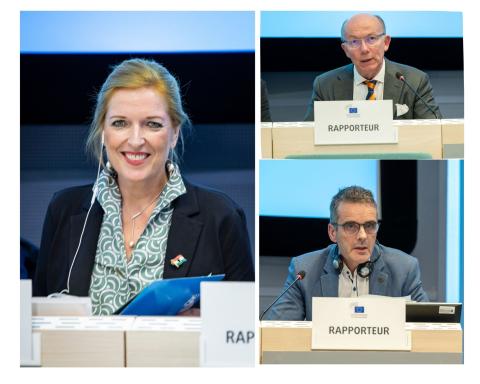
The EESC has outlined a vision for transforming the EU’s agriculture, fisheries and food systems to ensure resilience and sustainability in times of crisis.
In an opinion adopted in October, the EESC called for a food system that is competitive, crisis-proof and aligned with EU environmental and social goals. It emphasised food security, a fair income for producers, environmental resilience and supporting the next generation of food producers.
‘Ensuring stable, sustainable incomes for producers is essential, as is fostering a knowledge-based food policy that encourages innovation,’ said Arnold Puech d’Alissac, President of the World Farmers’ Organisation and one of the three rapporteurs of the opinion.
To support this, the EESC proposes strengthening the farming sector’s bargaining power in price negotiations and increasing EU agriculture and fisheries funding. It also calls for future trade agreements to incorporate Green Deal and Farm to Fork standards, ensuring fair competition and high food quality.
‘Ensuring fair incomes for primary producers is critical,’ said Piroska Kállay, another rapporteur for the opinion.
To this end, the EESC called for stricter enforcement of fair trading practices and a ban on below-cost selling in order to rebalance the food supply chain. Policies promoting generational renewal, focusing on young people and women, including education, training and support for cooperatives, are also of utmost importance.
To support sustainability, the EESC recommended rewarding carbon sequestration efforts, like sustainable soil management, and preventing carbon leakage. ‘These measures would help align food production with the EU’s climate targets and global environmental commitments,’ said Joe Healy, another rapporteur.
Another proposal is a public insurance system to protect producers from climate-related disasters, ensuring food supply continuity.
The EESC called for policies to restore soil and water health, improve water efficiency and reduce usage, alongside cutting red tape and boosting transparency with digitised price and cost tracking.
Finally, the EESC recommended establishing a European Food Policy Council (EFPC) to foster dialogue on food-related issues and align food policy with broader social and environmental objectives. These proposals provide a roadmap to make the EU’s food systems more resilient, sustainable and equitable in the face of global challenges.(ks)