
European Economic
and Social Committee
Role of caregivers being overlooked
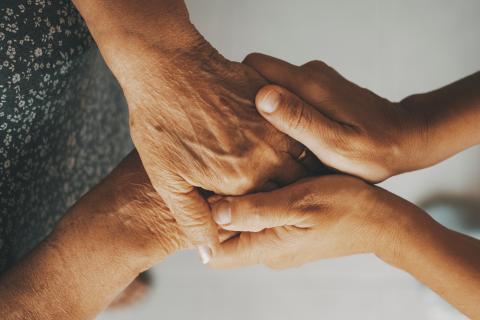
The ageing of the population that is affecting all European countries will mean an increase in the number of older people and, consequently, in the number of people affected by some form of disability. The European Economic and Social Committee (EESC) calls on the Commission to put the topic of informal carers high on the political agenda and to establish a platform for the exchange of best practices among Member States.
During its July plenary session, the EESC adopted an opinion calling for additional measures to be taken, at both EU and national level, to better protect informal carers and recognise their essential contribution to society.
These measures include: the European Commission setting up a platform for the exchange of best practices among Member States, the provision of high-quality, accessible community-based services to alleviate the burden on family caregivers, and the availability of respite services. It is also crucial that caregivers be able to access flexible working conditions, so that they are not forced to leave their jobs to look after family members.
Pietro Barbieri, rapporteur for the opinion, emphasised: 'The EESC is ready to give a voice to a group of people in our society who are largely invisible: the informal caregivers. These people are often forced to leave their work and, as a consequence, they lose their income and many of their rights. Informal carers carry out their activity in the shadows. Now is the time to turn the spotlight on to their efforts'.
The EESC calls on Member States to take appropriate measures to guarantee that a decision to take on informal care is voluntary, that gender inequalities are tackled, and that informal carers can maintain their employment and pay through more flexible working conditions and can easily re-enter the job market if they have been forced to leave it. It is important to ensure they have an appropriate work-life balance.
Informal caregiving does not affect men and women the same way. A huge percentage of informal carers are women, of whom about 70% care for their children, spouses or siblings. Mr. Barbieri pointed out that, in addition to being exposed to higher risks of burnout and psycho-physical disorders, these women are at serious risk of poverty. He added: 'We have one of the best welfare systems in the world, but in many cases it relies upon the bodies, the arms and the willpower of women'.
So as to be able to monitor the impact of the relevant rules and regulations, it is of major importance to have access to qualitative and quantitative data describing the actual living conditions of informal carers. The EESC calls for further research strategies to be adopted, in particular with the cooperation of Eurofound and the involvement of relevant stakeholders. Mr. Barbieri underlined that crucial need for more data, since informal carers are still not adequately identified in statistics.
Work organisation
Recommended for you
Tetyana Ogarkova: "The day of victory will come but it will not bring normality back"
Agenda
On 24 February 2022, the lives of millions of Ukrainians were turned upside down. Now, when we say the word "victory", we expect that day to be the way things used to be. A normal day, a day of peace…
Lutte contre la précarité énergétique: garantir un approvisionnement énergétique abordable devrait figurer au premier rang des priorités politiques des pays de l’UE
News
Alors que le nombre de ménages qui sont dans l’incapacité de chauffer leur logement va vraisemblablement augmenter dans l’Union, avec une inflation annuelle de l’énergie qui dépasse 40 %, il y a…
Recyclage durable, utilisation des matières premières secondaires et transition juste dans l’industrie européenne des métaux ferreux et non ferreux
Event
La Commission consultative des mutations industrielles (CCMI) du CESE organise une audition (diffusée sur Internet) sur le thème "Recyclage durable, utilisation des matières premières secondaires et…
Les océans et leur avenir
Event
Les zones rurales ont le potentiel pour produire davantage de résultats
News
Si l’attrait de la vie à la campagne s’est accru ces toutes dernières années, de nombreuses zones rurales de l’Union restent confrontées à un certain nombre de problèmes qui dissuadent les personnes…