On Tuesday 24 January, the European Economic and Social Committee (EESC) held an exchange of views with Guillaume Lafortune, Vice-President of the UN Sustainable Development Solutions Network (UN SDSN), on the implementation of the UN Sustainable Development Goals (SDGs). The debate revealed that the EU is failing to meet the objectives of the UN's 2030 Agenda. Yet, there is hope. The EU has the opportunity to take the lead, including through financial support. The EESC plays an important role in monitoring progress.
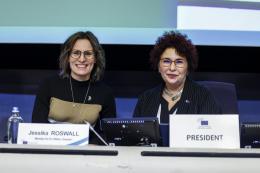
La session plénière de janvier du Comité économique et social européen (CESE) a donné lieu à un débat au cours duquel Jessika Roswall, ministre suédoise des affaires européennes, a présenté les priorités de la nouvelle présidence du Conseil de l’Union européenne.
En présence de Roberta Metsola, présidente du Parlement européen (PE), les membres du Comité économique et social européen (CESE), réunis en session plénière ce mercredi, ont débattu de la réaction de l’Union aux défis géopolitiques actuels. Les présidentes des deux institutions ont reconnu que la compétitivité, associée à une plus grande autonomie stratégique, sont cruciales en ces temps difficiles.
At its December plenary, the European Economic and Social Committee (EESC) discussed the issues affecting young people in the labour market in the context of the 2022 European Year of Youth and the 2023 European Year of Skills. The Committee advocates for a long-term strategy for youth engagement and recommends that the concept of European Years go beyond mere promotional activities and contribute towards clear plans. The needs of refugees and our Ukrainian neighbours must also be a priority of the European Year of Skills.
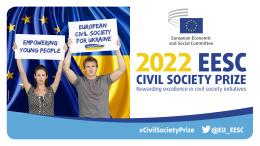
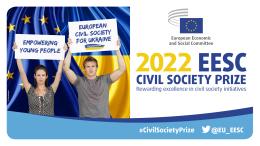
Le Comité économique et social européen (CESE)a récompensé aujourd’hui six organisations de la société civile pour leurs projets remarquables, qui sont de brillants exemples de l’engagement de la société civile pour, d’une part, assurer un avenir meilleur aux jeunes Européens, et, de l’autre, adoucir le sort des Ukrainiens qui souffrent de l’invasion brutale de leur pays par la Russie.
The European Economic and Social Committee held a plenary debate on the role of finance and public recovery policies in promoting gender equality and the economic empowerment of women in the EU. The discussion was linked to the adoption of two opinions: one on a gender-based approach to budgeting and investing and the other on how Member States can improve the way in which the direct and indirect measures proposed in their Recovery and Resilience Plans (RRPs) affect gender equality.
La session plénière de décembre du Comité économique et social européen (CESE) a donné lieu à un débat sur la reconstruction et la résilience de la région euro-méditerranéenne à la suite de la pandémie de COVID-19.
The EESC Fundamental Rights and Rule of Law Group held a public hearing on protecting women's sexual and reproductive health and rights. Participants in the debate called for free health services, access to contraception, more inclusive policies, and reproductive and sexual education. This debate was organised in collaboration with the EESC Equality Group as part of a series of EESC events following up on the European Parliament's Gender Equality Week initiative.
Cette année, le Comité économique et social européen (CESE) désignera exceptionnellement deux séries de lauréats. Son prix de la société civile sera décerné, d’une part, à des projets visant à construire un avenir meilleur pour les jeunes, et d’autre part, aux initiatives apportant un soutien au peuple ukrainien, sévèrement touché par l’invasion brutale de la Russie
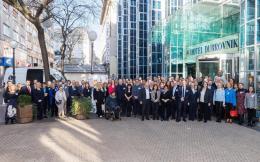
Les énormes défis posés à l’Europe par l’agression russe ont fait l’objet du séminaire annuel du CESE à l’intention des communicateurs de la société civile, intitulé «Perturbations géopolitiques aux portes de l’Europe: le point de vue de la société civile», qui s’est tenu à Zagreb, en Croatie, les 24 et 25 octobre 2022.