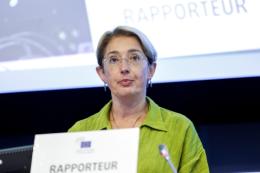
Dans un avis adopté lors de sa session plénière de mars, le Comité économique et social européen (CESE) fait observer que l’énergie éolienne constitue un élément clé de la transition écologique et insiste sur la nécessité d’étendre et de moderniser les réseaux énergétiques, de définir des critères socio-environnementaux lors des enchères et d’assurer une large participation du public.
In response to the European Commission's proposals for a comprehensive forest monitoring framework, the European Economic and Social Committee (EESC) has issued an opinion which includes cautious welcomes, recommendations, and calls for further review. The EESC emphasizes the need for sustainability, inclusivity, and respect for property rights in the proposed forest data system, while also urging attention to technical limitations and judicial considerations.
The European Economic and Social Commitee (EESC) organized a parallel session on Food Democracy during the Open Food Conference held in Leuven from the 11th to the 13th of March 2024, in the context of Belgium's presidency of the Council of the EU.
Join us at the European Economic and Social Committee's March plenary in Brussels on March 20-21, 2024, where the 2024 EU elections will be at the forefront of discussions. Featuring key debates on topics such as the future of the Single Market, insights into the 2024 European Elections through a Civil Society Lens, discussions on the humanitarian situation in Gaza, and crafting a strong social strategic agenda for Europe.
Lors de sa session plénière de février, le Comité économique et social européen (CESE) a adopté une position ferme en faveur de la création d’un meilleur environnement commercial pour les PME d’Europe: la législation de l’Union européenne doit accorder la «priorité aux PME» et réduire les formalités administratives superflues.
Les inégalités en matière de prise en charge d’autrui, les écarts de rémunération et de retraite entre les hommes et les femmes, les normes et stéréotypes culturels continuent d’avoir pour conséquence que la pauvreté touche davantage les femmes que les hommes
In a joint response to the European Commission's postponement of the Water Resilience Initiative, representatives of the European Economic and Social Committee (EESC), the MEP Water Group of the European Parliament (EP) and the European Committee of the Regions (CoR) have sent an open letter to Executive Vice-President Maroš Šefčovič, asking the Commission to adopt a comprehensive approach to water and reiterating their call for an EU Blue Deal.
On 7 March, the European Economic and Social Committee (EESC) will award its 14th Civil Society Prize, dedicated to mental health, to five non-profit projects: two from Finland and one each from Italy, Ireland and Slovakia.
Face à l’augmentation des tensions géopolitiques et à la multitude de risques graves qu’entraînent pour les économies ouvertes les relations et dépendances économiques existant sur la scène mondiale, il est impératif que l’Europe s’intéresse à sa sécurité économique. Le Comité économique et social européen (CESE) se félicite de la proposition présentée par la Commission concernant une stratégie européenne en matière de sécurité économique. Il souligne toutefois que l’UE doit renforcer sa compétitivité en veillant au bon fonctionnement et au parachèvement de son marché unique. Dans le même temps, il préconise d’associer les entreprises et autres acteurs concernés de la société civile de l’Union à la poursuite de l’élaboration et à la mise en œuvre de cette stratégie.
Microplastic pollution has emerged as a critical environmental concern, with its detrimental impact reaching far and wide across ecosystems and human health. The European Economic and Social Committee (EESC) acknowledges the urgency of addressing the issue and supports the European Commission’s proposal to regulate microplastic pellet operations and emissions.