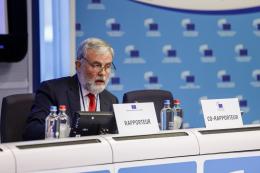
At its plenary session on 24 February, the EESC adopted an opinion on the Commission's Communication outlining orientations for a reform of the economic governance framework. While the EESC agrees on the need for a swift agreement ahead of the Member States' budgetary processes for 2024, it also stresses that many details are yet to be finalised.
[FR bientôt disponible] In a newly adopted opinion on the European Commission's regulation on short-term accommodation rental through online platforms, the EESC stresses that national and local authorities should be urged to carry out impact assessments to see how such activities are affecting the lives of local residents and businesses such as hotels and other hospitality facilities.
In an opinion adopted on 23 February, the EESC commented on the Commission's Communication on the 2023 Annual Sustainable Growth Survey, which outlines the economic and employment policy priorities for the EU for the coming 12 to 18 months.
Supporting labour market developments: how to maintain employability, boost productivity and develop skills, especially in SMEs, in the context of the European Year of Skills 2023 and linked to the adoption of the related SOC/722 own-initiative opinion
Un débat organisé par le Comité économique et social européen (CESE) a mis en lumière l’utilité de la construction en bois pour permettre à l’UE d’atteindre l’objectif de neutralité carbone à l’horizon 2050.
À l’occasion d’un débat organisé à Bruxelles par le Comité économique et social européen (CESE), les participantes et les participants ont souligné l’importance des infrastructures et des normes harmonisées pour relier l’Union et ses pays voisins, en tenant compte, en particulier, de la recomposition du paysage géopolitique par la guerre en Ukraine.
The EESC's External Relations Section held a debate during its section meeting dedicated to the situation of women in Latin America. The COVID-19 pandemic has exacerbated existing inequalities worsening the situation of women in the region. Participants in the debate called for legislative reforms to the social and employment system in order to eliminate gender inequalities. They also flagged up the role of civil society in the empowerment of women. The thematic discussion concluded the series of EESC events, following up on the European Parliament's Gender Equality Week initiative started in October 2022.
Lors de sa session plénière de janvier, le CESE a adopté un rapport d’information sur la mise en œuvre de l’accord de retrait entre l’Union européenne et le Royaume-Uni, y compris le protocole sur l’Irlande et l’Irlande du Nord. Il ressort de ce rapport que la société civile organisée du Royaume-Uni est résolument favorable à l’idée d’une relation plus approfondie et plus constructive avec ses homologues de l’Union et avec l’Union dans son ensemble. Une telle évolution contribuerait à mettre en œuvre de l’accord de retrait et à tirer le meilleur parti de l’accord de commerce et de coopération entre l’UE et le Royaume-Uni.
Lors de sa session plénière de janvier, le Comité économique et social européen (CESE) a adopté un avis dans lequel il salue la nouvelle approche de l’Union européenne en matière de commerce et de développement durable (CDD) exposée dans la récente communication sur «La force des partenariats commerciaux». Le CESE soutient le réexamen complet effectué par la Commission, qui définit un nouveau critère de référence en matière de commerce et de développement durable, et il considère ces éléments introduits comme faisant partie intégrante du paquet contenu dans tous les accords, qu’il s’agisse d’accords à venir, d’accords en cours de négociation ou, dans la mesure du possible, d’accords existants. Le nouveau plan relatif au commerce et au développement durable présente toutefois certaines lacunes, et le CESE déplore qu’aucune mesure ne soit prise pour associer plus étroitement la société civile au processus de négociation.