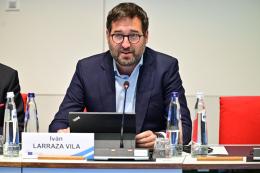
A conference held in Brussels by the European Economic and Social Committee and the Basque Government showcased the political and social importance of services of general interest in making intergenerational solidarity a reality in Europe and building a more inclusive society.
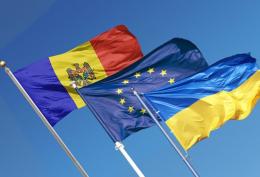
As a steadfast supporter of the European Union's enlargement, the European Economic and Social Committee (EESC) welcomes the formal opening of the first negotiation cluster (known as the ‘Fundamentals’ cluster) at the second Accession Conferences held respectively with Ukraine and the Republic of Moldova in Luxemburg on 15 June 2026.
There's a line from my favourite Irish poet Patrick Kavanagh which I find myself returning to: 'No one loves you for what you have done, but for what you might do.' At this moment, it certainly rings true for the current phase of the EU's next long-term budget, the Multiannual Financial Framework.
There's a line from my favourite Irish poet Patrick Kavanagh which I find myself returning to: 'No one loves you for what you have done, but for what you might do.'
At this moment, it certainly rings true for the current phase of the EU's next long-term budget, the Multiannual Financial Framework. There's a real desire and expectation that this MFF meets the moment with real ambition – and the money required to tackle our priorities in our increasingly destabilised world, from competitiveness to security, the green transition to social cohesion and inequality.
This is not just a negotiation over figures, but a negotiation over the future direction of our Union and our shared capacity to act. I'm proud that our numerous Opinions on various aspects of the MFF have brought the voices and expertise of citizens, workers and employers across Member States into EU policymaking on this issue. Finding compromise across our three groups on such a seismic topic is not easy. But this is the strength of the EESC and why we play such an indispensable role in Brussels.
In addition to ambition and the protection of key budgets like CAP and cohesion, the MFF must include civil society and regional actors in its design and execution. This is a precondition for success.
These are messages I conveyed in highly productive meetings last month with European Commission President Ursula Von der Leyen and Agriculture and Food Commissioner Christophe Hansen. It was encouraging to hear the Commission President's endorsement of our work in this space, as well as the Civil Society Strategy and Platform and on affordable housing.
Housing and stewarding the MFF process are two major areas of focus for the upcoming Irish Presidency of the Council of the EU, which kicks off on 1 July. The Taoiseach (Prime Minister) Micheál Martin launched the priorities of their EU Presidency – competitiveness, security and values – on 10 June in Dublin.
I'm heartened that civil society engagement is not only an integral element to the values priority but is a thread throughout their whole Presidency programme. This was powerfully articulated by the Taoiseach and Minister of State for European Affairs Thomas Byrne earlier that day in Dublin Castle at our Extraordinary Bureau.
The EESC has been requested by the Irish government to work on eight Exploratory Opinions on several joint priorities, including housing, competitiveness, digital regulation, tackling poverty, and the EU's approach to livestock, to ensure that the voices and expertise of civil society, employers and workers are heard in EU policy making during their Presidency.
On a personal level, as the first Irish EESC President during Ireland's EU Council Presidency, I'm looking forward to this work and to representing the EESC at high-level events and informal council meetings on topics including social rights, farming and consumer policy in the months ahead. The aim is to build on our strong collaboration with the Cypriot EU Presidency who've been working with on topics including water resilience, poverty eradication, sustainable farming, and humane migration.
This will begin on 5-6 July in Ballina, County Mayo, at the Informal Meeting of Employment and Social Policy Ministers where I will join discussions on tackling poverty, worker protections and addressing disability employment gap.
As I outlined in a recent bilateral with Executive Vice President and Commissioner for Social Rights Roxana Mînzatu, now we have an EU Anti-Poverty Strategy, we must keep up the momentum in this space. The EESC will have a concrete role in its implementation, through the cooperation agreement to be signed with the Commission.
Tackling poverty is not a nice to have. And it's not clashing with the drive to improve competitiveness. The two must go hand in hand – in the present, and in the next EU long-term budget.
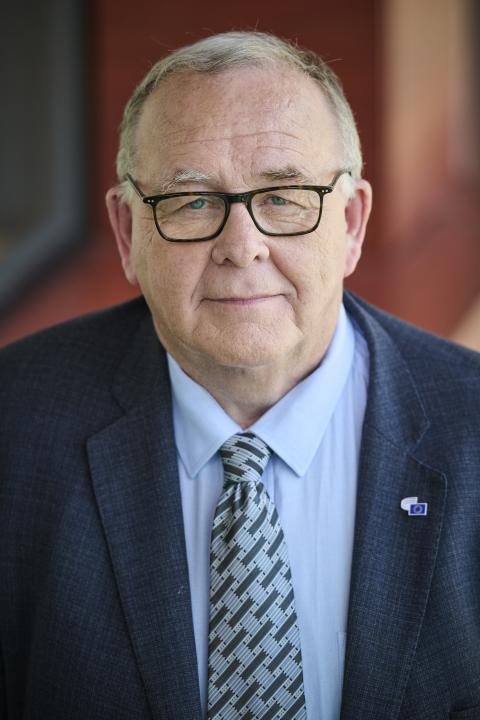
Séamus BOLAND
President of the European Economic and Social Committee
Designing the multiannual financial framework is not only a negotiation over numbers. It is, in essence, a discussion about the future of European integration, about the extent to which Member States are prepared to allocate resources enabling the EU to achieve collective objectives. As geopolitical tensions intensify, technological competition accelerates, and Europe seeks to strengthen its resilience, competitiveness and security, the question is whether its current financial architecture is capable of supporting its ambitions.
Designing the multiannual financial framework is not only a negotiation over numbers. It is, in essence, a discussion about the future of European integration, about the extent to which Member States are prepared to allocate resources enabling the EU to achieve collective objectives. As geopolitical tensions intensify, technological competition accelerates, and Europe seeks to strengthen its resilience, competitiveness and security, the question is whether its current financial architecture is capable of supporting its ambitions.
By Jaroslaw Pietras
The European Union is expected to deliver solutions to new problems such as climate change, migration, energy security, defence capabilities, digital transformation, research and innovation, public health, external border management and support for Ukraine. The rationale for a common European budget lies precisely in the capacity to finance activities that create benefits for all. Pooling resources reduces duplication, creates economies of scale and allows Europe to achieve outcomes that exceed the sum of individual national efforts. However, despite the increasing demand for collective action, the European budget remains unchanged and remarkably modest. This structural imbalance has become increasingly evident over the last decade. This raises an unavoidable question: should the European Union continue relying on extraordinary instruments whenever major crises arise, or should its permanent budget address these responsibilities?
The answer is far from straightforward. The EU budget differs from national budgets. It is not designed to finance welfare systems, pensions, healthcare, education, culture or security. Although the EU finances common policies, the overwhelming majority of public investment even in these areas continues to be carried out by Member States. European funding acts primarily as a catalyst, supporting national expenditure rather than replacing it.
The proposal for the next multiannual financial framework is based on the recognition that the European Union cannot continue expanding its responsibilities while it is unable to substantially increase its budget. Therefore, the Commission proposes that a significant share of EU funding be brought together within integrated national and regional partnership plans. Inspired partly by the experience of the Recovery and Resilience Facility, these plans would combine several existing policies under a single strategic framework agreed between the Commission and each Member State. Such an approach would simplify implementation, reduce administrative burdens, improve coordination between different policy areas and allow resources to be redirected more rapidly when unforeseen circumstances arise.
However, the very features that make the proposal attractive to its authors also explain considerable reservations. Governments generally welcome simplification but are cautious about expanding the Commission's role in assessing reforms, monitoring milestones and deciding on the release of financial resources. Even stronger concerns have emerged from the European Parliament. Members of Parliament have consistently argued that the EU's budget should continue to be based on clearly identifiable European policies rather than becoming a collection of national financial envelopes. From the Parliament's perspective, the proposed architecture risks weakening the genuinely European dimension of common policies.
These institutional debates are particularly visible in the case of cohesion policy. Until now it has been based upon a partnership principle involving the European Commission, national governments, regional authorities, municipalities, economic and social partners and civil society organisations. Regions themselves possess detailed knowledge of local needs and investment priorities. Nevertheless, many regional authorities fear that their role could gradually diminish if programming decisions become increasingly centralised at national level.
A similar discussion surrounds the future of the common agricultural policy. The Commission proposes maintaining substantial financial support while allowing greater flexibility for Member States to tailor implementation to national circumstances, yet many stakeholders fear that excessive decentralisation could undermine the common character of agricultural policy itself.
Behind these sectoral debates lies a broader constitutional question regarding the distribution of responsibilities within the European Union. Should the Commission evolve towards a strategic executive managing broad investment frameworks while Member States assume greater responsibility for implementation? Or should the EU preserve more detailed common programmes that ensure greater uniformity across Europe? The answer will shape not only the next financial framework but potentially the future institutional balance within the EU itself.
Jarosław Pietras is currently a Visiting Fellow at the Wilfried Martens Centre for European Studies and Visiting Professor at the College of Europe in Bruges, Belgium. He served as Director General in the Council of the European Union from 2008 to 2020. His professional career started in 1980 at the University of Warsaw Faculty of Economics, teaching international economy and trade policy.
After 1990, he worked for consecutive Polish Governments, serving as Secretary of State in the Ministry of Finance, Secretary of State for Europe and Head of the Office of the Committee for European Integration. He obtained his PhD in Economics in 1986 at the Faculty of Economics of the University of Warsaw. He is also the author of a number of publications on EU and trade issues. He was a Fulbright Foundation scholar at Duke University in North Carolina, USA, a board member of the Bruegel think-tank devoted to international economics in Brussels, and ACE Programme scholar at the Centre for European Policy Studies in Brussels.