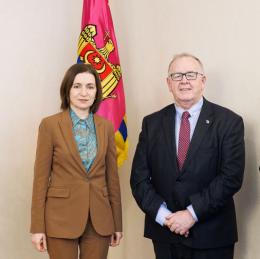
On a mission to Moldova, European Economic and Social Committee (EESC) President Séamus Boland met with Moldova’s political leadership, civil society organisations and young people to reaffirm the EESC’s strong support for the country’s European path.
Cyprus Chamber of Commerce & Industry
38, Grivas Dhigenis Ave. & 3, Deligiorgis Str., 1509
Nicosia
Cyprus
The discussion will examine how the EU’s evolving focus on strategic autonomy and preparedness is reshaping the meaning of competitiveness, positioning it as a prerequisite for resilience, security, and sustainable growth. The guests will explore the central role of SMEs, both as key drivers of employment, innovation, and value creation, and as actors particularly exposed to structural constraints such as regulatory complexity, energy costs, financing gaps, and skills shortages. Particular attention will be given to how preparedness can be embedded into competitiveness policy, enabling SMEs not only to withstand shocks but to adapt, scale, and compete effectively.
Minutes of the of the 249th meeting of the INT Section
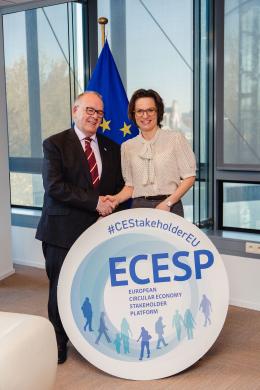
Accelerating the transition to a circular economy is not only about making Europe cleaner and more competitive, but also about achieving strategic autonomy. The European Circular Economy Stakeholders platform is set to play a crucial role in this process.
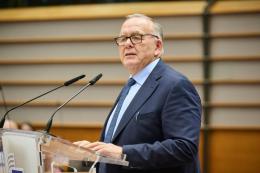
I welcome the decision by European Union Ambassadors to establish a Council Working Party tasked with drafting the Accession Treaty with Montenegro and congratulate Montenegro for this important milestone. This represents both a recognition of progress and an incentive to accelerate reforms.