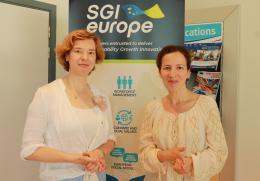
On 23 June 2026, the EESC Employers' Group hosted SGI Day 2026, the annual flagship event of our partner organisation SGI Europe, focused on the Freedom to Stay, in the presence of Mrs Roxana Minzatu, EU Commission Executive Vice President for Social Rights and Skills, Quality Jobs, and Preparedness.
The European Economic and Social Committee (EESC) has adopted an information report and a resolution calling for a stronger role for social partners and civil society organisations in shaping national reforms and investments. The EESC calls for the creation of a European code for structured consultations and mandatory assessments of partnership practices to improve transparency, effectiveness and democratic legitimacy.
The European Economic and Social Committee (EESC) has adopted an opinion arguing that putting the New European Bauhaus into practice can help tackle the housing crisis, as long as it moves from inspiring pilot projects to systemic, scalable and place-based delivery.
The EESC Fundamental Rights and Rule of Law (FRRL) Group expresses concern regarding recent developments in the Czech Republic following the decision of 18 May 2026 to abolish the Department for Human Rights and the Protection of Minorities at the Office of the Government.