The United Nations' Sustainable Development Goals must continue to serve as the compass for Europe's future well beyond 2030. Civil society organisations and policymakers must prepare for the end of the decade, when the SDGs should be strengthened. The energy transition and the circular economy agenda must play a central role in this process.
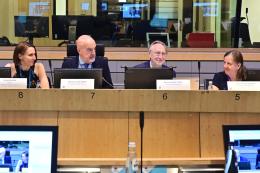
The European Semester must evolve into a more results-oriented framework that promotes sustainable competitiveness and social inclusion while ensuring that reforms and investments deliver tangible benefits for citizens. This is even more crucial given its future link to the next Multiannual Financial Framework. This was the central message from the Annual European Semester Group Conference, held by the European Economic and Social Committee (EESC) in Brussels on 30 June.
As global trade governance becomes more fragmented and politicised, members from all 15 EU Domestic Advisory Groups met in Brussels to discuss how organised civil society can strengthen its contribution to the implementation of EU trade agreements and ensure that sustainability commitments are effectively monitored and followed up.
Europe will need significantly more investment if it wants to secure the critical raw materials required for its green, digital and defence transitions, the European Economic and Social Committee (EESC) warned in an opinion adopted at its June plenary session.
ByChristian MOOS, rapporteur for the EESC opinion on ProtectEU: Agenda to prevent and counter terrorism and member of the Civil Society Organisations’ Group, representing the German Civil Service Association dbb