As part of European Youth Week 2026, the European Economic and Social Committee (EESC) highlighted its long‑standing commitment to meaningful youth participation through direct engagement with young people and a range of concrete policy tools designed to strengthen their influence on decision‑making.
Display date
1 month 1 week ago
Instrument for Agile and Rapid Defence Innovation – AGILE
At the March Plenary, the European Economic and Social Committee (EESC) adopted an opinion on the European Commission's Battery Booster Strategy. While supporting the initiative's mission to strengthen the European battery value chain, the EESC calls for clearer prioritization, stronger implementation tools, a broader scope beyond electric vehicle batteries, and higher environmental and social standards.
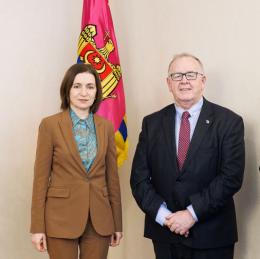
On a mission to Moldova, European Economic and Social Committee (EESC) President Séamus Boland met with Moldova’s political leadership, civil society organisations and young people to reaffirm the EESC’s strong support for the country’s European path.
Cyprus Chamber of Commerce & Industry
38, Grivas Dhigenis Ave. & 3, Deligiorgis Str., 1509
Nicosia
Cyprus
The discussion will examine how the EU’s evolving focus on strategic autonomy and preparedness is reshaping the meaning of competitiveness, positioning it as a prerequisite for resilience, security, and sustainable growth. The guests will explore the central role of SMEs, both as key drivers of employment, innovation, and value creation, and as actors particularly exposed to structural constraints such as regulatory complexity, energy costs, financing gaps, and skills shortages. Particular attention will be given to how preparedness can be embedded into competitiveness policy, enabling SMEs not only to withstand shocks but to adapt, scale, and compete effectively.