Newsletter Info

EESC info

European Economic and Social Committee A bridge between Europe and organised civil society

FEBRUARY 2023 | EN

EESC info SPECIAL - Civil Society Prize 2022
GENERATE NEWSLETTER PDF

Available Languages:

  • BG
  • CS
  • DA
  • DE
  • EL
  • EN
  • ES
  • ET
  • FI
  • FR
  • GA
  • HR
  • HU
  • IT
  • LT
  • LV
  • MT
  • NL
  • PL
  • PT
  • RO
  • SK
  • SL
  • SV
Honouring all those who bring light to their communities

Honouring all those who bring light to their communities

Dear readers,

Back in late 2021, the EU decided to make 2022 the year of youth. Its aim was to shine the spotlight on the situation of young people, especially against the backdrop of the COVID-19 crisis, which was quite hard on them, negatively affecting their situation on the labour market as well as their education.

The EU wanted to prompt decision-makers to promote opportunities for young people and encourage them to become active citizens and actors of change, and called for the maximum engagement with those hardest to reach: young people with disabilities, minority groups and those living in disadvantaged areas.


Read more in all languages

Dear readers,

Back in late 2021, the EU decided to make 2022 the year of youth. Its aim was to shine the spotlight on the situation of young people, especially against the backdrop of the COVID-19 crisis, which was quite hard on them, negatively affecting their situation on the labour market as well as their education.

The EU wanted to prompt decision-makers to promote opportunities for young people and encourage them to become active citizens and actors of change, and called for the maximum engagement with those hardest to reach: young people with disabilities, minority groups and those living in disadvantaged areas.

Little did we know that less than two months into the year that the EU had dedicated to youth, in a cruel twist of fate, young people at its eastern borders would be fleeing to shelters to hide from bombs and missiles, would be forced to leave their country to avoid getting killed or would be losing their brothers, fathers or their own lives in the bloody trenches of Ukrainian battlefields, following Russia's cruel attack on Ukraine and its civilian population.
In this year of such turbulent events, the EESC decided to make its 2022 Civil Society Prize a dual award, dedicated to two themes – youth and Ukraine.

In the first category entitled "Empowering young people", we looked for projects that creatively encouraged and helped new generations find their voice and stand firmly on their feet in a world becoming increasingly polarised and hostile, battling inflation, climate change and the energy crisis, to name just a few of the challenges.

The prize in the "European civil society for Ukraine" category was intended to pay tribute to civil society, which quickly mobilised to help Ukrainian civilians as soon as the war started, and to honour the thousands of civil society initiatives that mushroomed across Europe in response to the plight of Ukrainians in the face of the Russian aggression.

We received over a hundred applications and it was not an easy task to choose the best ones, as all our candidates deserved the award for their dedication and solidarity. In the end, the prize was shared between six organisations, three in each category, from five EU countries: Italy, Poland, Portugal, Romania, and Spain with two winning projects.  

On 15 December, we celebrated their fantastic achievements at the award ceremony in Brussels.

All three winning projects in the youth category help young people who don't heave it easy, as they are from disadvantaged segments of society: the Roma minority, young people who have spent part of or their entire childhood in a care system and now have to face the world alone, or are socially excluded for various reasons.

The three projects on Ukraine helped refugees in different ways, assisting them at borders when they first arrived and collecting aid, taking care of children with cancer, or enabling Ukrainians to smoothly integrate into their new communities.

Let me finish the introduction to this special edition of the EESC Info on the Civil Society Prize by repeating the words of Martyna Kowacka, representative of our Polish winner who, in a symbolic gesture, brought the Bethlehem Light of Peace to the award ceremony and pointed to the importance of responding to evil and building such values as tolerance, friendship and readiness to help.

She said she hoped that everyone would make their own contribution so that, one day, we would see the light of peace replace the fire of war.
We believe that, thanks to the selfless and countless efforts of people on the ground who every day contribute to making the world a better place, the fire of war will be soon put out and replaced by the light of peace. And with our prize, we want to pay homage not only to our winners and candidates but also to all other individuals and organisations that keep bringing light to their communities.

Cillian Lohan, Vice-President for Communication


Watch the 2022 Civil Society Prize ceremony

Relive the experience of the award ceremony by watching our video!

Read more in all languages

Relive the experience of the award ceremony by watching our video!

See the videos on the 2022 Civil Society Prize projects

You can watch below the videos on the winning projects.

Read more in all languages

You can watch below the videos on the winning projects.

Learning by doing


Superpower School

Care Leavers Network Italia

Asociația SUS INIMA

You are in a Safe Place

Polish Scouting and Guiding Association

2022 Civil Society Prize in the media

Here is a selection of headlines that have appeared in the media to date concerning the 2022 Civil Society Prize.


Read more in all languages

Here is a selection of headlines that have appeared in the media to date concerning the 2022 Civil Society Prize.

Bulgaria -  BTA: Европейска институция връчва годишните си награди за гражданското общество за 2022 г.

Croatia - HIA:  Mladi i Ukrajina - glavne teme ovogodišnjeg natječaja Europskog gospodarskog i socijalnog odbora

Italy - Vita: La rete dei ragazzi fuori famiglia premiata a Bruxelles

Italy - Eunews: L’Italia al Premio Cese per la società civile: fra i vincitori l’associazione Agevolando

Poland - TVP: Polscy harcerze wyróżnieni nagrodą dla Społeczeństwa Obywatelskiego 2022

Poland - Onet: Rusza konkurs o europejską nagrodę. Dwa tematy

Portugal - Diário do Minho: Europa precisa mais do que nunca de bons exemplos de cidadania ativa

Romania - Radio Romania International: România câştigă din nou Premiul Societăţii Civile

Romania - Curierul Naţional: Asociația românească ”Sus Inima” câștigă ediția din 2022 a Premiului CESE pentru societatea civilă

New publications

The 2022 edition of the CSP brochure is out - take a look!

The EESC has published a brochure showcasing all six winners of its 2022 Civil Society Prize. This brochure presents outstanding examples of civil society engagement in creating a better future for young people and helping Ukrainian war victims.

Read more in all languages

The EESC has published a brochure showcasing all six winners of its 2022 Civil Society Prize. This brochure presents outstanding examples of civil society engagement in creating a better future for young people and helping Ukrainian war victims.

You can download the brochure at: https://www.eesc.europa.eu/en/our-work/publications-other-work/publications/2022-eesc-civil-society-prize-youth-and-ukraine  (ab)

EESC News

Spain's Fundación Secretariado Gitano and Romanian association SUS INIMA win the 2022 EESC Civil Society Prize for youth and Ukraine

Exceptionally, this year's prize went to two sets of winners from two categories: empowering young people and European civil society for Ukraine

The European Economic and Social Committee (EESC) awarded prizes to six civil society organisations for their outstanding projects, which are shining examples of civil society's commitment to creating a better future for Europe's young people and to easing the plight of Ukrainians suffering as a result of Russia's brutal invasion of their country.

Read more in all languages

Exceptionally, this year's prize went to two sets of winners from two categories: empowering young people and European civil society for Ukraine

The European Economic and Social Committee (EESC) awarded prizes to six civil society organisations for their outstanding projects, which are shining examples of civil society's commitment to creating a better future for Europe's young people and to easing the plight of Ukrainians suffering as a result of Russia's brutal invasion of their country.

The EUR 60 000 prize was shared among six winning projects. The Spanish association Fundación Secretariado Gitano took home the first prize of EUR 14 000 in the category of youth. Their "Learning by Doing" project addresses the issue of unemployment among young Roma. The same amount was received by Romania's Asociația SUS INIMA, the first-prize winner for a project relating to Ukraine. The Romanian association is helping Ukrainian refugees to smoothly integrate into Romanian society.

The other four associations received EUR 8 000 each. Their final ranking is as follows:
CATEGORY 1 - YOUTH
2nd Prize - Movimento Transformers (Portugal)
3rd Prize - Associazione Agevolando (Italy)

CATEGORY 2 - UKRAINE
2nd Prize - Villavecchia Foundation (Spain)
3rd Prize - Polish Scouting and Guiding Association (Poland)

At the award ceremony held in Brussels, EESC president Christa Schweng congratulated the six winners and thanked all candidates for their enriching applications: "Your solidarity and your initiatives for Ukraine have made a difference to hundreds of thousands of people. Your initiatives to empower disadvantaged young people will have an impact on their lives. Your projects and your commitment to implementing them are a true example of active citizenship. In these difficult times, Europe needs these examples and your commitment more than ever!"

Handing out the prizes, EESC Vice President for Communication, Cillian Lohan, said "We are currently facing huge global challenges: climate change, peace, energy security, artificial intelligence and other emerging technologies, sustainable development and many more. We have to duly assess the impact of all our policies on young people and we also need to involve them at all stages of decision-making processes. It is high time we shifted from hearing and consulting young people to co-creation, co-design and co-production."

FIRST PRIZE WINNERS
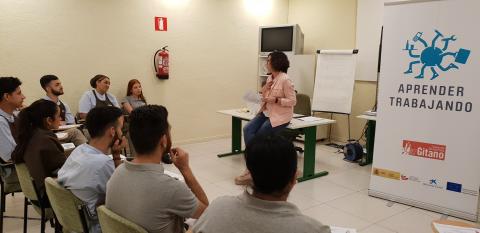
"Learning by Doing", run by Spain's Fundación Secretariado Gitano, was voted the most outstanding project relating to youth.  It deals with unemployment among young Roma people aged 16 to 30. Through a public-private partnership, the programme combines theoretical and practical training with the aim of breaking down stereotypes and prejudices against the Roma population in the companies involved with the initiative, and tackling wider social exclusion.

With its project Smooth integration of Ukrainian refugees into the Romanian social fabric - focus point Sibiu county, Romania's association SUS INIMA took the first prize in the category "European civil society for Ukraine". To date, this NGO has helped tens of thousands of Ukrainian refugees. In a shift from its usual work of offering support for cancer patients, SUS INIMA has developed a number of initiatives to help Ukrainians, ranging from school activities and finding a job, to getting therapy and psychological support. This in turn has enabled Ukrainian families to integrate smoothly into Romanian society, as it has given them a sense of belonging and a safe haven – both physical and mental.


MORE ON OTHER WINNING PROJECTS

CATEGORY 1 – EMPOWERING YOUNG PEOPLE

The second prize in the youth category went to the Portuguese association Movimento Transformers and their Superpower School volunteer programme, in which mentors give weekly classes to learners, mainly children and young people at risk of social exclusion. The programme enables young people to discover their talents – in areas such as cooking, martial arts, photography and creative writing – and develop skills that will empower them to become agents of change and give back what they have learned to positively transform their community.

Winner of the third prize, Associazione Agevolando from Italy, advocates for the rights and well-being of minors and young adults who have spent part or all of their childhood in foster or residential care and who need to become independent upon reaching the age of majority. Their Care Leavers Network Italia initiative is an informal nationwide network of young people aged 16 to 26 who have been in the care system. Its main goals are to encourage opportunities for exchange and learning.

CATEGORY 2 – EUROPEAN CIVIL SOCIETY FOR UKRAINE

The second prize was awarded to the Spanish Villavecchia Foundation (Spain). With its "You are in a Safe Place" emergency fund, it has provided care for young cancer patients and their parents. Seriously ill Ukrainian children were taken away from the horrors of war by international organisations and brought to safety to resume their treatment. One such safe place was Barcelona, where the foundation has been striving to offer these young Ukrainian patients and their families the best possible quality of life by making sure they get comprehensive care at all levels.

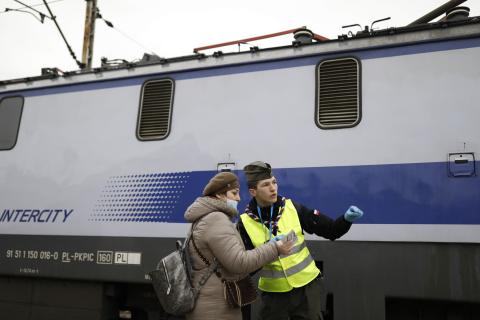
Third place went to the Polish Scouting and Guiding Association (ZHP), the country's biggest non-formal youth education organisation, which mobilised to help Ukrainians as soon as the war began. ZHP volunteers have maintained a presence at border crossings, guiding people to safety, providing information, collecting and transporting donations and organising "border patrols" experienced in first aid. It has focused in particular on Ukrainian children, collecting toys, supporting them psychologically and including them in scouting activities.

ABOUT THE CIVIL SOCIETY PRIZE 2022

This year's Civil Society Prize attracted 106 candidates from 21 Member States: 60 for category 1 (Youth) and 46 for category 2 (Ukraine).

The EESC hopes that its prize will encourage civil society to keep showing solidarity with Ukrainian people and continue giving a voice and power to the generation that is the future of Europe.
The Civil Society Prize is awarded for 'excellence in civil society initiatives'. Each year, the prize covers a different aspect of the EESC's work. In 2021, it rewarded projects that were creatively tackling the climate crisis. In 2020, the EESC launched a one-off Civil Solidarity Prize dedicated to the fight against COVID-19. The theme in 2019 was gender equality and women's empowerment.

Further details about the Civil Society Prize 2022 are available here.



Did you know?

Early school dropout rate among young Roma is 64% compared to 19% in the general population, and 78% lack basic skills as they never completed compulsory education. The unemployment rates of young Roma are three times higher than that of their peers in the rest of society. Learning by Doing programme, developed by our winner in the youth category, Spain's Fundación Secretariado Gitano, is fighting to change that. The programme offers young Roma an opportunity to gain work experience and receive training in leading companies which joined the initiative. The results are already there: 55% of the around 3 500 young Roma who have taken part in the programme got a job and 32% went back to school.

Read more in all languages

Early school dropout rate among young Roma is 64% compared to 19% in the general population, and 78% lack basic skills as they never completed compulsory education. The unemployment rates of young Roma are three times higher than that of their peers in the rest of society. Learning by Doing programme, developed by our winner in the youth category, Spain's Fundación Secretariado Gitano, is fighting to change that. The programme offers young Roma an opportunity to gain work experience and receive training in leading companies which joined the initiative. The results are already there: 55% of the around 3 500 young Roma who have taken part in the programme got a job and 32% went back to school.

The education of young learners in the Superpower School, a volunteer programme run by our winner from Portugal, Movimento Transformers, does not end there. They have to "give back" to the community what they have learned. They do it by identifying a social problem and solving it with the talent or "superpower" they have acquired. Although the Superpower School students – mostly children and young people at risk of social exclusion – have weekly classes in which they can develop talents such as cooking, photography, creative writing or skating, their mentors also work with them on developing different skills and teach them about values such as gender equality, environmental or social sustainability and positive communication. Some 80% of those who attended the Superpower School say they now know better what to do in life and 30% stopped receiving negative grades.

The Care Leavers Network was launched by our Italian winner, the volunteer organisation Agevolando, as an experimental project implemented in Italy's Emilia Romagna region in 2014. Today, it is a nationwide project, present in 12 Italian regions. It has to date involved 500 young care leavers from across Italy, who have come up with suggestions for innovation in the care system and given new impulses to national policies that should help young people stand firmly on their feet once they leave the system. One of their achievements is the National Experimental Fund for Care Leavers, which provides concrete support for young people up to age 21.

Our first prize winner for Ukraine, the Romanian association SUS INIMA, based its refugee inegration model on a simple questionnaire containing questions on different issues such as education, medical services, access to basic needs, overall quality of life etc. Once it obtains the replies, it develops activities and initiatives to meet the evolving needs stated by respondents. This has built trust between the host society and refugees and quickly enabled the latter to become community members.

"You are in a Safe Place" is not just the name of the Spanish emergency fund for Ukrainian children with cancer who resumed their medical treatment in Barcelona after the war came to their country. It is also the first phrase the members of the Villavechia foundation, the association which operates the fund, told the mothers and other family members of 16 young cancer patients when they arrived in Barcelona in mid-March 2022. To make the phrase come true, the Villavecchia foundation teamed up with many hospitals, volunteers and other entities to make sure young patients and their families are cared for and supported in the best possible way.

The Polish Scouting and Guiding Association (PSGA) has been actively helping Ukrainian refugees from the very first day Russia attacked. Its scouts were present at six border crossing points, and during the first month of the war they directly helped more than 1.5 million refugees. Overall, of the around three million Ukrainian civilians who fled the country to Poland, one in three received assistance in centres run by scouts and one in five children participated in scout-led activities. During the first months the volunteer service was provided 24 hours a day. The PSGA also collected 127 tons of aid, which was sent to Ukraine. (ll)

In the winners' words

Breaking stereotypes: Being Roma does not mean I don't want to work or fulfil my potential

The first prize winner, Spain's Fundación Secretariado Gitano, launched its project Learning by Doing in 2013. In the 10 years of its existence, the project has enabled more than half of the young Roma who have taken part to get a job and a third to return to the education system to complete their compulsory secondary education. But most strikingly, 87% of the young people who participated say that their lives have improved and 94% of the companies who took part in the project by employing them said they would be prepared to do it again. Fundacion's Raúl Pérez told us more.

Read more in all languages

The first prize winner, Spain's Fundación Secretariado Gitano, launched its project Learning by Doing in 2013. In the 10 years of its existence, the project has enabled more than half of the young Roma who have taken part to get a job and a third to return to the education system to complete their compulsory secondary education. But most strikingly, 87% of the young people who participated say that their lives have improved and 94% of the companies who took part in the project by employing them said they would be prepared to do it again. Fundacion's Raúl Pérez told us more.

EESC info: What prompted you to start your project or initiative?
Aprender Trabajando (Learning by Working) was launched in 2013 at a time of severe global economic crisis which, in the case of Spain, resulted in high unemployment rates, among other things. Unemployment hit the youngest section of the population hard: "In 2013, the youth unemployment rate stood at an unacceptable 55.48%" (Youth and Labour Market Report, June 2014, Ministry of Employment and Social Security). In the case of the Spanish Roma population, 60% of whom are under the age of 30 and whose unemployment rate is usually three times that of the general population, the situation was aggravated by the fact that they often do not have the basic compulsory qualifications (only 17% complete compulsory minimum education) and have neither training nor previous work experience (66% of young Roma people are in neither education nor employment) (Comparative study on the situation of the Roma population in Spain with respect to employment and poverty (2018). Fundación Secretariado Gitano).

In response to this situation, various measures have been put in place at national level (e.g. the Entrepreneurship and Youth Employment Strategy 2013-2016) and at EU level (e.g. the Youth Guarantee). The Fundación Secretariado Gitano, which at that time was receiving funding through the ESF's Fight Against Discrimination operational programme in order to develop Acceder, a training and employment programme involving the Roma population, had the opportunity (provided by European funds) to test a new training model for young Roma people from vulnerable backgrounds.

How was your project received? Did you have any feedback from the people you helped? (Can you give an example if you have?)
During its 10 years of development, Aprender Trabajando has trained more than 3 500 Roma people under the age of 30, as beneficiaries of the national Youth Guarantee scheme who were not in education or employment. It has enabled 55% to enter employment, and 32% have returned to the education system in order to complete their compulsory secondary education. 87% of the young people who participated say that their lives have improved and 94% of the partner companies would be prepared to work with Aprender Trabajando again (according to Aprender Trabajando's 2013-2021 Executive Report).

Below you will find two testimonies from Aprender Trabajando alumni, which you can hear in the video produced to mark our 10th anniversary: 10 years. Aprender Trabajando, 2022:
"I was unemployed for two years. We ended up homeless, drifting from one place to the next, with no idea of where we would end up. I got in touch with Aprender Trabajando because I wanted to train and get a job." This is the testimony of Manuel Lizárraga, who participated in Aprender Trabajando at the Fundación Secretariado Gitano headquarters in Burgos. He is currently part of the workforce of the company Alcampo.
Maria Bruno proudly states: "I want to work and fulfil my potential as a person just like anyone else. Being Roma does not mean this is not possible." Maria took part in Aprender Trabajando in Madrid with the company Bricodepot, located in Getafe. "I really enjoy going to work. I love the place and am surrounded by wonderful people. They treated me as a person, not like the new girl or the new Roma."

How will you use this specific funding to provide further help in the community? Are you already planning new projects?
Since their inception, the Acceder and Aprender Trabajando programmes have been largely urban, developing in the main cities of Spain and often focusing on employment in the service sector, predominantly in urban areas. All of this limits their scope, leaving out the Roma population in rural areas, who, despite facing similar problems to those in cities in terms of discrimination or restrictions on their access to employment, do not have the same opportunities to access this kind of support.

One challenge would therefore be to extend this experience to as many Roma people as possible, adapting the model to reach those areas where a significant number of Roma people live, but where the organisation has no offices (mainly rural environments), and involving businesses from sectors other than the traditional sectors of trade and hospitality.

To this end, whenever circumstances allow, we plan to use these funds to finance a study (or part of a study) to adapt Aprender Trabajando's model to rural environments, and to new sectors other than trade and hospitality.
Should it ultimately not be possible to put the funds towards this study, they will be reinvested in the Aprender Trabajando project itself, by purchasing materials for the activities in the theoretical phase.

What advice would you give to other organisations in terms of achieving results with such activities and programmes?

  • Any job integration project must include cooperation with companies throughout the design, implementation and monitoring process.
  • It is important to start with pilot projects and anticipate further upscaling from the outset, if the experience proves to be positive.
  • Introducing the role of tutors, both on the NGO side and on the company side, and ensuring that the communication and coordination process between the two is clear.
  • Combining theoretical and practical training in real work environments as an effective avenue for training that matches the requirements of the labour market and as a way to promote subsequent employment opportunities.
  • Adapting training courses and processes to the needs and circumstances of those targeted, in order to ensure that they have equal access to training and employment resources.

Do you think the EU is doing enough to help disadvantaged youth? Would you have any advice or recommendations for specific actions?
Mechanisms need to be put in place to ensure that countries (at state, regional or local level) implement effective projects to integrate the most disadvantaged young people into the labour market and that these projects actually reach those who need it most, such as the Roma population. It is essential to ensure interventions have a long-term approach, which is key to bringing about real changes in the lives of these young people.
Perhaps there could be greater co-financing of such projects by European funds in order to make it easier to invest in them in these terms.
Where any European financial resources involving recruitment are used (e.g. large investments being made or to be made under NextGenerationEU funds), there should be encouragement to include clauses for the recruitment of disadvantaged young people.


What's your superpower?

Students of the Superpower School – most of whom are young people at risk of social exclusion – do not only develop their skills and talents such as cooking, photography or creative writing. The school, run as a volunteer programme by the Portuguese association Movimento Transformers, also equips them with skills and knowledge that will help them build self-esteem and become active members of society. We found out more from Movimento Transformers' Joana Moreira.

Read more in all languages

Students of the Superpower School – most of whom are young people at risk of social exclusion – do not only develop their skills and talents such as cooking, photography or creative writing. The school, run as a volunteer programme by the Portuguese association Movimento Transformers, also equips them with skills and knowledge that will help them build self-esteem and become active members of society. We found out more from Movimento Transformers' Joana Moreira.

EESC info: What prompted you to launch your project or initiative?

We believe that the reason young people don't engage is not because they don't want to make a difference, but because they haven't yet found the best way to do so. It was on this premise that we created the Transformers movement, allowing young people to contribute to their communities using their talents.

How has your project been received? Have you had any feedback from the people you've helped?

The project has been a success and we have already mobilised more than 6 000 young people across the country. Many of our trainees have become mentors, sharing the skills they learned with other young people, establishing an informal cycle of knowledge and a real systemic impact.

How will you use this specific funding to provide further help in the community? Are you already planning any new projects?

With this funding we'll be able to increase our impact by working with more young people at national level. We'll also resume our annual event, TCONF (a conference by young people for young people), this year focusing on young people's mental health.

What advice would you give to other organisations in terms of achieving results with such activities and programmes?

To work together with others, have an advocacy strategy, recruit the best people into their teams and ask for help when needed. We believe that championships are never won by working alone, and we always need allies so we can bring about real change in public policy and have a positive impact.

Do you think the EU is doing enough to help disadvantaged youth? Would you have any advice or recommendations for specific actions?

I believe that the path is being well travelled, with exchange programmes for young people to discover the world, giving them opportunities for training and for participation. However, I would like to see more sharing of other organisations' best practices, as there are methodologies that can cross borders; for example, our Superpower Schools programme, which could be implemented by any EU organisation working with disadvantaged young people.


Agents of change

The Agevolando association is an Italian volunteer organisation which brings together minors and young adults who spent a part of or their entire childhood in care and have to leave the system to live independently. As this transition is far from easy, Agevolando created a project which won them the 2022 Civil Society in the category on youth – the Care Leavers Network (CLN). Its aim is to create a space for care leavers to come up with their own proposals and solutions and to become key players in creating a care system that truly meets their needs as well as making the journey towards adulthood as smooth as possible for everyone in their situation. We spoke to the president and project manager of Care Leavers' Network, Federico Zullo and Cecilia Dante.

Read more in all languages

The Agevolando association is an Italian volunteer organisation which brings together minors and young adults who spent a part of or their entire childhood in care and have to leave the system to live independently. As this transition is far from easy, Agevolando created a project which won them the 2022 Civil Society in the category on youth – the Care Leavers Network (CLN). Its aim is to create a space for care leavers to come up with their own proposals and solutions and to become key players in creating a care system that truly meets their needs as well as making the journey towards adulthood as smooth as possible for everyone in their situation.  We spoke to the president and project manager of Care Leavers' Network, Federico Zullo and Cecilia Dante.

EESC info: What prompted you to launch this initiative?

The CLN (Care Leavers Network) was created after it became clear that "care leavers" actively involved in the Agevolando association needed to have a space dedicated to them, so that they could "compare notes" with each other and collectively come up with proposals for improvements to the care system and subsequent transition to adulthood in Italy and Europe. Agevolando chose to promote the advocacy of care leavers by carrying out this project, which, since 2013, has enabled them to play a leading role in putting forward proposals and engaging in discussions with institutions and professionals, which is bringing about a real change in the system of care for children and "leaving care" in Italy.

How has your project been received? Have you obtained any feedback from the people you helped? If so, could you give us an example?
The project has been very well received by the institutions dedicated to children in our country, both at local and national level. In 2015, the Garante Nazionale per l’Infanzia e l’Adolescenza (Italian Ombudsman for Children and Adolescents) wished to support the expansion of the CLN to be a national body – it previously existed only in Emilia Romagna – and since then it has involved care leavers in many regions, and every year there are requests to extend it into others, demonstrating recognition of the value of the project. The young people involved in the CLN greatly appreciate its objectives and results, both in terms of the influence that their recommendations have had on legislation and the professional culture, as well as with regard to the relationships that have developed between them, with a view to mutual support, and with the contact persons, the adults involved who follow their progress and facilitate the various processes. Many young people involved in the project have been able to benefit from other internal projects and opportunities provided by the association (with the project "Se avessi" for example, they have also been financially supported in terms of psychological, housing, study and work support).

How will you use this specific funding to provide further help in the community? Are you already planning any new projects?
The funds will be used to ensure the continuity of the project and its sustainability over time. In Italy, it is difficult to find funding and resources to support youth participation and advocacy projects, which are not widespread enough. This difficulty does not call into question the importance and validity of the project and the need to carry it forward over time in a systematic manner, so that all of the around 6 000 care leavers who leave the care system every year in Italy when they reach the age of 18 can choose to join the CLN.

What advice would you give to other organisations in terms of achieving results with such activities and programmes?
We would recommend facilitating pathways for the active involvement and leadership of young people – whether care leavers or other young people with difficulties – so that they can organise themselves as associations and build advocacy and mutual self-help paths together, promoting actions to involve other young people in close cooperation with organisations that express the views of professionals and adults, at local, national and European level.

Do you think the EU is doing enough to help disadvantaged youth? Would you have any advice or recommendations for specific actions?
The EU is demonstrating a more significant and practical focus on young people living in disadvantaged conditions than it did in the past, but there is still much to be done in terms of promoting universal rights and opportunities for their full inclusion. We propose that there should be considerable investment in the participation of young people in every area of activity and life, thus promoting their empowerment and facilitating empowerment processes that can foster powerful and constructive participation in society. We believe that it could make a crucial difference if EU Member States were instructed to put in place mechanisms, including institutional ones, to guarantee such fully fledged participatory measures, with a targeted and appropriate allocation of resources.


My home is your home

SUS Inima has to date helped tens of thousands of Ukrainian refugees by finding them a place to live, covering their basic needs or providing them with education. It also offers them psychological support to deal with war trauma. The infrastructure to help refugees navigate Romania's economic and legal framework is being set up. This is all with the goal of enabling them to integrate into Romanian society as smoothly as possible, making them feel at home. We talked to SUS Inima's Lu Knobloch.

Read more in all languages

SUS Inima has to date helped tens of thousands of Ukrainian refugees by finding them a place to live, covering their basic needs or providing them with education. It also offers them psychological support to deal with war trauma. The infrastructure to help refugees navigate Romania's economic and legal framework is being set up. This is all with the goal of enabling them to integrate into Romanian society as smoothly as possible, making them feel at home. We talked to SUS Inima's Lu Knobloch.

EESC info: What prompted you to start your project or initiative?

SUS INIMA developed the intervention and crisis response programmes because, on a local level, an entity was needed that could collaborate with public and private bodies, whilst ensuring transparency and a valid collaboration platform for all willing stakeholders to provide assistance. And the fact that the majority of refugees from Ukraine were women and children, many of whom were abroad for the first time and had no experience in legal paperwork, planning trips, etc. The situation has been more complicated due to the language barrier.

How has your project been received? Have you had any feedback from the people you've helped? (Can you give us an example, if you have any?)

Initially the help offered was received with a certain sense of reluctance, however, the number of grateful beneficiaries of all types of intervention actions, support or supply of a variety of services, be it accommodation, transport, coverage of basic needs (food and CRIs) as well as education has increased significantly.

How will you use this specific funding to provide further help in the community? Are you already planning any new projects?

The specific funding will be used on two channels: 1) psychological support to refugees, primarily for children in order to help them deal with trauma; 2) developing a new initiative outlining economic and social cohesion, in the sense of setting up an infrastructure that can assist and advise refugees with a basic understanding of the legal and economic framework for Romania and actively promote and assist with finding employment or opening a local business, thus promoting active citizenship and sustainable societal inclusion.

What advice would you give to other organisations in terms of achieving results with such activities and programmes?

  • Focus on cooperating with the local authorities, stakeholders and NGOs instead of competing,
  • And base all programmes or initiatives you want to develop on case studies of the actual needs of beneficiaries.

Do you see solidarity fatigue with Ukrainian refugees kicking in if the war in Ukraine persists? What can and should civil society organisations do to prevent this from happening? Could the EU play a positive role here?

Solidarity is still at a high level. However, the volume of support provided by local communities is decreasing due to resource exhaustion. One solution to the existing needs is continuation of support and aid provided to the refugees in terms of their integration within the local communities they are in. Additionally, simplification, to a certain extent, of paperwork and procedures needed for Ukrainian refugees to be employed, open a company, get access to bank accounts, insurance and medical services. This is needed in order to ensure a sustainable decrease in financial dependence on external sources. Civil society is playing a key role in the development and implementation of aid deployment and support of the refugees. The EU can help with creating broader networks at the EC level, thus supporting and facilitating a know-how exchange that can be beneficial to all parties involved: implementors and beneficiaries.

Many hands make light work

When the news about the evacuation of children with cancer from Ukraine reached the Villavecchia Foundation, its staff did not hesitate for a second. They immediately volunteered to welcome and assist the children and their families. But to be able to give these children the adequate care and support they really needed, the foundation had to team up with hospitals and many other entities and volunteers. Together, they managed to create a safe place for the young patients in Barcelona. Natàlia Ferrer Ametller shared their story with us.

Read more in all languages

When the news about the evacuation of children with cancer from Ukraine reached the Villavecchia Foundation, its staff did not hesitate for a second. They immediately volunteered to welcome and assist the children and their families. But to be able to give these children the adequate care and support they really needed, the foundation had to team up with hospitals and many other entities and volunteers. Together, they managed to create a safe place for the young patients in Barcelona. Natàlia Ferrer Ametller shared their story with us.

EESC info: What prompted you to start your project or initiative?

We were informed that children with cancer were being evacuated from Ukraine and we offered our help to the administrations involved and to the international organisation that was managing the evacuation. When we were tasked with organising the whole operation, we received immediate support from the Josep Carreras International Foundation with a view to us managing the whole operation together. Many other entities offered to help. We did not hesitate for a second; we had to help in those areas where we were able to do so: welcoming and assisting children with cancer and supporting their families, in coordination with the referral hospitals.

How was your project received? Did you have any feedback from the people you helped? (Can you give an example if you have one?)

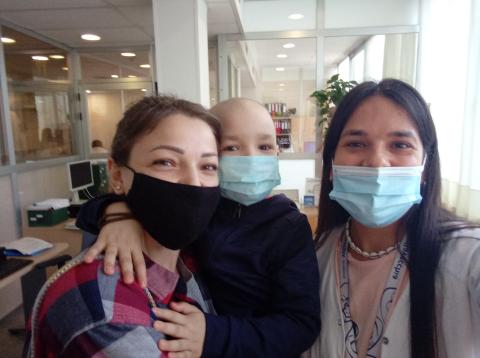
It was a very intense experience and we learned many things. Above all, we learned about the harsh situations of refugees. The biggest difficulty was the language, as well as some cultural aspects. However, we had help from many volunteers, who did tremendous work as interpreters, accompanying children during all their hospital stays, ambulance rides, visits and formalities. Many treatments have progressed very well and many children have already completed their acute treatment and are in the maintenance phase. Some of them have been able to return home. For example, here is a picture of one of the children, Mykola, and his mother, together with our hospital social worker. We went through a very difficult time together and the best gift was the children's smiles and their mothers' sense of calm.

How will you use this specific funding to provide further help in the community?

To continue working. We have three families whose children are still at an acute stage due to complications with their treatment. They need housing, maintenance, travel, medication assistance, translation, etc., and the rest of the families need to continue to feel that we remain close at hand.

Are you already planning new projects?

Yes, we are working to create the Victoria Pavilion, which is a paediatric hospice and the first of its kind in Spain. This will be a place to care for children with diseases that cannot be cured who are at advanced stages or in their last days of life. We will renovate a historic building in a very emblematic place in the Sant Pau Hospital in Barcelona.

What advice would you give to other organisations in terms of achieving results with such activities and programmes?

We believe that it is very important to clearly identify needs and to design projects that address what needs to be addressed, however difficult it may be. You need to know how to listen, learn, accept help and team up with other entities that work in a complementary way. You need to appreciate the work of others and all move towards the same goal together.

Do you see solidarity fatigue with Ukrainian refugees kicking in if the war in Ukraine persists?

Unfortunately, current events quickly become old news and the solidarity they generate can be short-lived. However, it is also true that people have a lot of capacity to persist and to fight for rights and social justice.

What can and should civil society organisations do to prevent this from happening?

Call on the authorities to continue to provide aid and to strengthen the role of social bodies.

Could the EU play a positive role in this regard?

Yes, by promoting recommendations at European level for governments and administrations to work together and facilitate the work of the relevant bodies. It won't work if we have administrations working on one side and bodies on another, with no link between them. Public administrations need civil society and the latter cannot and should not be isolated. Many social bodies have been working without the support of public administrations. We know that being open and working in a network requires effort, but also that there is absolutely an opportunity to work together.

Shaping future generations of engaged citizens

The Polish Scouting and Guiding Association, the country's biggest non-formal youth education organisation, rushed to help Ukrainian refugees from day one of the war, attending to their various evolving needs. The PSGA is proud that its members decided to take up service in support of Ukraine without a second thought, for which it can also take credit. The ideals that the PSGA instils in its young members encourage them to try to make the world a better place, which is an effort that should be made by each and every one of us on a daily basis. We had many questions for Olga Junkuszew, the Polish Scouting and Guiding Association spokesperson.

Read more in all languages

The Polish Scouting and Guiding Association, the country's biggest non-formal youth education organisation, rushed to help Ukrainian refugees from day one of the war, attending to their various and evolving needs. The PSGA is proud its members decided to take up service for Ukraine without a second thought, for which it can also take credit. The ideals that the PSGA instils in its young members encourage them to try to make the world a better place, which is an effort that should be made by each and every one of us on a daily basis. We had many questions for Olga Junkuszew, the Polish Scouting and Guiding Association spokesperson.

EESC Info: What prompted you to start the project?
It was only natural that we should respond to this crisis — service is an extremely important aspect of the Polish Scouting and Guiding Association's educational work. The reaction of the PSGA's members showed that our continuous educational work and the ideals we convey to young people truly have an impact on their lives, supporting them and encouraging them to make the world a better place. We are proud that our members decided to take up service in support of Ukraine without a second thought.

How was your project received? Did you have any feedback from the people you helped? (Can you give us an example, if you have any?)
Our project was very well received. We estimate that one in three Ukrainian refugees received support in centres run by scouts and that nearly 6000 children were able to have the opportunity to go to summer camps. We know that this gave children the chance to experience the physical, mental and emotional rest they so dearly needed. Our actions have evolved alongside the changing needs. We know that it was viewed positively that we were able to constantly meet successive challenges. We also receive positive feedback from the Ukrainian scouting organisations we are in contact with.

How will you use this specific funding to provide further help in the community? Are you already planning new projects?
Thanks to the monetary prize we will be able to further develop our educational programme, which allows us to shape future generations of engaged citizens who take the initiative and are there where they are needed, responding to the challenges of today's world. Thanks to these funds, the PSGA's members will be able to continue to grow among friends, while acquiring lifelong skills and building their character according to scouting values.

What advice would you give to other organisations in terms of achieving results with such activities and programmes?
We believe that for an organisation to achieve results it must always work according to its values and only act in line with its mission. Then it will not be necessary to worry about the results or the engagement of its members.

Do you see solidarity fatigue with Ukrainian refugees kicking in if the war in Ukraine persists? What can and should civil society organisations do to prevent this from happening? Could the EU play a positive role here?
Of course! As scouts from the Polish Scouting and Guiding Association, we believe that each of us should make the effort every day to leave the world at least a little better than we found it. This means that people should be encouraged to take small actions every day that continue to change the world around us. Helping Ukraine is a marathon, not a sprint. We need to remember this and provide support in our immediate, everyday lives.

Editors

Ewa Haczyk-Plumley (editor-in-chief)
Daniela Marangoni (dm)
 

Contributors to this issue

 Laura Lui (ll)
 

Coordination

Agata Berdys (ab)
Giorgia Battiato (gb)


Address

European Economic and Social Committee
Jacques Delors Building,
99 Rue Belliard,
B-1040 Brussels, Belgium
Tel. (+32 2) 546.94.76
Email: eescinfo@eesc.europa.eu

EESC info is published nine times a year during EESC plenary sessions. EESC info is available in 24 languages
EESC info is not an official record of the EESC’s proceedings; for this, please refer to the Official Journal of the European Union or to the Committee’s other publications.
Reproduction permitted if EESC info is mentioned as the source and a link  is sent to the editor.
 

February 2023
02/2023

Follow us

  • Facebook
  • Twitter
  • LinkedIn
  • Instagram