
European Economic
and Social Committee
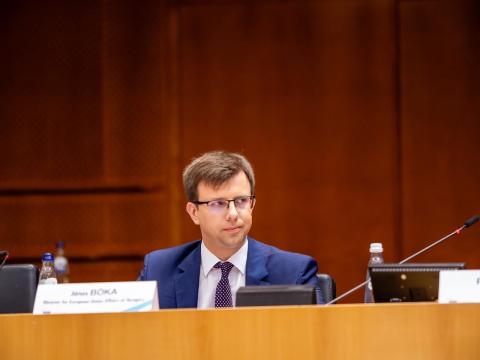
The EESC's July plenary session included a debate with the Hungarian Minister for European Union Affairs, János Bóka, who presented the main priorities of the Hungarian Presidency of the Council of the EU.
Hungary is taking up the rotating presidency at a sensitive time for Europe, a time of political transition within the institutions and extraordinary challenges for the Union. ‘The 2024 Hungarian Presidency of the Council comes at a time of multiple crises,’ said Mr Bóka. ‘We are witnessing war in our neighbourhood, declining European competitiveness, increasing tensions in the EU’s trade relations, demographic challenges, uncontrolled migration and decreasing prospects for European farmers.’
Pointing out that the Committee had a long-standing history of working well with Council presidencies, the EESC president Oliver Röpke spoke about the institution’s role as a guardian of European values: ‘Our Committee is committed to working closely with the Hungarian presidency to ensure that the EU is taking action on what Europeans feel are the most urgent priorities. We will be invaluable partners, but also outspoken and constructive critics. Civil society has a strong voice, and we will ensure that it is heard.’
Some EESC members voiced concerns about Hungary’s position on Russia’s war of aggression against Ukraine, respect for the rule of law in the EU, and the shrinking space for civil society in Hungary. Mr Bóka said that the Hungarian presidency was fully aware of its responsibilities and subscribed to both the EU’s common position on Ukraine and the rule of law and European values. The Hungarian presidency has already contacted the EESC and requested ten exploratory opinions. For more information on the EESC’s activities during the Hungarian presidency, please check the EESC website. (mp)