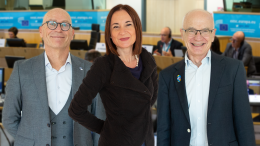
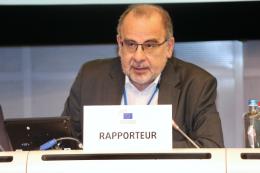
Pour des raisons d’ordre économique, physiologique et socio-culturel, les femmes pourraient tomber plus facilement en proie à la précarité énergétique que les hommes. Devant les statistiques alarmantes publiées récemment, il a été demandé à l’Union européenne, à l’occasion du débat organisé sur ce thème par le Comité économique et social européen (CESE), d’adopter des politiques tenant spécifiquement compte de la question de l’égalité entre les hommes et les femmes.
XV Connecting EU Seminar
24-25 November 2022
Hotel Dubrovnik| Ljudevita Gaja 1, Zagreb
The European Economic and Social Committee (EESC), in partnership with the Economic and Social Council of Croatia (GSV), is organising its annual Civil Society Communication seminar, #ConnectingEU2022, on 24-25 November 2022, on: Geopolitical turmoil at Europe's door: the perspective of civil society
Le Comité économique et social européen (CESE) souligne que les transports publics jouent un rôle essentiel pour garantir l’accès aux services de base et leur continuité. La pandémie de COVID-19 ayant modifié le comportement des citoyens en matière de mobilité, l’UE a besoin d’une stratégie spécifique pour améliorer celle-ci et faire en sorte qu’elle soit réellement respectueuse de l’environnement et des personnes.
The European Economic and Social Committee (EESC) has held a debate on women's representation and participation in the workforce. The event gathered insights, success stories and best practices from our CCMI members and delegates. The conclusions drawn will make an important contribution to the EESC's ongoing initiative on gender equality.
A coordinated and systematic approach to skills training is needed to ensure that all Europeans can face the challenges of the green and digital transitions, the European Economic and Social Committee(EESC) and the European Centre for the Development of Vocational Training (Cedefop) emphasised at their fourth Policy Learning Forum on 16 November.
The EESC held a debate on gender-based investments in the Member States' national Recovery and Resilience Plans (RRPs). Following on from the European Gender Equality Week, the event gathered policy-makers, experts from organised civil society and academia to discuss, among other things, how EU countries can improve the impact of the measures proposed in their RRPs on gender equality during implementation and monitoring.
En ces temps où la guerre a fait son retour sur le continent européen, la culture doit plus que jamais devenir un vecteur stratégique primordial de la politique étrangère de l’Union. Pour en capter tout le potentiel, le CESE préconise la mise en place d’un plan d’action stratégique et pluriannuel en bonne et due forme en matière de diplomatie culturelle.
The European Economic and Social Committee (EESC) recommends that Digital Innovation Hubs be reinforced to boost the EU’s innovation capacity as part of the transition to a sustainable future. DIHs provide valuable infrastructure for small and medium-sized enterprises (SMEs) that might otherwise struggle to become greener and more digital.
In two newly adopted opinions, the European Economic and Social Committee (EESC) gives updated views on the Commission's Annual Sustainable Growth Survey 2022, which outlines the upcoming economic and employment policy priorities for the EU, as well as on the Recommendations on euro area economic policy for 2022. The EESC calls for a balanced approach that does not jeopardise the EU's social and environmental goals.
Le Comité économique et social européen (CESE) presse la Commission européenne et les États membres d’élaborer rapidement un plan pour renforcer la préparation de l’Union aux situations d’urgence. Ce plan devrait notamment viser à accroître la souveraineté de l’UE en ce qui concerne la production d’énergie, de denrées alimentaires et d’eau, ainsi que l’extraction de matières premières.