The EESC issues between 160 and 190 opinions, evaluation and information reports a year.
It also organises several annual initiatives and events with a focus on civil society and citizens’ participation such as the Civil Society Prize, the Civil Society Days, the Your Europe, Your Say youth plenary and the ECI Day.
Here you can find news and information about the EESC'swork, including its social media accounts, the EESC Info newsletter, photo galleries and videos.
The EESC brings together representatives from all areas of organised civil society, who give their independent advice on EU policies and legislation. The EESC's326 Members are organised into three groups: Employers, Workers and Various Interests.
The EESC has six sections, specialising in concrete topics of relevance to the citizens of the European Union, ranging from social to economic affairs, energy, environment, external relations or the internal market.
A conference held in Brussels by the European Economic and Social Committee and the Basque Government showcased the political and social importance of services of general interest in making intergenerational solidarity a reality in Europe and building a more inclusive society.
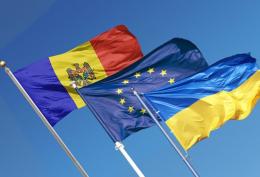
As a steadfast supporter of the European Union's enlargement, the European Economic and Social Committee (EESC) welcomes the formal opening of the first negotiation cluster (known as the ‘Fundamentals’ cluster) at the second Accession Conferences held respectively with Ukraine and the Republic of Moldova in Luxemburg on 15 June 2026.
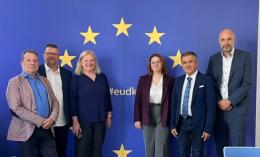
On 9-10 June 2026, the Fundamental Rights and Rule of Law (FRRL) Group of the European Economic and Social Committee (EESC) concluded a two-day visit to Copenhagen.