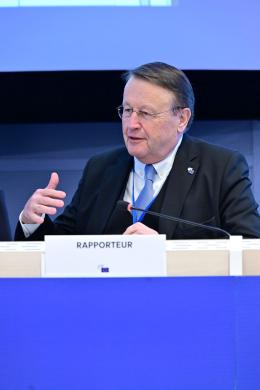
This public hearing will aim to present and discuss the European Commission's Action Plan against Cyberbullying, bringing together key institutional actors, civil society organisations, social partners and experts to exchange views on effective prevention and response measures. The discussion will contribute to the preparation of the EESC Opinion SOC/869.
The permanent group on Inclusion of the Roma is organising a public hearing on 8 June 2026 on the topic of "United in Diversity: Roma Inclusion and Our Shared European Culture". The hearing will bring together policy-makers and civil society organisations to exchange views on how Roma culture is connected to a shared European identity, as well as on the visibility of Roma contributions in culture, media, and education across the European Union.
An interview with Joe healy - his role as the rapporteur of the Common Agricultural Policy (CAP) post-2027 opinion, the evaluation report on the Common Agricultural Policy delivery on its objectives, and as vice-president of the Permanent Group on Sustainable Food Systems.
In an opinion on the Commission’s proposed 'AGILE' programme, the European Economic and Social Committee (EESC) supports efforts to speed up defence innovation in the EU but warns that speed must not come at the expense of balanced funding, equal access and democratic scrutiny.
EU policymakers, industry leaders and innovation experts are calling for sweeping reforms to help European startups scale and compete globally, warning that persistent barriers such as fragmented regulations, limited market access and risk-averse culture are stifling Europe's innovation potential.