ByChristian MOOS, rapporteur for the EESC opinion on ProtectEU: Agenda to prevent and counter terrorism, member of the Civil Society Organisations’ Group, representing the German Civil Service Association dbb
At its plenary session on 18 June, the EESC held a debate with the EU Commissioner for Environment, Water Resilience and a Competitive Circular Economy, Jessika Roswall. Read the key messages of the members of the EESC Civil Society Organisations’ Group.
The objective of the EU Inc. is not to replace national legal systems, but to complement them by creating optional European legal frameworks that companies can choose when operating across borders. Its purpose is not harmonisation for its own sake, but the gradual removal of internal barriers that continue to fragment the Single Market. EU Inc. is the first practical expression of this approach.
Save the date! On 15 September, the CCMI will organise a high-level event bringing together European civil society and key stakeholders to help shape the EU’s contribution to the UN Water Conference 2026. Building on the EESC’s work on the EU Blue Deal and its recently adopted opinion on this process, the event will foster dialogue and deliver key recommendations from civil society to EU and global decision-makers, feeding into global water policy discussions.
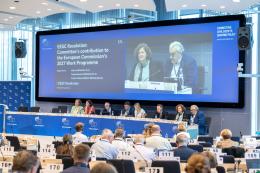
At its plenary session on 18 June, the EESC held a debate on the Committee’s Contribution to the European Commission’s 2027 work programme. Read the key messages of the members of the EESC Civil Society Organisations’ Group.