EU enlargement is a key priority for the European Economic and Social Committee (EESC). The Committee considers enlargement to be a geostrategic investment in a strong, stable, secure and united Europe, grounded in shared democratic values.
Public debate in the ECO Section on the The Multiannual Financial Framework after 2027 - Assessing progress and outstanding challenges. The event will take stock of developments in the negotiations since the Commission presented their proposals for the next Multiannual Financial Framework and discuss outstanding challenges.
The debate of the EESC on “Strong regions for a safe Europe:Resilience and growth of EU Eastern border regions” will focus on the strategic importance of strengthening resilience and fostering sustainable growth in the European Union’s eastern border regions.
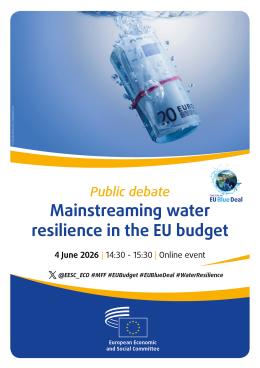
Mainstreaming Water Resilience in the EU Budget is a timely discussion on securing Europe’s water future. Discover how smarter EU investments can strengthen water resilience, sustainability, and preparedness, and how we should shape tomorrow’s funding priorities across programmes in the context of the EU´s next Multiannual Financial Framework.
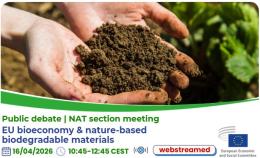
The debate will explore how the EU can strengthen its bioeconomy strategy and scale up the use of nature-based biodegradable materials to advance circularity, resource efficiency, and sustainability.
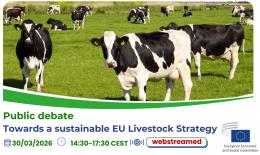
On 30 March 2026, the EESC Permanent Group on Sustainable Food Systems (PG) will hold a public debate “Towards a sustainable EU Livestock Strategy”, with the aim to contribute to the European Commission’s upcoming EU Livestock Strategy.
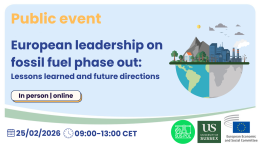
On 25 February 2026, the University of Sussex and the EESC will host an event and workshop on European leadership on fossil fuel phase out: Lessons learned and future directions.
It is taking place at a critical moment - following the outcomes of COP30, amid growing calls for concrete roadmaps to accelerate the transition away from fossil fuels, and ahead of the world’s first summit on a just transition away from fossil fuels in 2026 - the event will examine how EU leadership, experience, and policy tools can help accelerate action within Europe and beyond.
Public debate in the ECO Section on the Latest twists and turns on the road to the next Multiannual Financial Framework in the framework of the opinion ECO/682 Multiannual financial framework 2028-2034.
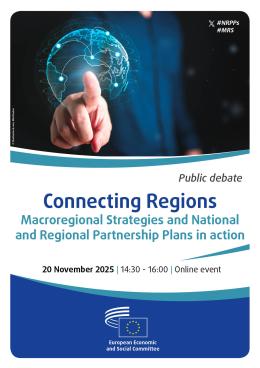
The EESC's objective with this debate is to underscore the importance of aligning macroregional strategies with national regional partnership plans (NRPPs) in order to boost cohesion and cross-border cooperation.