Information Report ECO/651 and Own-initiative opinion ECO/652 are a continuation of the European Semester Group's (ESG) work to consult annually national economic and social councils, social partners and civil society organisations from EU Member States on reform and investment proposals made in the context of the European Semester and their implementation in the Member States. The Information Report aims to collect the views of social partners and civil society organisations in the Member States on the reform and investment proposals and their implementation, in particular those indicated in the 2024 Country-Specific Recommendations. The Own-initiative opinion aims to complement the Information Report and to include the EESC's policy recommendations based on the results of the stakeholder consultation. It allows the EESC to formulate general and specific considerations, and to present the associated EESC's conclusions and policy proposals.
Download — Information report: The point of view of organised civil society in the EU Member States on national reform and investment proposals and their implementation (2024-2025 European Semester cycle)
After the European elections, what agenda for the EU?
In this issue:
Our members share their expectations and proposals for the EU agenda 2024-2029
Guest articles by László Bercse (Vice-President, Inclusion Europe), Rareș Voicu (President, European Youth Forum) and Radu Caragea-Szucs (Vice-President, Funky Citizens)
Special interview with EESC Vice-President Aurel Laurenţiu Plosceanu on the European elections
Report on our recent conference on 'The State of Health in the EU'
Interview with rapporteur Stoyan Tchoukanov on the EESC opinion 'Promoting autonomous and sustainable food production: strategies for the Common Agricultural Policy post-2027'
EESC with this Resolution, calls on the Member States of the European Union and its leaders, the European institutions and the EU citizens, to safeguard and protect the economic, social and territorial cohesion of the EU according to Article 174 of the TFEU.
The fundamental principle of cohesion policy, according to which ‘no one should be left behind’, remains sound and valid. Civil society partners are ready to continue working towards it by means of a solid EU investment policy.
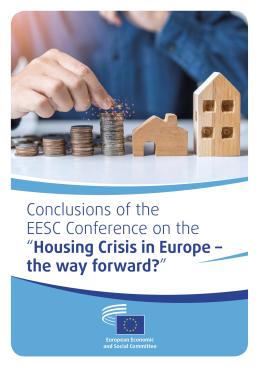
On 20 February 2024 in Brussels, the EESC organised a conference on the Housing Crisis in Europe. This publication sets out the participants' assessment of the current state of affairs and their recommendations on how to tackle the current housing crisis.
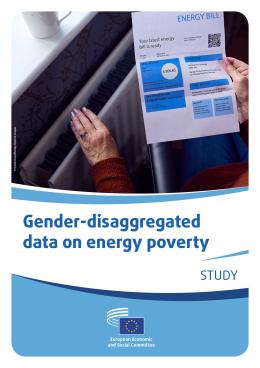
Recent economic shocks from the COVID-19 pandemic and the energy crisis in Europe following Russia’s invasion of Ukraine have brought energy poverty to the forefront of social and political debate. While EU policies increasingly address energy poverty, gender considerations remain overlooked. This study addresses this gap and aims to increase the understanding of the gender-energy poverty nexus, analysing existing literature and EU and national policies.
Every year in February, the EESC adopts an opinion on the Annual Sustainable Growth Survey (ASGS), which the Commission usually presents at the end of November in the year before. The Communication on the ASGS 2024 outlines the economic and employment policy priorities for the EU for the following 12 months, focusing on short-term energy shock mitigation, medium-term sustainable growth and resilience in the EU, and alignment with the long-term EU objectives.
The structured approach centres around the 4 dimensions of competitive sustainability, and is aligned with the United Nations Sustainable Development Goals. The ASGS continues to guide Member States in the implementation of the national Recovery and Resilience Plans, with the European Semester playing a central role, especially in the ongoing revision of the European economic governance framework.
In its opinion on 'Additional considerations on the euro area economic policy 2024', the EESC urges closer coordination of national budgetary policies and considers instruments like NextGenerationEU essential for future stability.
The EESC recommends including similar tools in the EU’s future financial frameworks to ensure resilience and fiscal sustainability.
The Committee calls for the completion of the Capital Markets Union to prevent investors from migrating to global markets, prioritising financial market stability and consumer protection, and highlights the need to fully implement the Banking Union by addressing regulatory disparities across Member States, creating a common deposit insurance scheme, and mobilising financial resources for European infrastructure projects.
Lessons learned from the first years of the implementation of the programming period 2021-2027
Event type
Debate
Location
Online event
Belgium
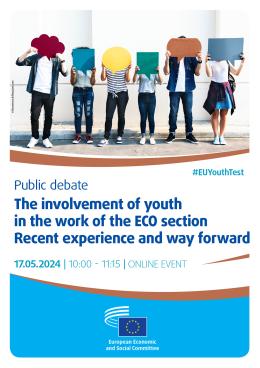
Public debate on 9th Cohesion report: Lessons learned from the first years of the implementation of the programming period 2021-2027, in the framework of the ECO section meeting.