Oliver Röpke, President of the European Economic and Social Committee
Organisation
European Economic and Social Committee (EESC)
Today, Europe celebrates its anniversary. We, celebrate peace, stability, and unity brought by the European Union. We reflect on how our Union has grown and evolved, and the remarkable progress we have made together over the years. Europe is not just a peace project, but an idea of a better future. It is a future worth fighting for. Today, let's stand up for what matters. Let's stand up for Europe.
The Netherlands Bar has published its annual report for 2023. In it, the Netherlands Bar gives a bird's eye view of how it has fulfilled its (statutory) duties as a public-law professional organisation. As in previous years, the Netherlands Bar promoted the democratic rule of law, the protection of fundamental rights and an independent legal profession, in the interest of the litigant.
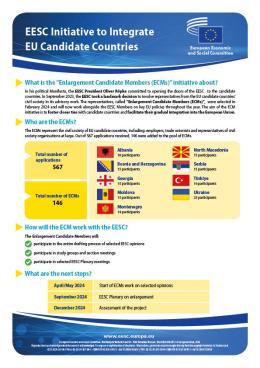
In his political Manifesto, the EESC President Oliver Röpke committed to opening the doors of the EESC to the candidate countries. In September 2023, the EESC took a landmark decision to involve representatives from the EU candidate countries’ civil society in its advisory work