The European Economic and Social Committee (EESC) has given its backing to the European Citizens’ Initiative (ECI) My Voice, My Choice: For Safe and Accessible Abortion, endorsing its proposal for an EU solidarity mechanism enabling women who cannot access abortion in their home country to receive care in another Member State.
The European Economic and Social Committee (EESC) has given its backing to the European Citizens’ Initiative (ECI) My Voice, My Choice: For Safe and Accessible Abortion, endorsing its proposal for an EU solidarity mechanism enabling women who cannot access abortion in their home country to receive care in another Member State.
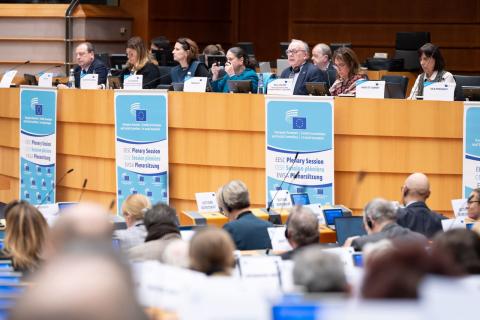
During its January plenary session, the EESC adopted an opinion on the ECI, following a debate that underscored that abortion is a fundamental human right that must be protected for every woman.
EESC President Séamus Boland stressed civil society’s essential role, stating that ‘ensuring that rights and services are not only guaranteed in principle, but accessible in practice, lies at the heart of social justice and political responsibility.’
The debate highlighted persistent inequalities across Europe, where restrictive laws or insufficient healthcare force many women abroad or leave them without safe options.
The European Commission’s Deputy Director‑General for Justice and Consumers Irena Moozová noted that the Commission is evaluating the ECI, with conclusions expected by 2 March. Members of the European Parliament and civil society groups warned of a global backlash against reproductive rights. Member of the European Parliament’s Women's Rights and Gender Equality Committee (FEMM) Abir Al‑Sahlani noted that ‘history was made’ when Parliament adopted a resolution supporting the ECI, while Mary Collins of the European Women’s Lobby stressed the need to push back against disinformation.
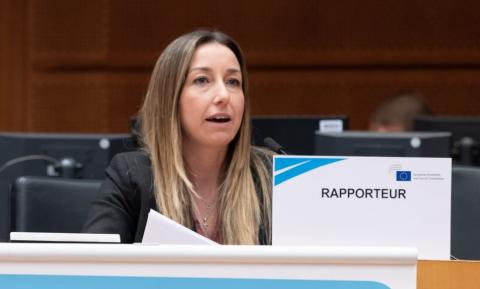
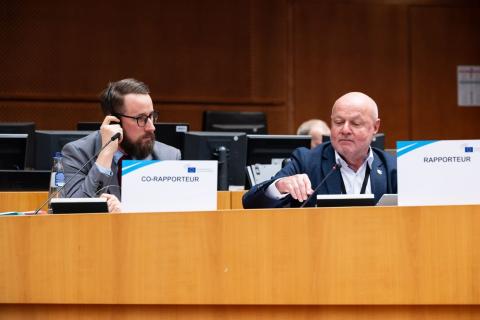
The rapporteur of the EESC’s opinion, José Antonio Moreno Díaz, reiterated the Committee’s stance: ‘The EESC opinion fully supports the My Voice, My Choice initiative, which recognises the right to abortion as a woman’s right to privacy, integrity, sexuality, personal autonomy and, ultimately, health.’
The initiative, backed by more than 1.2 million signatures, calls for an EU financial mechanism covering abortion‑related costs for women lacking access at home. The Committee agreed in its opinion, stressing that access must not depend on geography or income, and that obstructing abortion may amount to institutional gender‑based violence.(lm)
At its January 2026 plenary session, the European Economic and Social Committee (EESC) adopted a resolution setting out the EU’s priorities for the 70th United Nations Commission on the Status of Women (UN CSW70). Centred on access to justice, women’s participation in public life and the elimination of gender‑based violence, the resolution outlines a roadmap for strengthening women’s rights and reinforcing democracy in Europe and globally.
At its January 2026 plenary session, the European Economic and Social Committee (EESC) adopted a resolution setting out the EU’s priorities for the 70th United Nations Commission on the Status of Women (UN CSW70). Centred on access to justice, women’s participation in public life and the elimination of gender‑based violence, the resolution outlines a roadmap for strengthening women’s rights and reinforcing democracy in Europe and globally.
The EESC highlights that women and girls worldwide continue to face legal, financial, social and digital barriers that prevent them from defending their rights. During the plenary debate, the rapporteurs stressed the urgency of removing discriminatory laws, improving legal aid and ensuring justice systems are accessible, affordable and gender‑responsive. They also emphasised the importance of civil society and social partners in supporting women who face discrimination, violence or exploitation.
Access to justice, the Committee notes, is both a human right and a prerequisite for exercising all other rights. To address persistent barriers, the resolution calls for eliminating discriminatory legislation, strengthening gender‑responsive judicial institutions, expanding affordable legal aid and ensuring the safety and confidentiality of survivors of violence. It also stresses the need for more women in judicial careers and for mandatory gender‑bias training for legal professionals. Digitalisation is highlighted as another priority, with Member States urged to expand digital literacy and ensure online legal information is accessible to all women.
CSW70 will also assess progress on women’s participation in public life and efforts to eliminate violence against women. The EESC underscores the need for equal representation, zero tolerance for gender‑based violence and protection for female human‑rights defenders, especially where civic space is shrinking.
Finally, the Committee commits to advancing CSW70 outcomes through strengthened civil dialogue, gender‑responsive budgeting, awareness‑raising and improved data collection.(lm)
The European Economic and Social Committee is calling for a significantly strengthened European Social Fund (ESF) within future National and Regional Partnership Plans (NRPPs). The ESF must remain central to ensuring quality employment, lifelong learning, social inclusion and equal opportunities during the 2028-2034 programming period.
The European Economic and Social Committee is calling for a significantly strengthened European Social Fund (ESF) within future National and Regional Partnership Plans (NRPPs). The ESF must remain central to ensuring quality employment, lifelong learning, social inclusion and equal opportunities during the 2028-2034 programming period.
In an opinion adopted at its January plenary session, the EESC stated that the European Commission’s proposal to reorganise cohesion and agricultural funding under a single strategic architecture can only succeed if the ESF retains its distinct mission, prioritises those most in need and continues to be shaped by meaningful partnerships with social actors at all levels.
To address Europe’s social and economic challenges – from the green and digital transitions to persistent poverty and unequal access to services – the Committee called for raising social spending under the NRPPs from 14% to 20%, with at least 14% specifically dedicated to the ESF. It also asked for clearer rules on what constitutes social expenditure.
The ESF’s multilevel governance model should be maintained, keeping national and regional programmes mandatory. The EESC called for systematic consultation of social partners and civil society, mandatory voting rights for them on ESF monitoring committees and dedicating at least 1% of ESF resources in all Member States to strengthening their administrative capacity.
On skills and employment, the EESC highlighted the need for stronger vocational training, adult learning, STEM and digital skills, improved apprenticeships and support for youth employment, including allocating at least 20% of ESF resources to the reinforced Youth Guarantee.
The Committee further called for expanding ESF support for social inclusion, high‑quality social services, work-life balance, elderly and disability care, mental and physical health, and affordable housing.(lm)
EESC calls for swift, concrete action to accelerate AI deployment across the EU, especially for SMEs and scale-ups. In a global AI race driven by speed and scale, Europe must position reliability and trustworthiness as its defining strengths.
EESC calls for swift, concrete action to accelerate AI deployment across the EU, especially for SMEs and scale-ups. In a global AI race driven by speed and scale, Europe must position reliability and trustworthiness as its defining strengths.
At its January plenary session, the European Economic and Social Committee (EESC) gave its backing to the European Commission's Apply AI Strategy, which seeks to move AI from research and hype to real use in business and public services.
During a plenary debate with the European Commission and AI experts before the adoption of the EESC's opinion on the strategy, the EESC stressed that AI must be trustworthy, transparent and human-centric. Europe’s competitive advantage lies in an approach to AI that considers both technological progress and the protection of human dignity, workers’ rights and fundamental freedoms.
EESC President Séamus Boland said: ‘As AI evolves rapidly, Europe cannot afford fragmented approaches or uneven capabilities across Member States and sectors. The gap between technological innovation and practical deployment is still significant, and we must address it collectively.’
Lucilla Sioli, Director of the Artificial Intelligence Office at the European Commission, said that the slow progress in governance implementation across Member States risks undermining the development of trustworthy and compliant AI: ‘We call on the Member States to revise their AI strategies and align them with the vision and ambitions of the Apply AI Strategy.
In its opinion, the EESC calls for swift, concrete action to accelerate AI deployment across the EU, particularly for SMEs and scale-ups. It strongly advocates simpler access to funding, lighter administrative requirements and clearer intellectual property rules, alongside stronger regional AI ecosystems built on European digital innovation hubs. The Committee also stresses the need for sustained investment in AI skills.
Max Reddel, Advanced AI Director at the Centre for Future Generations, commended the EESC’s emphasis on building sovereign European AI capabilities and avoiding dependence on foreign AI systems, including non-European frontier models.
'Europe’s strength is reliability. We build technology that doesn’t break. ASML’s lithography machines. Airbus aircraft. Technologies so precise and dependable that we lead markets others pioneered. We can replicate this in AI,’ Mr Reddel said. (ll)
Since the beginning of Russia’s full‑scale invasion, the EESC’s Ukraine Hub has offered Ukrainian civil society organisations a dedicated space to work, connect and host small‑scale events in Brussels. Among its users is Ukrainian Prism, one of the country’s leading think tanks specialising in foreign policy and international security. Prism representative, Mariia Korban, told us about the organisation’s mission and described how the Hub has enabled them to contribute directly to the European conversation on Ukraine at the heart of EU policymaking.
Since the beginning of Russia’s full‑scale invasion, the EESC’s Ukraine Hub has offered Ukrainian civil society organisations a dedicated space to work, connect and host small‑scale events in Brussels. Among its users is Ukrainian Prism, one of the country’s leading think tanks specialising in foreign policy and international security. Prism representative, Mariia Korban, told us about the organisation’s mission and described how the Hub has enabled them to contribute directly to the European conversation on Ukraine at the heart of EU policymaking.
The European Economic and Social Committee (EESC) established the Ukraine Hub in April 2022, two months after Russia launched its massive assault on the country. The Hub was set up as a concrete form of support, providing office space for Ukrainian civil society organisations (CSOs). The initiative quickly expanded when the Committee of the Regions invited Ukrainian local and regional authorities (LRAs) to join.
Since September 2022, the Hub has been based in the former VIP restaurant of the EESC’s Van Maerlant building. In 2023, Hub organisations were authorised to host small‑scale events, and around 30 such events have taken place to date, bringing together nearly 1 000 participants. The EESC also provides logistical support to Hub users, including printing services and access to network equipment in the VMA building.
Among the Hub’s users is Ukrainian Prism, the Foreign Policy Council contributing Ukrainian expertise on foreign policy and security to European debates. We spoke with Prism representative, Mariia Korban, who outlined the organisation’s work and explained what cooperation with the EESC means in practice.
Since opening your Brussels office in 2023, you have been very active. Could you briefly explain what Ukrainian Prism is and highlight some of the key activities or achievements you are most proud of?
Ukrainian Prism is a Kyiv-based think tank specialising in Ukraine’s foreign policy and international security. Through ten research programmes, we work on the regions and policy areas that shape Ukraine’s role in the world.
For us, expertise is not knowledge for its own sake, but a contribution to shared decisions. This is why, in early 2023, we opened an office in Brussels – not to observe European policymaking from the outside, but to take an active part in European processes and to ensure the consistent integration of Ukrainian expertise into the European dialogue.
Since then, we have organised or co-organised 70 expert events in Brussels and across EU capitals, bringing together more than 3 000 participants from diplomacy, EU institutions, policy analysis, media and civil society. These events were designed to foster substantive and informed dialogue between Ukraine and its European partners.
In parallel, we coordinate four regional expert forums with Southern Europe, the Nordic-Baltic Eight, the Weimar Triangle and the Benelux countries, helping to strengthen mutual understanding and trust across Europe.
The EESC Ukraine Hub seems to be an important partner for your organisation. What does this cooperation offer in practical terms?
For Ukrainian Prism, the Ukraine Hub at the European Economic and Social Committee has become a genuine institutional anchor in Brussels.
By hosting us within its premises, the EESC has given us the opportunity to work at the very heart of the European institutional landscape – not as guests, but as partners in a shared European conversation on Ukraine. This proximity enables continuous engagement and lays the foundation for long-term, trust-based cooperation.
The Ukraine Hub also provides a stable platform for regular interaction between Ukrainian expertise and European stakeholders, while supporting the inclusion of a broader range of Ukrainian experts and civil society representatives in the Brussels dialogue. In this way, institutional support is translated into tangible and lasting impact.
Your organisation celebrated its 10th anniversary at the end of 2025. What are the main priorities for the next stage of Ukrainian Prism’s work?
Ten years is not a conclusion – it is a responsibility.
Our main priority is to do everything possible to help bring peace and victory to our country and to ensure a secure and sustainable future for Ukraine. With this understanding, we are focused on further embedding Ukrainian expertise into European strategic discussions on security, enlargement and Europe’s long-term resilience - as a credible and well-informed partner.
We will continue to deepen cooperation with EU institutions, Member States and think tanks, building on established partnerships and ensuring Ukraine’s active and trusted presence in shaping Europe’s shared future.
Mariia Korban is Manager of the Brussels Office of the Foreign Policy Council Ukrainian Prism, with a professional background in diplomacy and international cooperation. Her work focuses on European politics, EU–Ukraine relations, contemporary security challenges and public diplomacy.
The EESC has stood by Ukraine since the start of Russia's aggression, and its members did not hesitate to support Ukrainian people and refugees directly in their own countries. Marcin Nowacki, a Polish member of the EESC and president of the Section for Transport, Energy, Infrastructure and the Information Society (TEN), spoke to us about the assistance provided by Polish businesses both during the early stages of the war and now, during its fourth winter.
The EESC has stood by Ukraine since the start of Russia's aggression, and its members did not hesitate to support Ukrainian people and refugees directly in their own countries. Marcin Nowacki, a Polish member of the EESC and president of the Section for Transport, Energy, Infrastructure and the Information Society (TEN), spoke to us about the assistance provided by Polish businesses both during the early stages of war and now, during its fourth winter.
You represent employers at the European Economic and Social Committee. Could you tell us how Polish companies and entrepreneurs have been involved in supporting Ukraine since the outbreak of the war?
Polish businesses have been involved in helping Ukraine since day one. This has included financial support (for the Ukrainian army and NGOs), material support (humanitarian aid convoys), infrastructure and logistical support (providing warehouses and offices) and business support (helping Ukrainians join the Polish and European markets). It’s hard to list all the forms it took because everyone wanted to help and took the initiative themselves. In my case, in the first weeks of the war my involvement was focused on organisation and transportation of advanced medical products for the Ukrainian military. In a small, international team, we managed to organise the financing for the purchase of the products needed and to cover all the logistics involved in this process. I spent many weeks travelling by bus and making deliveries to the Ukrainian side.
What kind of support has been offered to refugees from Ukraine in Poland? In recent months there has been talk of ‘solidarity fatigue’, and reports indicate that public support for hosting Ukrainians is not as strong as it was at the beginning of the war. In your experience, are entrepreneurs and businesses decreasing their involvement in supporting refugees from Ukraine?
After four years of war, the intensity of support and involvement across society is certainly at a different level. During the early stages of the war, support covered almost all possible areas, from people taking families into their own homes, to financial support, to psychological and legal assistance. I remember frantic phone calls between family, friends and colleagues trying to find extra rooms or beds for refugees. It was real, spontaneous involvement by society as a whole. More recently, this type of thing is no longer what’s needed. Most refugees residing in Poland have found work and that is the greatest support that Poland, and our employers, can provide. Fortunately, the Polish labour market is very dynamic and open. Refugees from Ukraine are always welcome. However, in certain sectors, where there has been a rapid change in the market over a relatively short period of time, some expressions of dissatisfaction can be heard. This is mostly an emotional reaction, as while Poland has a very large refugee population, it is also experiencing a historically low unemployment rate. In my view, there is a place for all of us. One ongoing challenge is knowledge of the Polish language. It’s important to remember that knowledge of the local language is important in Poland, in terms of both the labour market and for becoming part of society.
What forms of assistance will be crucial in the long term, particularly when it comes to rebuilding Ukraine and strengthening its civil society? What role can employers’ organisations play in this process?
The role of civil society organisations, including business organisations, is twofold: to support Ukraine’s European integration process and to work towards the long-term commitment of European countries to provide military and financial assistance for Ukraine as it defends itself. We know that as any war goes on, fatigue sets in, especially for communities that are not directly involved. Many would like the problem to just sort itself out. But it doesn’t work that way and Ukraine needs Europe. Europe, in turn, needs a safe and independent Ukraine. It is therefore important to adapt to European integration and to maintain ongoing interest and sympathy for Ukraine within European societies. This takes work and effort on all our parts, including, of course, Ukrainians themselves.
As the continent enters the fourth year of what was meant to be Vladimir Putin's 'three-day special military operation' to overthrow the Ukrainian government, nullify Ukraine’s independence and ensure its return as a vassal state, the war rages on. Between half a million and 1.5 million people have been killed or injured, vast areas of land have become unusable and entire cities lie in ruins. For four years, Ukrainians have valiantly fought against a numerically superior enemy, enduring war crimes, constant attacks on civilians and blackouts in the depths of winter.
As the continent enters the fourth year of what was meant to be Vladimir Putin's 'three-day special military operation' to overthrow the Ukrainian government, nullify Ukraine’s independence and ensure its return as a vassal state, the war rages on. Between half a million and 1.5 million people have been killed or injured, vast areas of land have become unusable and entire cities lie in ruins. For four years, Ukrainians have valiantly fought against a numerically superior enemy, enduring war crimes, constant attacks on civilians and blackouts in the depths of winter.
The continuation of the war raises difficult questions about the future. With U.S. support dwindling in recent years, fuelled by the Trump administration's worldview centred on spheres of influence, Europe has become Ukraine's main backer. Given Ukraine’s role as the frontline of European security, this support is driven not by charity, but by Europe's existential need.
At the same time, Chinese support and Russia's autarkic economy have blunted the impact of Western sanctions. Putin’s continued strategy of 'feeling forward' (driven largely by the lack of viable alternatives) is turning Russia into a Chinese economic vassal (even though the enmity between the two should not be underestimated). Russia, for its part, accuses the EU of obstructing ‘peace’ (which in practice would mean Ukrainian capitulation), and promises ‘no more wars’ if Russia and its interests are respected. This is hardly reassuring, as Russia’s interests tend to include entire or large parts of its neighbouring states, some of them within the European Union.
Despite all the geopolitical considerations, the war continues unabated and people are still dying. Ukraine must press forward on its EU accession path, and this should also prompt the EU to rethink both the accession process and its internal decision-making procedures. In a world shaped by strongmen, raw power and spheres of influence, the EU must stand its ground and show there is another way, and that there is hope for normal countries to survive without becoming vassals of larger powers.
Securing a sovereign and independent future for Ukraine is central to this vision. Only by doing so can the EU use its influence to improve people’s lives within Ukraine itself, strengthening civil and social dialogue, supporting social partners and protecting fundamental rights. Although sometimes called into question during wartime, social dialogue and collective bargaining remain essential to societal peace and strength. They play a key role in mobilising social forces within the country and ensuring support for the country's defence efforts.
Late 2025 and early 2026 witnessed a marked acceleration in diplomatic efforts aimed at resolving the nearly four-year full-scale war in Ukraine. While the November US-Russia 28-point peace plan, widely perceived as heavily favouring Russia and disadvantaging Ukraine, initially cast a shadow, December brought a surprisingly positive shift. The original plan was superseded by a revised 20-point proposal, developed by the Ukrainian government in collaboration with its European partners, offering a pathway towards a just and lasting peace, grounded in the principles of the United Nations Charter.
High-level diplomatic engagement and negotiations
A flurry of high-level talks ensued: discussions between European leaders in Berlin (15 December) and a meeting between the Ukrainian and US presidents at Mar-a-Lago, followed by a videoconference with European leaders (29 December), consultations with national security advisors and chiefs of staff in Kyiv (3-5 January) and finally a pivotal meeting in Paris (6 January) between the leaders of the coalition of the willing and representatives of the Ukrainian and US administrations. These intense negotiations resulted in an agreement on the core elements of a peace framework, including – crucially for Ukraine – robust security guarantees, to be activated upon the implementation of a ceasefire.
monitor and verify the ceasefire, under the oversight of the United States;
provide sustained long-term military and technical support to the Ukrainian army;
respond decisively to any further hostile actions by Russia;
deploy international forces to assist Ukraine in maintaining security (including border protection) and stabilising the region following the ceasefire; and
engage in enduring defence cooperation with Kyiv.
In parallel, at its meeting on 18-19 December, the European Council demonstrated its unwavering determination to support Ukraine’s military efforts. Citing the ‘enhanced cooperation’ provisions of Article 20 of the Treaty on European Union, the Council pledged to provide a EUR 90 billion aid package, to be financed through EU borrowing on capital markets. The loan would cover two thirds of Ukraine’s military and budgetary needs for 2026 and 2027 and would be repaid once Ukraine receives reparations from Russia.
Prior to this, on 12 December, the European Council resolved to freeze the assets of the Central Bank of the Russian Federation indefinitely until Russia stops the war and pays due reparations to Ukraine. This unprecedented decision was made under Article 122(1) of the Treaty on the Functioning of the European Union, which requires a qualified majority rather than unanimity – a smart way to strip the countries sceptical about supporting Ukraine (particularly Hungary) of the ability to use their veto power to extract concessions on other matters.
Obstacles to peace and the broader implications
The agreement forged within the Ukraine-US-Europe triangle represents a significant step towards a peace process, bolstering Ukraine’s negotiating leverage. However, achieving peace still hinges on the will of the aggressor, Russia, which continues to escalate attacks on critical infrastructure and residential areas, killing civilians and depriving millions of electricity, heat and water. Russia’s territorial demands, its opposition to any military presence of NATO countries in Ukraine and its refusal to agree to a ceasefire do not inspire optimism.Sustained pressure on Russia therefore remains imperative.
Participants in the EESC EU-Ukraine Civil Society Platform (CSP) urged the EU to take action, particularly by adopting the 20th sanctions package. Their declaration, published on 11 December, calls for all Russian banks to be targeted without exception and for a complete cessation of imports of oil, gas and oil products from the Russian Federation, including deliveries via pipelines or shipments via non-EU countries.
Achieving peace on the terms outlined in the 20-point plan, supplemented by the Paris security guarantees, would signify a triumph of democratic principles over aggressive, authoritarian imperialism. It would send a strong message that aggression and violations of international law will not be tolerated, helping to deter future conflicts and uphold the rules-based international order.
The immediate practical implications for Europe would be enhanced security, stabilised energy and commodity prices and reduced border and economic tensions. Politically, a successful peace process involving European diplomacy would further strengthen European solidarity and enhance Europe’s role as a global actor. Crucially, it would offer millions of refugees and internally displaced Ukrainians the prospect of returning home to reunite with their families and engage in reconstruction and recovery efforts supported by the international community. A lasting peace would pave the way for Ukraine’s closer integration into the EU and eventual membership, bringing significant economic and political benefits.
With the arrival of spring on the horizon, the EESC welcomes March with two fantastic events that reflect the very core of the Committee’s identity: civil society and young people.
With the arrival of spring on the horizon, the EESC welcomes March with two fantastic events that reflect the very core of the Committee’s identity: civil society and young people.
From 2 to 5 March 2026, the third edition of Civil Society Week, entitled People, Democracy, Resilience – Our Future, will focus on advancing diversity, civic engagement, equality and inclusion as key pathways to renewing Europe’s social and democratic promise for future generations.
An integral part of Civil Society Week is the European Citizens’ Initiative (ECI), a proven instrument enabling citizens to propose EU action. Now in its 14th year, the ECI event marks a significant milestone, as four initiatives have each surpassed one million signatures in recent months.
Moving on, from 19-20 March the EESC will welcome young people from all EU Member States, the candidate countries and the UK. With the popular acronym YEYS, the Committee’s landmark youth event Your Europe, Your Say! is designed to be more than just an event but rather a space for young people to connect, engage actively and shape democratic life across Europe.
Under the theme Meaningful Connections, Active Participation and Democratic Engagement, YEYS attracted strong interest from young people, especially from candidate countries and Ukraine, showing that their heart beats in the EU.
That is why Civil Society Week and YEYS matter. They provide timely platforms for organised civil society, citizens and young people from across Europe to make their voices heard on key issues – particularly at a moment when Europe faces profound societal, technological, economic and geopolitical challenges.
The overwhelming interest shown by young Ukrainians in our youth event clearly demonstrates that their aspirations and dreams are firmly rooted in the European family.
Their enthusiasm stands in stark contrast to the difficult reality their country continues to endure.
As Ukraine enters its fourth winter of full-scale war, Russia continues to weaponise winter by targeting Ukraine’s energy infrastructure, disproportionately affecting the most vulnerable civilians and leaving people to freeze in their own homes.
Now more than ever, the Committee, together with all EU institutions and civil society organisations, must continue to provide tangible support and demonstrate solidarity in action. The EESC has stood firmly with Ukraine since the first day of the invasion, opening its doors to civil society and young people alike.
24 February marks the fourth anniversary of Russia’s aggression against Ukraine, which continues to claim thousands of lives.
On this occasion, we are dedicating this issue to Ukraine and giving the floor to Ukrainian civil society organisations and journalists – and to their European counterparts – who work tirelessly to support the Ukrainian population and to tell the truth about what is happening on the ground.
I invite you to read our newsletter and I urge you to support the Ukrainian people in any way you can. Now is not the time to look away.
I also warmly invite you to take part in the dialogue at our two upcoming events. In this House, your voice can be heard and turned into action. Join us and seize this opportunity to help shape change.
Together, let us safeguard the civic space, so priceless for our democracy and vital for our society, by engaging in open dialogue and remaining vigilant in the face of the current challenges