
European Economic
and Social Committee
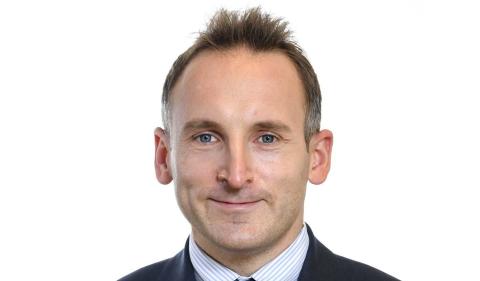
The EESC has stood by Ukraine since the start of Russia's aggression, and its members did not hesitate to support Ukrainian people and refugees directly in their own countries. Marcin Nowacki, a Polish member of the EESC and president of the Section for Transport, Energy, Infrastructure and the Information Society (TEN), spoke to us about the assistance provided by Polish businesses both during the early stages of war and now, during its fourth winter.
You represent employers at the European Economic and Social Committee. Could you tell us how Polish companies and entrepreneurs have been involved in supporting Ukraine since the outbreak of the war?
Polish businesses have been involved in helping Ukraine since day one. This has included financial support (for the Ukrainian army and NGOs), material support (humanitarian aid convoys), infrastructure and logistical support (providing warehouses and offices) and business support (helping Ukrainians join the Polish and European markets). It’s hard to list all the forms it took because everyone wanted to help and took the initiative themselves. In my case, in the first weeks of the war my involvement was focused on organisation and transportation of advanced medical products for the Ukrainian military. In a small, international team, we managed to organise the financing for the purchase of the products needed and to cover all the logistics involved in this process. I spent many weeks travelling by bus and making deliveries to the Ukrainian side.
What kind of support has been offered to refugees from Ukraine in Poland? In recent months there has been talk of ‘solidarity fatigue’, and reports indicate that public support for hosting Ukrainians is not as strong as it was at the beginning of the war. In your experience, are entrepreneurs and businesses decreasing their involvement in supporting refugees from Ukraine?
After four years of war, the intensity of support and involvement across society is certainly at a different level. During the early stages of the war, support covered almost all possible areas, from people taking families into their own homes, to financial support, to psychological and legal assistance. I remember frantic phone calls between family, friends and colleagues trying to find extra rooms or beds for refugees. It was real, spontaneous involvement by society as a whole. More recently, this type of thing is no longer what’s needed. Most refugees residing in Poland have found work and that is the greatest support that Poland, and our employers, can provide. Fortunately, the Polish labour market is very dynamic and open. Refugees from Ukraine are always welcome. However, in certain sectors, where there has been a rapid change in the market over a relatively short period of time, some expressions of dissatisfaction can be heard. This is mostly an emotional reaction, as while Poland has a very large refugee population, it is also experiencing a historically low unemployment rate. In my view, there is a place for all of us. One ongoing challenge is knowledge of the Polish language. It’s important to remember that knowledge of the local language is important in Poland, in terms of both the labour market and for becoming part of society.
What forms of assistance will be crucial in the long term, particularly when it comes to rebuilding Ukraine and strengthening its civil society? What role can employers’ organisations play in this process?
The role of civil society organisations, including business organisations, is twofold: to support Ukraine’s European integration process and to work towards the long-term commitment of European countries to provide military and financial assistance for Ukraine as it defends itself. We know that as any war goes on, fatigue sets in, especially for communities that are not directly involved. Many would like the problem to just sort itself out. But it doesn’t work that way and Ukraine needs Europe. Europe, in turn, needs a safe and independent Ukraine. It is therefore important to adapt to European integration and to maintain ongoing interest and sympathy for Ukraine within European societies. This takes work and effort on all our parts, including, of course, Ukrainians themselves.