
European Economic
and Social Committee
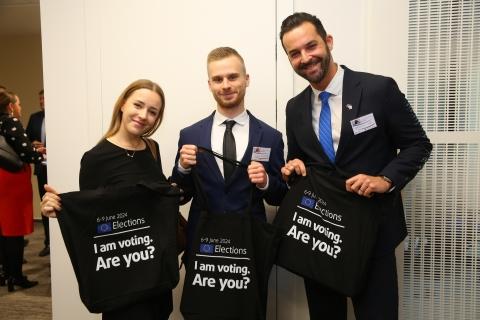
The impact of disinformation on the 2024 European Parliament elections and ways to ensure civil society plays a more effective role in promoting those elections, with a strong focus on young people: these were the main topics discussed at the seminar "European Elections 2024: Why vote?", organised by the EESC in Bratislava on 23-24 November.
The event was hosted by the European Labour Authority and held in partnership with the Slovak Economic and Social Council and with the support of the Liaison Office of the European Parliament in Bratislava. It brought together more than 130 people: EESC members, communication and press officers from civil society organisations, journalists and representatives of economic and social councils from seven Member States.
Discussions spanning over two days revealed that Europeans need to know how EU decisions affect their lives if campaigns to boost voter turnout are to have any real effect. Messages need to be tailored to each EU country and barriers preventing young people from entering politics need to be addressed as a matter of urgency.
To encourage voters to turn out in force, it is crucial to effectively combat disinformation and to encourage strong and clear communication about what is at stake, making voters feel the commitment of politicians who will represent them in the EU.
Opening the seminar, EESC president Oliver Ropke said: "If we want the 2024 elections to be successful, then all of us – the EU institutions, the media, communication specialists – need to work together to raise awareness in order to fight disinformation and, most importantly, to bring Europe closer to its people. Above all, they need to know that these elections are about them."
Mr Röpke and the EESC delegation also visited the Jan Kuciak Investigative centre and paid tribute to journalist Jan Kuciak who was murdered in 2018 for exposing high-level corruption in his country. (ll)