The 2030 Agenda for Sustainable Development, adopted by all United Nations Member States in 2015, provides a shared blueprint for peace and prosperity for people and the planet, now and into the future. At its heart are the 17 Sustainable Development Goals (SDGs), which are an urgent call for action by all developed and developing countries in a global partnership. They recognize that ending poverty and other deprivations must go hand-in-hand with strategies that improve health and education, reduce inequality, and spur economic growth – all while tackling climate change and working to preserve our oceans and forests.
Civil society and expert contributions for the UN HLPF and beyond
Location
Rue Belliard 99, 1040
Brussels
Belgium
This workshop aims to discuss priorities to strengthen the EU’s SDG leadership at home and internationally in achieving climate neutrality and sustainable development ahead of major international summits planned for this coming July and September.
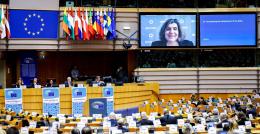
At its March plenary session, the European Economic and Social Committee (EESC) hosted Ambassador Lachezara Stoeva, president of the United Nations Economic and Social Council (ECOSOC). Ambassador Stoeva strongly supported the key role civil society must play in implementing the 2030 Agenda.