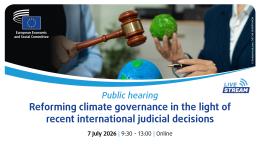
The EESC is organising a public hearing to feed into a timely own-initiative opinion which will examine civil society proposals on how to reform climate governance, including decision-making processes, negotiation frameworks, and the participation and impact of civil society organisations at global climate summits. It will also assess how international climate litigation is shaping climate negotiations and may further influence the governance of the UNFCCC, particularly in light of the International Court of Justice’s advisory opinion of 23 July 2025.
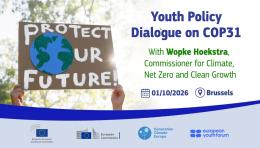
The European Commission and the European Economic and Social Committee, in cooperation with the European Youth Forum and Generation Climate Europe, will organise the Youth Policy Dialogue on COP31. The event will take place on Thursday 1 October 2026.
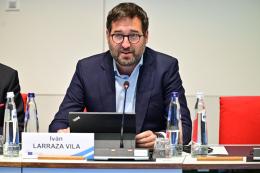
A conference held in Brussels by the European Economic and Social Committee and the Basque Government showcased the political and social importance of services of general interest in making intergenerational solidarity a reality in Europe and building a more inclusive society.
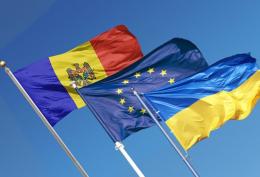
As a steadfast supporter of the European Union's enlargement, the European Economic and Social Committee (EESC) welcomes the formal opening of the first negotiation cluster (known as the ‘Fundamentals’ cluster) at the second Accession Conferences held respectively with Ukraine and the Republic of Moldova in Luxemburg on 15 June 2026.