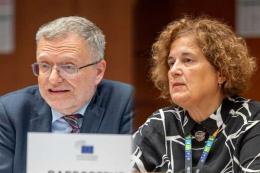
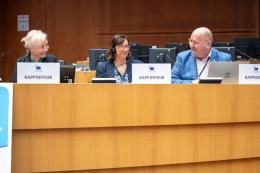
The opinion focuses on the proposal for a new funding programme on Single Market and Customs for the period 2028-2034. With € 6.2 billion (double the funding compared to the current long-term EU budget), the reinforced Single Market and Customs Programme will combine several previously standalone programmes (Single Market Programme, Customs, Customs Control Equipment Instrument, Fiscalis and the Union Anti-Fraud Programme) into one coherent strategy that should preserve EU economic security.
EESC opinion on Single Market and Customs Programme 2028-2034
At its September plenary, the European Economic and Social Committee (EESC) hosted a debate with Commissioner for Energy and Housing Dan Jørgensen, and called on the European Commission to take urgent action to address the ongoing housing crisis.
At its September plenary in Brussels, the European Economic and Social Committee (EESC) brought together EU leaders, civil society, youth groups, and international partners in the European Parliament hemicycle to mark the end of President Oliver Röpke’s 2023-2025 term of office. The ceremony celebrated the Committee’s recent achievements and looked ahead to the challenges set to shape Europe’s future.
At its September plenary session, the European Economic and Social Committee (EESC) adopted an opinion on the New Pact for the Mediterranean, a month ahead of its official launch by the European Commission. The Committee calls for bottom-up processes ensuring that the Pact has a direct, positive impact on all people, especially on youth.