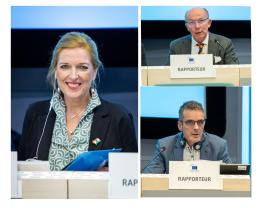
The European Economic and Social Committee (EESC) has laid out a bold vision for transforming the EU's agriculture, fisheries, and food systems to better withstand crises while ensuring sustainability. The opinion "Fostering sustainable and resilient food systems in times of crisis," requested by the Hungarian presidency, was adopted at the October plenary.
The European Economic and Social Committee (EESC) aims to lay the groundwork for a post-2027 common agricultural policy (CAP) that is resilient and sustainable and meets the needs of both farmers and society. The Belgian Presidency of the Council of the EU has tasked the EESC with formulating an opinion on how to achieve strategic autonomy and sustainable food production.The opinion adopted at its January plenary session.
In the opinion, the European Economic and Social Committee (EESC)
welcomes the communication from the European Commission regarding the fertiliser crisis and its impact on European farmers (higher costs), consumers (food price inflation) and industry workers;
calls for both short-term and longer-term measures to limit the EU's dependence on imported mineral fertilisers, reduce the environmental impact of crop fertilisation and improve the functioning of the EU fertiliser market;
welcomes the establishment of a new fertiliser market observatory in 2023 to ensure transparency in the EU fertiliser market;
At the request of the French Presidency of the Council of the EU, in the opinion on Food security and sustainable food systems adopted at its plenary session on 19 January 2022, the European Economic and Social Committee (EESC) identified the key levers for sustainable and competitive EU food production and for reducing dependence on imports while increasing the EU's protein autonomy.
Conference on Professional Support for the EU Blue Deal
Location
Belliard street 99
Brussels and online
Belgium
Join us on 7 May 2024, when the Liberal Professions Category of the EESC proudly presents the 8th edition of the Day of Liberal Professions. The conference is open to the public. Registration is now closed. We invite you to follow live via webstreaming.
On 6 November 2023, the EESC will host a public hearing in the context of its ongoing opinion on 'Promoting autonomous and sustainable food production: strategies for the Common Agricultural Policy (CAP) post-2027' requested by the upcoming Belgian Presidency of the Council of the EU.
Food security and sustainable food systems - With Commissioner Wojciechowski
Location
14:30 - 16:00 CET - Webstreamed, Brussels
Belgium
The EESC will host the third EU Youth Round Table on Wednesday 30 November, 14:30-16:00 CET. Janusz Wojciechowski, Commissioner for Agriculture, will participate in the event and will engage with the youth representatives on the topic: food security and sustainable food systems.
Extraordinary meeting of the Diversity Europe Group in the framework of the Slovenian Presidency of the Council of the EU
Event type
Meeting
Location
9.30 - 13.00 - Ljubljana & Brussels in hybrid format
The event will take place both in Brussels and in Ljubljana in hybrid form. Registration for external participants will be open on this page until 25 November 2021.
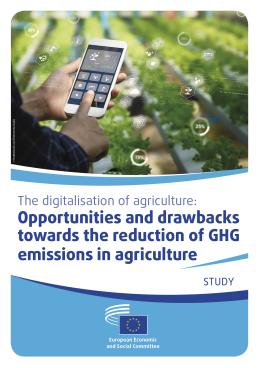
Opportunities and drawbacks towards the reduction of GHG emissions in agriculture
This study evaluates the environmental, social, and economic impacts of digitalisation based on a literature review and case studies in Estonia, Germany, Romania, and Spain